
Economy February 12, 2026

Merz Reaffirms Opposition to Joint European Debt After EU Leaders' Market Commitments

German chancellor cites constitutional limits while aligning with France on guarding markets against unfair trading practices

By Nina Shah
Merz Reaffirms Opposition to Joint European Debt After EU Leaders' Market Commitments

German Chancellor Friedrich Merz reiterated his refusal to back joint European government bonds following a meeting where EU leaders pledged to strengthen the bloc’s border-free internal market. Merz pointed to constraints imposed by Germany’s Constitutional Court and signalled common ground with France on measures to shield European markets from unfair trading behavior despite the disagreement over shared debt issuance.

Key Points

  • Chancellor Friedrich Merz publicly reaffirmed he will not support the creation of euro bonds during a press briefing after an EU leaders' meeting.
  • Merz cited strict limitations set by Germany’s Constitutional Court that constrain what a German government could do regarding joint European debt instruments.
  • Despite opposing joint debt issuance, Merz reported agreement with France on the need to protect European markets against unfair trading practices; EU leaders at the meeting committed to measures to strengthen the border-free internal market.

German Chancellor Friedrich Merz reiterated on Thursday that he will not support the issuance of joint European government bonds, repeating his stance after a meeting of European Union leaders that focused on commitments to enhance the bloc’s border-free internal market.

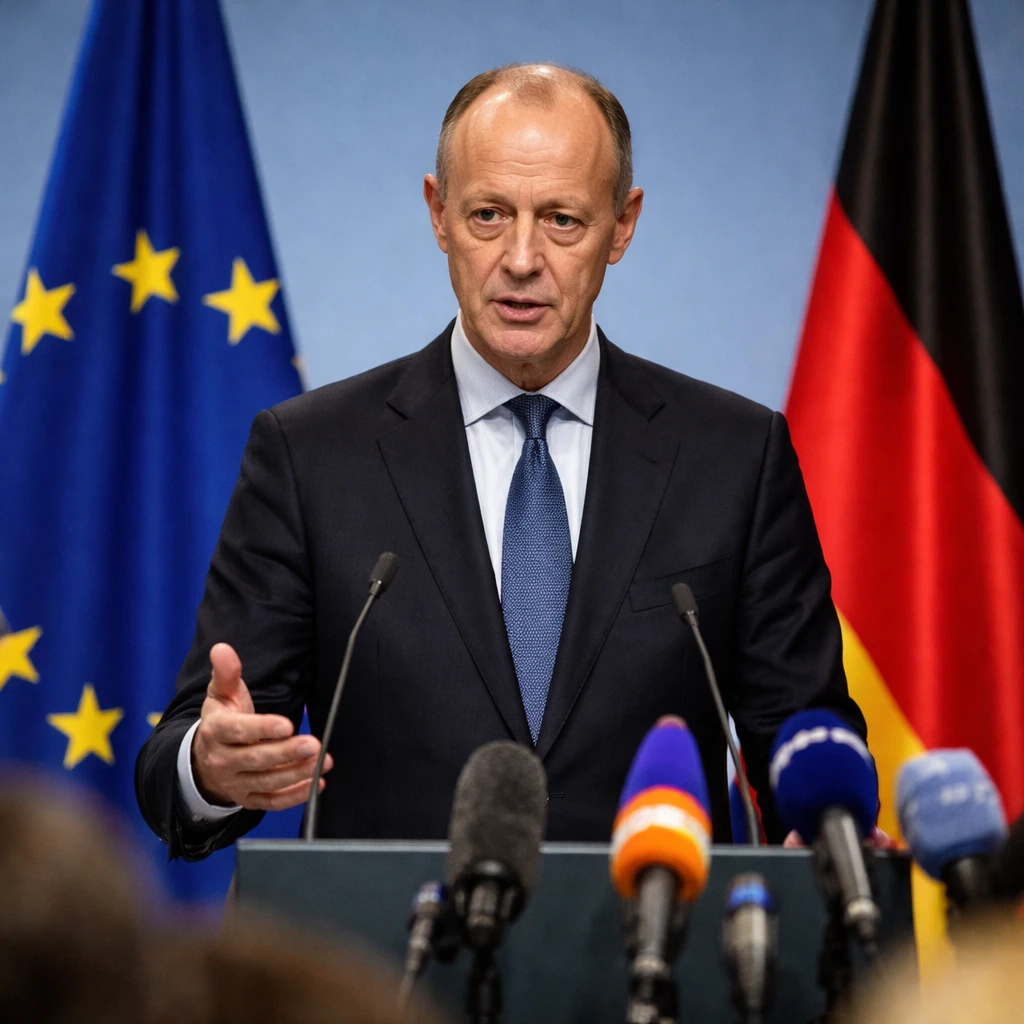
Speaking at a press briefing after the session, Merz said: "This morning I was very clear in what I said, that although there may be different opinions, I will not support the idea of euro bonds." His comments came in the context of broader EU discussions where leaders agreed on measures intended to improve conditions within the single market.

Merz also highlighted legal constraints facing a German government on the matter, noting that Germany’s Constitutional Court has set tight limits on what steps Berlin could take with respect to such financial instruments. He emphasised these judicial boundaries as a factor shaping his position.

While he rejected the concept of euro bonds, Merz indicated an area of agreement with France. He said both countries see a need to protect European markets against unfair trading practices, signalling convergence on trade policy even as they diverge on the question of joint debt issuance. The chancellor framed this alignment on market protection as separate from the disagreement over shared borrowing.

The remarks leave clear differences among EU policymakers on whether pooled borrowing should be pursued, while also underscoring points of consensus on preserving the integrity and fairness of European markets. Merz’s statement reiterated his personal and institutional reluctance to endorse euro bonds and cited judicial constraints that would limit Germany’s ability to participate in such instruments.

Details released after the leaders’ meeting focused on commitments to strengthen the border-free internal market, but the chancellor’s comments made plain that unanimous support for joint borrowing is not forthcoming from Berlin. At the same time, the noted agreement with France on defending market fairness illustrates that trade policy and debt policy remain distinct topics in the bloc’s ongoing discussions.

Risks

  • Persistent disagreement among EU leaders over joint debt issuance - could prolong policy divergence between member states (affecting sovereign debt discussions and fiscal policy coordination).
  • Legal constraints from Germany’s Constitutional Court that limit Berlin’s ability to participate in shared borrowing arrangements - a constraint on any potential EU-level debt initiatives (relevant to government finance and regulatory governance).
  • Separation of positions on fiscal instruments from alignment on trade protections - could create uneven policy outcomes across sectors dependent on cross-border rules, including banking, trade-related industries, and sovereign funding plans.

More from Economy

Supreme Court Term Spotlight: High-Stakes Cases Shaping Law and Policy Feb 20, 2026 Trump Vows Fresh 10% Global Tariff After Supreme Court Limits His Trade Authority Feb 20, 2026 Supreme Court Ruling Narrows Presidential Tariff Options, Treasury Secretary Says Feb 20, 2026 Supreme Court Curbs Emergency Tariff Authority, Sparking Market and Policy Reactions Feb 20, 2026 Brazil Says U.S. Supreme Court Decision Restores Country's Edge in American Market Feb 20, 2026