
Overview
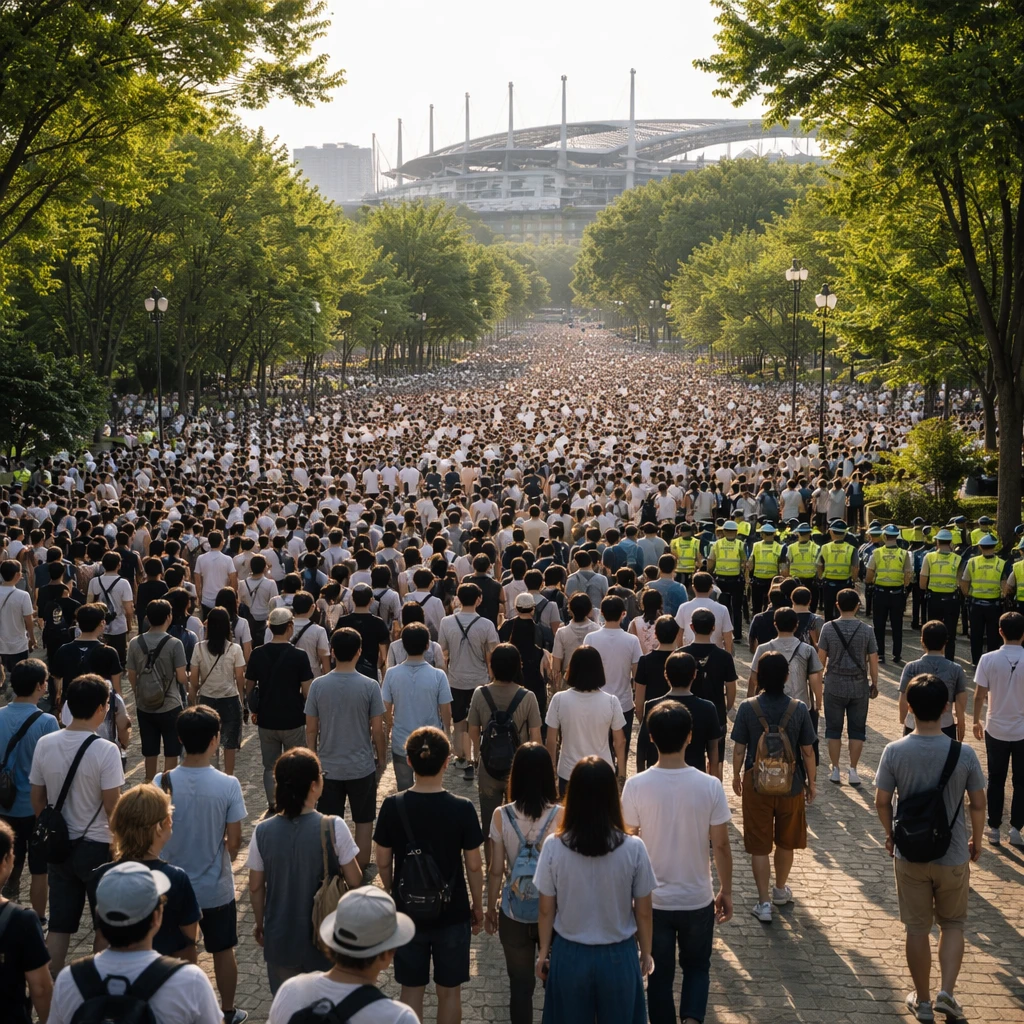
Public unrest has grown in South Korea following disruptions during last week’s local elections, when shortages of ballot papers affected parts of the vote held on June 3. What began as a small demonstration near an affected polling place in Seoul escalated into mass gatherings that drew tens of thousands of people to Olympic Park, where police estimated the crowd exceeded 32,000 by Saturday evening.
What happened at the polls
Election day saw problems at roughly 50 polling stations across Seoul and Gyeongsang province, according to official reports. At more than a dozen of those sites, voting was suspended because ballot supplies ran out. The National Election Commission has acknowledged the disruptions and apologized, saying that election officials had underestimated turnout and therefore failed to supply enough ballot papers at some locations.
While the affected polling places comprised only a small portion of the more than 14,000 polling stations operating nationwide, demonstrators argue the interruptions undermined individuals’ voting rights and have shaken confidence in the integrity of the electoral process.
Political fallout
The controversy has become a political test for President Lee Jae Myung even though his Democratic Party performed strongly overall in the local contests. The ruling party secured victories in 12 of 16 major races, but it failed to win Seoul, the country’s largest and politically pivotal jurisdiction.
In response to the incident, the chairperson of the National Election Commission has offered to resign. Authorities have noted that current election laws do not provide legal grounds for a nationwide revote, a position that has not satisfied protesters who continue to demand a fresh election and greater accountability from officials.
Responses from parties and the public
The opposition People Power Party has called for a parliamentary investigation into the ballot shortages, while the Democratic Party has promised to conduct its own review to determine what went wrong. Demonstrations have largely remained peaceful and decentralized; participants describe the movement as nonpartisan and focused on protecting voting rights rather than promoting a specific political agenda.
Protesters continue to press for a rerun of the election and for officials to be held responsible for the logistical failures that occurred on June 3.
What comes next
The issue is expected to remain front and center ahead of a scheduled presidential press conference on Monday, during which President Lee is slated to address the controversy along with broader government priorities. Political analysts will be watching whether the dispute affects public confidence in government institutions or prompts additional political pressure on the administration.
At present, the principal actions under way are internal reviews and calls for formal investigations, while legal barriers cited by authorities limit the options for a nationwide rerun under existing election law.