
Investor focus shifts to the U.S. Federal Reserve’s two-day policy meeting this week as market participants seek a clearer read on how the recent escalation in the Iran conflict is reshaping expectations for interest-rate cuts in 2026. The central bank convenes for the first policy gathering since U.S. and Israeli air strikes on Iran began about two weeks ago, events that precipitated a sharp rise in oil prices and broader market turbulence.
Fed officials will confront a pair of linked questions during their deliberations: how the energy price shock is likely to influence inflation, and what that means for economic growth. The central bank is scheduled to publish updated economic projections on Wednesday, and Chairman Jerome Powell will hold a press conference after the policy statement that could offer further insight into the Fed’s thinking on the conflict’s implications.
Market pricing has already shifted in response to the geopolitical developments. Investors had been banking on multiple cuts this year to support equities and other risk assets; those hopes have been tempered as oil surged and inflationary risks rose. "The Fed is going to be front and center, especially given the fact that we have seen the market push back... these rate cut expectations," said Angelo Kourkafas, senior global investment strategist at Edward Jones.
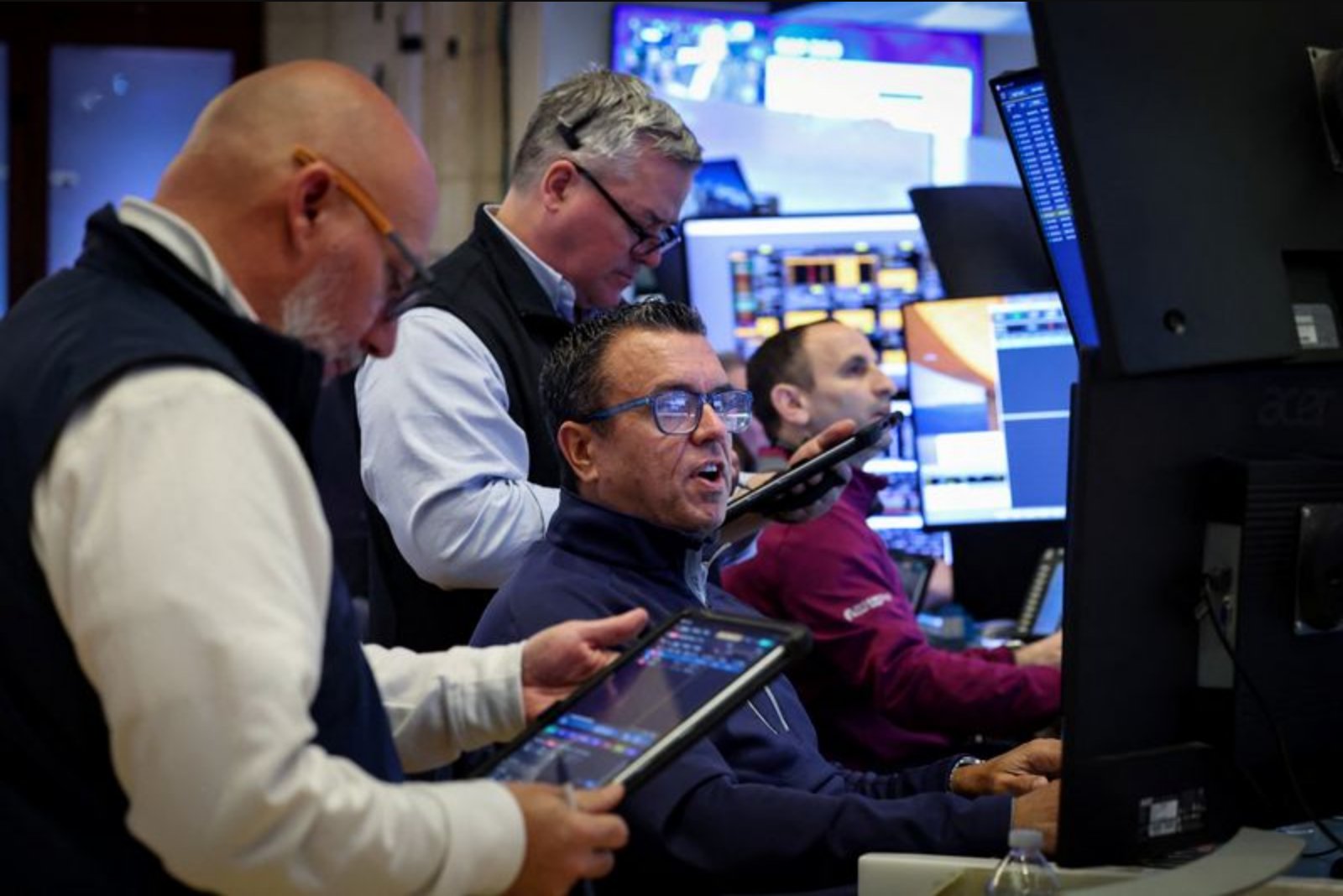
Equities and volatility reflect that reassessment. U.S. stock indexes have declined and equity volatility has risen since the conflict began. The benchmark S&P 500 finished last Friday about 5% below its record closing high from late January, marking a third consecutive weekly fall.
Oil has been a focal point. U.S. crude climbed near $120 a barrel early in the week before settling on Friday close to the psychologically important $100 level. Tehran has signaled that the market should be prepared for oil at $200 as Iranian forces struck merchant vessels during the week, a development that has only heightened market nervousness.
"We’re seeing wild swings in the market as traders are latching on to any hint of developments, positive or negative, on the Iran conflict," said Sid Vaidya, chief investment strategist at TD Wealth.
Fed policy expectations have adjusted to reflect the higher energy costs. The central bank had reduced rates last year to support a weakening labor market, then paused its easing cycle in January after judging that risks to employment and inflation had diminished. That pause set the stage for markets to assume additional cuts later in the year, expectations that have been scaled back amid the recent rise in energy prices.
At the same time, incoming data present a mixed picture. A surprisingly weak jobs report for February could argue for the Fed to retain an easing bias, complicating policymakers’ task of weighing upside inflation pressure from oil against downside risks to the labor market.
Fed funds futures reflected the recalibration as of last Friday, pricing in slightly less than one standard quarter-percentage point cut by December, down from two such cuts priced in as of late February before the conflict began, according to LSEG data.
Attention will center on the Fed’s projections and Powell’s commentary. Policymakers’ updated forecasts for interest rates, inflation and labor market conditions will be scrutinized for signals about the likely path of policy. "I think it’s going to set the table for the year and how to look at inflation being induced by oil prices," said Paul Nolte, senior wealth adviser and market strategist at Murphy & Sylvest Wealth Management.
Powell’s remarks carry added importance because this meeting is his second-to-last as chair before his term expires in May. The next substantive policy move might not occur until the administration’s nominee for Fed chair, former Fed Governor Kevin Warsh, is expected to take over the central bank’s leadership, a succession that could influence the timing and direction of future rate decisions.
Beyond the Fed, market participants will have other potential sources of volatility to monitor. Nvidia’s annual developer conference is scheduled for the coming week and could revive focus on the artificial-intelligence trade, a sector that contributed to earlier-year swings in technology and related stocks.
Yet many investors expect Iran-related headlines to remain the dominant driver of market moves in the near term. "Headlines continue to drive market movements as investors wait for greater clarity on the timing of a U.S. exit strategy," said Adam Turnquist, chief technical strategist for LPL Financial.
With the Fed’s policy projections and Powell’s press conference due midweek, traders and portfolio managers are preparing for a period in which fresh information on both the geopolitical front and the labor market could swiftly alter the outlook for rate cuts and risk assets. The combination of oil-market disruption, shifting policy expectations and headline-driven trading is keeping volatility elevated across equity and commodity markets.
Summary
The Fed meets for the first time since air strikes on Iran began, confronting rising oil prices and market volatility that have weakened hopes for rate cuts this year. Updated Fed projections and Chairman Powell’s press conference are expected to provide guidance on how policymakers view the inflationary impact of the energy shock versus mixed labor-market signals.
Key points
- Geopolitical shocks have driven oil sharply higher, with U.S. crude briefly nearing $120 a barrel and settling near $100, increasing inflation risk and prompting markets to scale back expected rate cuts.
- The Fed will release updated projections and hold a press conference on Wednesday; policymakers must weigh the inflationary effects of higher energy prices against weakening labor data.
- Equities have reacted to the uncertainty - the S&P 500 is about 5% below its late-January record and has posted a third straight weekly decline; technology and AI-focused stocks could see renewed attention around Nvidia’s developer conference.
Risks and uncertainties
- Escalating conflict in the Middle East could push oil even higher, sustaining inflationary pressure - this primarily affects energy, inflation-sensitive sectors, and fixed-income markets.
- Mixed economic data, including the weak February jobs report, create uncertainty about the timing and extent of Fed easing - this impacts interest-rate-sensitive sectors and risk asset valuations.
- Headline-driven trading may continue to amplify equity volatility, complicating portfolio positioning for investors across equities and commodities.