
U.S. stock index futures moved lower on Thursday as a sharp rise in crude prices, driven by escalating conflict in the Middle East, exacerbated fears of higher inflation and underscored the Federal Reserve's cautious posture on interest rate reductions. Investors also digested a robust outlook from Micron Technology that failed to buoy sentiment amid worries about the company's planned higher spending in an environment of elevated borrowing costs.
Premarket activity showed select semiconductor and related names slipping after recent gains. Micron's shares were down 4.5% in premarket trade. Other memory-focused stocks registered losses as well, with SanDisk falling 4.5% and Western Digital easing 2.3%. AI chipset leader Nvidia dipped 0.4%.
Brent crude climbed to $115 a barrel following Iran's attacks on energy facilities across the Middle East, actions described in the market as retaliation for Israel's strike on Iran's South Pars gas field. The U.S. benchmark remained at its widest discount to Brent in 11 years - a gap attributed in the market to releases from U.S. strategic petroleum reserves and rising freight costs.
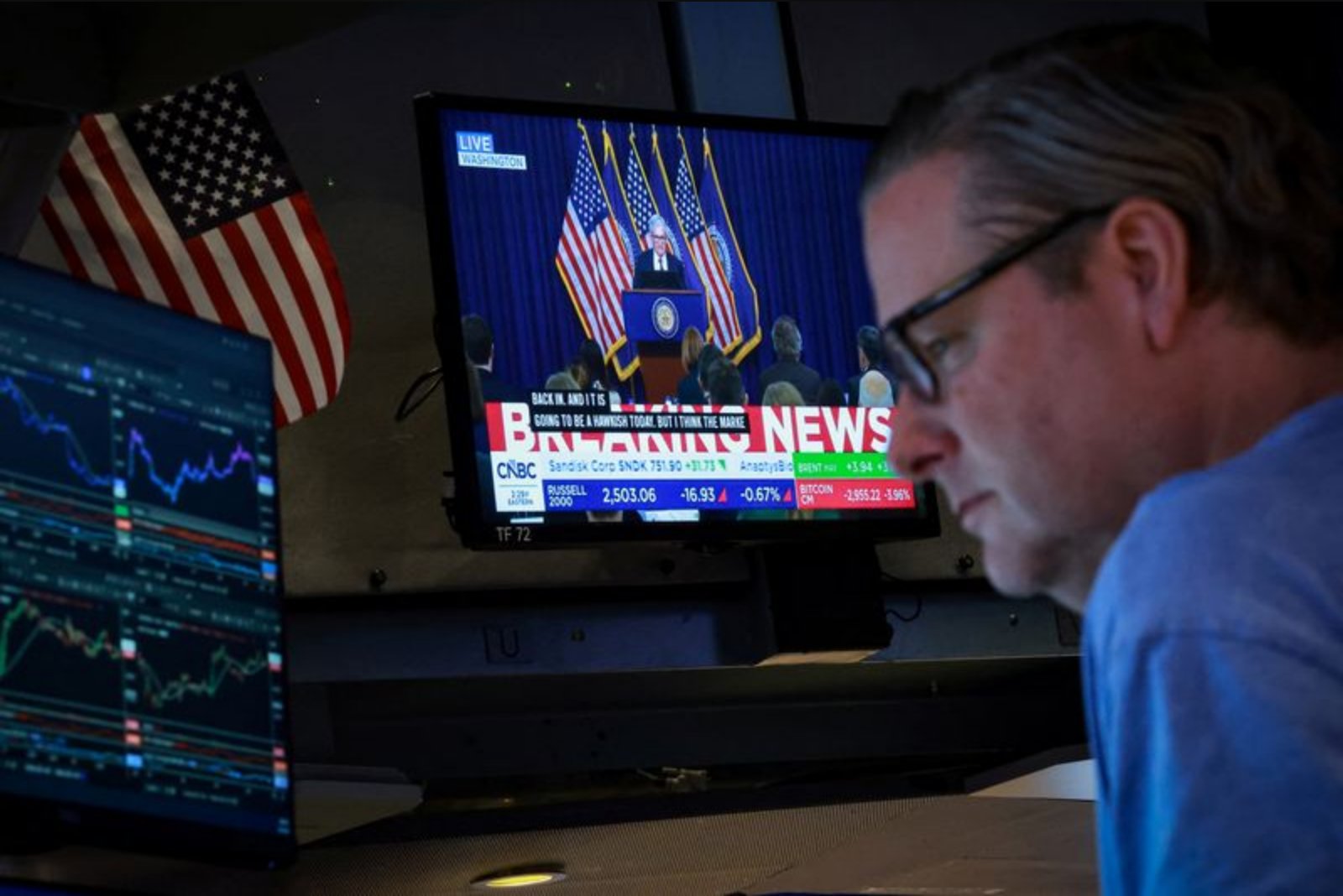
The Federal Reserve held interest rates steady at its recent meeting and Chair Jerome Powell warned of upward pressure on inflation. Powell cautioned it was too early to assess the economic consequences of the conflict and maintained the Fed's prior projection of one 25-basis-point rate cut this year.
Following the Fed decision, several major banks revised their rate-cut timetables. Morgan Stanley moved its expected first cut to September from June, joining Goldman Sachs and Barclays in delaying anticipated easing. Market pricing had already trimmed expectations for rate relief even before the Fed's announcement, and LSEG-compiled data suggested traders saw a dovish shift only as far out as mid-2027.
Commenting on the policy stance, Bill Adams, chief economist for Comerica Bank, said: "The big takeaway from the Fed decision is that the Fed will not be riding to the economy’s rescue, even if gas and diesel prices keep rising. Monetary policy can slow growth and inflation, or it can speed up growth and inflation. But it can’t offset an energy supply shock, which weakens growth at the same time that it raises inflation."
At 05:27 a.m. ET, futures trading showed Dow E-minis down 135 points, or 0.29%, S&P 500 E-minis off 22.25 points, or 0.34%, and Nasdaq 100 E-minis lower by 118.25 points, or 0.48%. Stocks and bonds both sold off after the Fed decision, pushing the Dow and Nasdaq beneath their 200-day moving averages (DMA), while the S&P 500 hit a four-month low and approached its own long-term moving average. The 200 (DMA) is a technical indicator reflecting long-term momentum.
Market participants will be watching for any further commentary from policymakers later in the day, along with the weekly jobless claims report. A U.S.-Japan summit was also highlighted as an event of interest; President Donald Trump may seek assistance on the conflict in Iran during that meeting after earlier calls for allies to help secure passage through the strategic Strait of Hormuz went unanswered.
Energy-sensitive travel names were modestly pressured by the surge in crude. Major carriers such as Delta Air and United Airlines traded marginally lower, and cruise operators including Norwegian and Carnival were largely muted.
Expectations for a higher-for-longer interest rate environment and a firmer U.S. dollar weighed on precious metals, hitting miners hard. Shares of Gold Fields and Endeavour Silver fell around 9% each.
The combination of elevated oil, a cautious Fed outlook and uncertain geopolitical developments has created a cross-market ripple affecting equities, commodities and fixed income. Traders and portfolio managers cited the interplay of energy supply concerns, shifting rate-cut timelines and technical sell-offs as the main drivers in this session.
Key points
- Crude prices spiked to $115 a barrel for Brent after Iran attacked energy facilities, intensifying inflation concerns and pressuring markets.
- The Fed left policy rates unchanged, signaled higher inflation risks and stuck with a forecast of one 25-basis-point cut this year, prompting several banks to delay their own cut expectations.
- Sector impacts included weakness in memory chip stocks and tech names, modest softness in energy-sensitive travel and cruise companies, and steep declines in precious metals miners amid expectations of higher rates and a stronger dollar.
Risks and uncertainties
- Geopolitical escalation in the Middle East could further lift oil prices - affecting energy, transportation and inflation readings - while the economic fallout from such a supply shock remains uncertain.
- The Fed's decision to delay rate cuts and banks' revised timelines for easing add uncertainty for interest-rate-sensitive sectors, including housing, consumer discretionary and miners.
- Technical market pressure, illustrated by major indices slipping below their 200-day moving averages and the S&P 500 hitting a four-month low, raises the possibility of broader risk-off positioning among investors.
Investors will be watching incoming economic data and policy commentary for signals on how long elevated energy costs and tighter financial conditions might weigh on growth and inflation. In the near term, market direction will likely hinge on developments in the Middle East, any further policy guidance from the Fed, and updates to corporate spending plans in an environment of higher borrowing costs.