
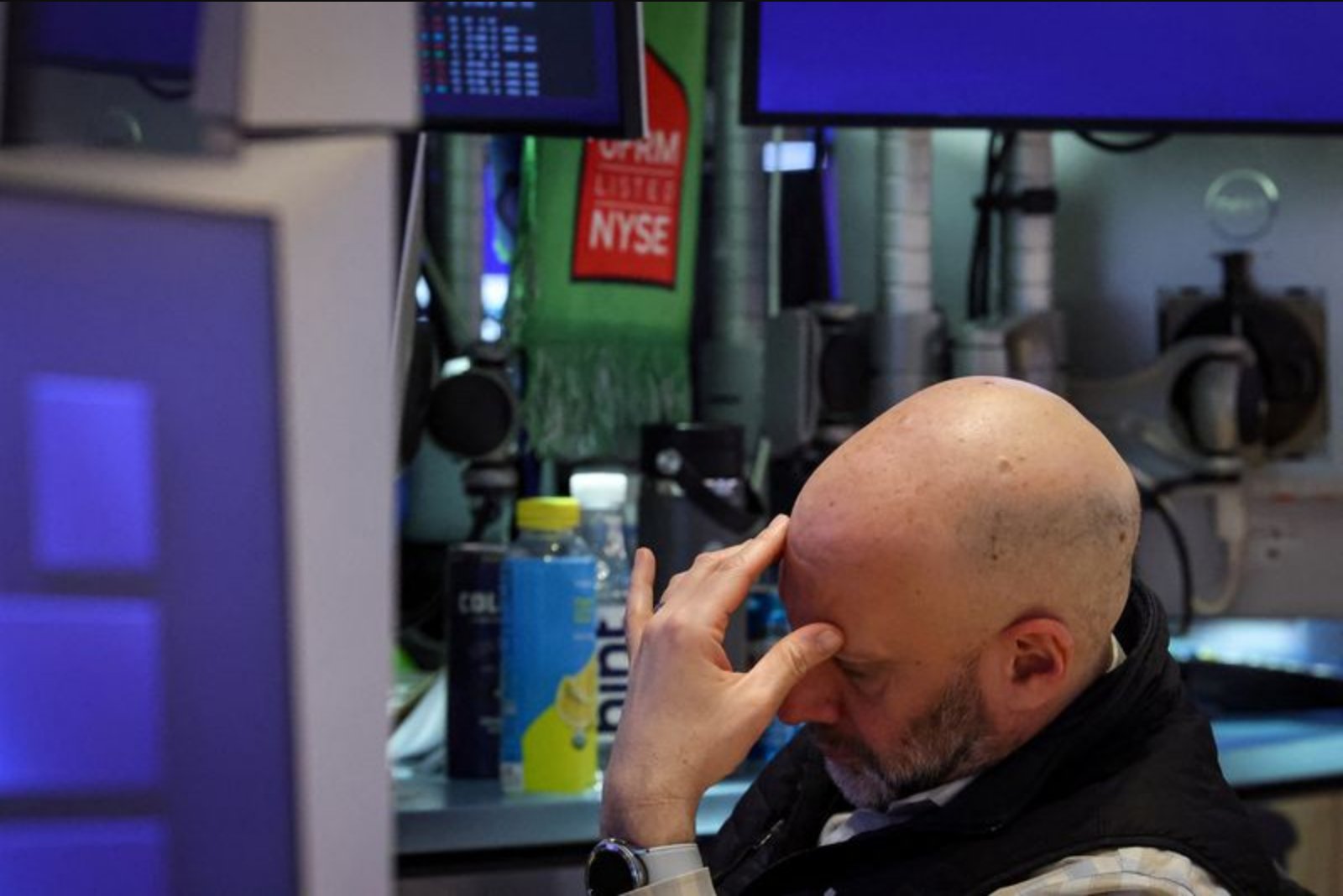
Expectations that artificial intelligence could profoundly reshape corporate economics are keeping equity investors on edge, with momentum in some sectors offset by renewed caution elsewhere as key economic and corporate data arrive next week.
At the center of market attention is the monthly U.S. employment report, due March 6, which will be watched for confirmation of January’s surprising strength and for signals about the Federal Reserve’s next policy move. The jobs report for February is forecast to show an increase of 60,000 positions, according to a Reuters poll. By comparison, January saw payrolls rise by 130,000 and the unemployment rate tick down to 4.3%.
Investors and strategists say uncertainty about how AI will redistribute economic winners and losers has dominated trading recently, weighing particularly on sectors thought vulnerable to disruption. "There continues to be this...back and forth about who might be the victim and those that will actually emerge winners because they are harnessing AI as opposed to being replaced by it," said Kristina Hooper, chief market strategist at Man Group. "There is very little definitive right now about that, and so I think that will continue to be a concern."
The sensitivity of software stocks to AI developments remains acute. Nvidia, widely viewed as an AI bellwether, failed to soothe investor concerns with its latest quarterly report; the semiconductor giant’s shares fell by more than 5% on Thursday, dragging down the tech sector. Market participants remain focused on whether the company’s large hyperscaler customers will realize the returns necessary to justify the heavy spending on data centers and related infrastructure.
Despite pressure in technology, gains in other areas such as industrials and consumer staples have helped sustain broad indexes. The benchmark S&P 500 was up 0.9% in 2026 as of Thursday. "The U.S. equity market is sort of in its late cycle, trying to find the winners and losers of this new disruptive technology and pretty much treading water," said John Velis, Americas macro strategist at BNY.
The labor report and rate expectations
Next week’s payrolls release is expected to provide insight on two fronts: the near-term health of the labor market and how quickly investors expect the Fed to ease policy. Fed funds futures currently imply the next rate reduction will arrive in June or July, timing that assumes a change in Fed leadership after Chair Jerome Powell’s term ends in May and Kevin Warsh, his nominated replacement, could be in place.
The Federal Reserve cut rates last year amid signs of a softening jobs backdrop but paused the easing cycle in January. A firm jobs print could prompt markets to delay their expectations of further cuts, since stronger employment data typically reduces the case for near-term easing. "The market’s reaction to the jobs data will be telling for which factors are prominent for equity investors," Velis said. He added that strong employment figures followed by weak stock performance would underscore the importance of the rate argument for equities.
Some strategists caution against reading too much into one month of data. "We saw a good January jobs report, but we also have seen a really weak 2025 for the job market," Hooper said. Paul Nolte, senior wealth adviser and market strategist at Murphy & Sylvest Wealth Management, noted that the concern is whether January represented a one-off improvement or the start of a more durable trend.
Other data and corporate reports to watch
In addition to the employment release, investors will monitor reports on manufacturing and services activity, and the retail sales print for January, also due on March 6. On the corporate front, major semiconductor firm Broadcom is scheduled to report quarterly results on Wednesday, and retailers Best Buy and Target will also deliver earnings. Those company results are among the final contributions to the fourth-quarter earnings season.
Taken together, these releases are expected to provide additional context on how AI adoption is affecting demand, capital spending and labor needs across sectors. Wall Street is eager for any concrete evidence of AI’s economic impact, whether it is generating productivity gains or displacing jobs.
Policy, labor displacement and market psychology
Comments from policymakers and market practitioners reflect the broader unease. In an interview this week, outgoing Atlanta Fed President Raphael Bostic said the U.S. may be entering a period of structurally higher unemployment as firms deploy AI tools to save labor. Keith Lerner, chief investment officer at Truist Advisory Services, captured the market mood in a research note, saying: "Major technological shifts provoke both excitement and anxiety. More recently... optimism has begun to give way to heightened anxiety and increasingly bleak narratives about AI’s impact on work, productivity, and economic outcomes."
The interaction between employment conditions, corporate capital spending on AI-related infrastructure and investor expectations for interest rates will be central to market flows in the near term. With a cluster of important economic indicators and corporate updates due next week, investors will be parsing data to determine which industries are likely to be AI beneficiaries and which may face structural headwinds.
For now, the market sits in a delicate position: buoyed in parts by gains outside technology, yet vulnerable to reversals if either the labor data or corporate updates shift the calculus around interest-rate expectations or the economic consequences of AI adoption.