
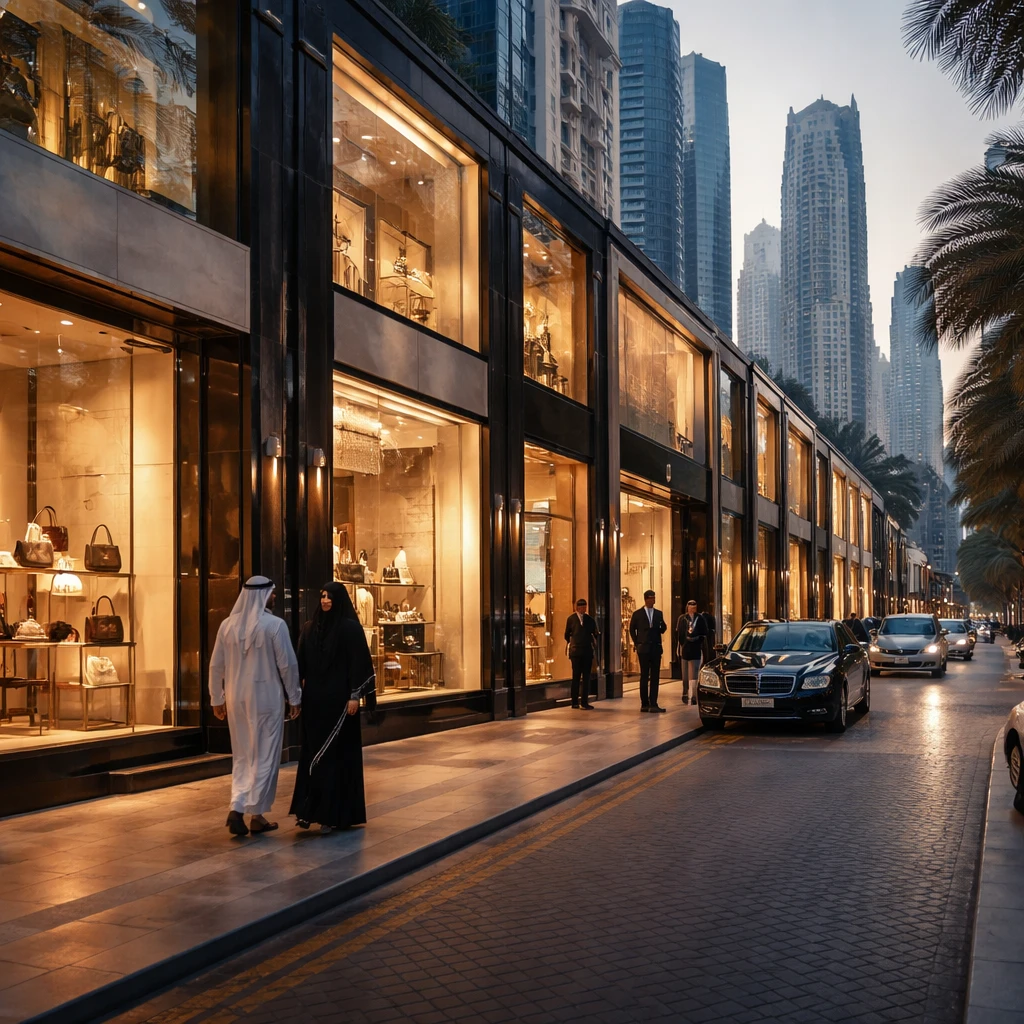
Global luxury houses are preparing for a localized downturn in sales after fighting in the Middle East intensified, though market watchers say much of the near-term valuation effect may already be reflected in prices.
A deep-dive report from Bernstein highlights the growing strategic importance of the Middle East to the luxury industry. The consultancy estimates the region now contributes about 6% of total sector sales, elevating it to a role comparable to Japan in recent years.
Concentration of exposure
Bernstein's analysis identifies the largest conglomerates as the most exposed. LVMH Moet Hennessy Louis Vuitton SE (EPA:LVMH), Compagnie Financiere Richemont SA (SIX:CFR) and Kering SA (EPA:PRTP) are estimated to derive roughly 8% of their sales from the Middle East, leaving them most vulnerable to a regional slump. By contrast, houses including Herm�s, Moncler SpA (BIT:MONC) and Salvatore Ferragamo SpA (BIT:SFER) are viewed as having the smallest footprints in the area and are therefore more insulated.
The report notes that "airport doors" remain largely closed, cutting into around 9% of the sector's retail network and limiting the usual flows of tourists who have driven a significant share of luxury spending.
How retailers are responding
With travel curtailed, brands are leaning on wealthy local customers. Sales staff have shifted tactics back to the kind of outreach used during the COVID-19 period, contacting high-net-worth individuals who are, in Bernstein's words, "sitting at home with little else to do but shop". This approach should blunt the worst of the disruption, the report suggests.
Bernstein projects March sales in the region will be cut by half rather than disappear entirely, equating to an estimated 100 basis-point headwind to total first-quarter sales for the sector. That impact is described as manageable in the near term.
Broader risks if conflict persists
Beyond the immediate retail interruption, Bernstein flags wider indirect effects if the conflict extends into the medium term. The Middle East was the fastest-growing geography for the luxury sector in fiscal 2025, with organic expansion of 6% to 8%. A protracted war could reverse those gains through higher energy costs, potential inflationary pressure and a weakening of global consumer confidence, Bernstein warns.
The geographic focus is on the United Arab Emirates and Saudi Arabia, which together house more than half of the region's luxury store base and are currently the least affected areas, with most boutiques still operating. Nonetheless, roughly 30% of global luxury sales are tied to travel, meaning a broader regional crisis would threaten the "hyper-tourism" phenomenon that has supported recent outperformance.
Market implications and outlook
Analysts cited in the report view the immediate fallout as largely already priced into current stock levels, but they emphasize that the course of the conflict will be a decisive variable for the industry's 2026 prospects. For now, firms are relying on outreach to local high-net-worth customers and the relative resilience of UAE and Saudi retail networks to cushion revenue losses.