
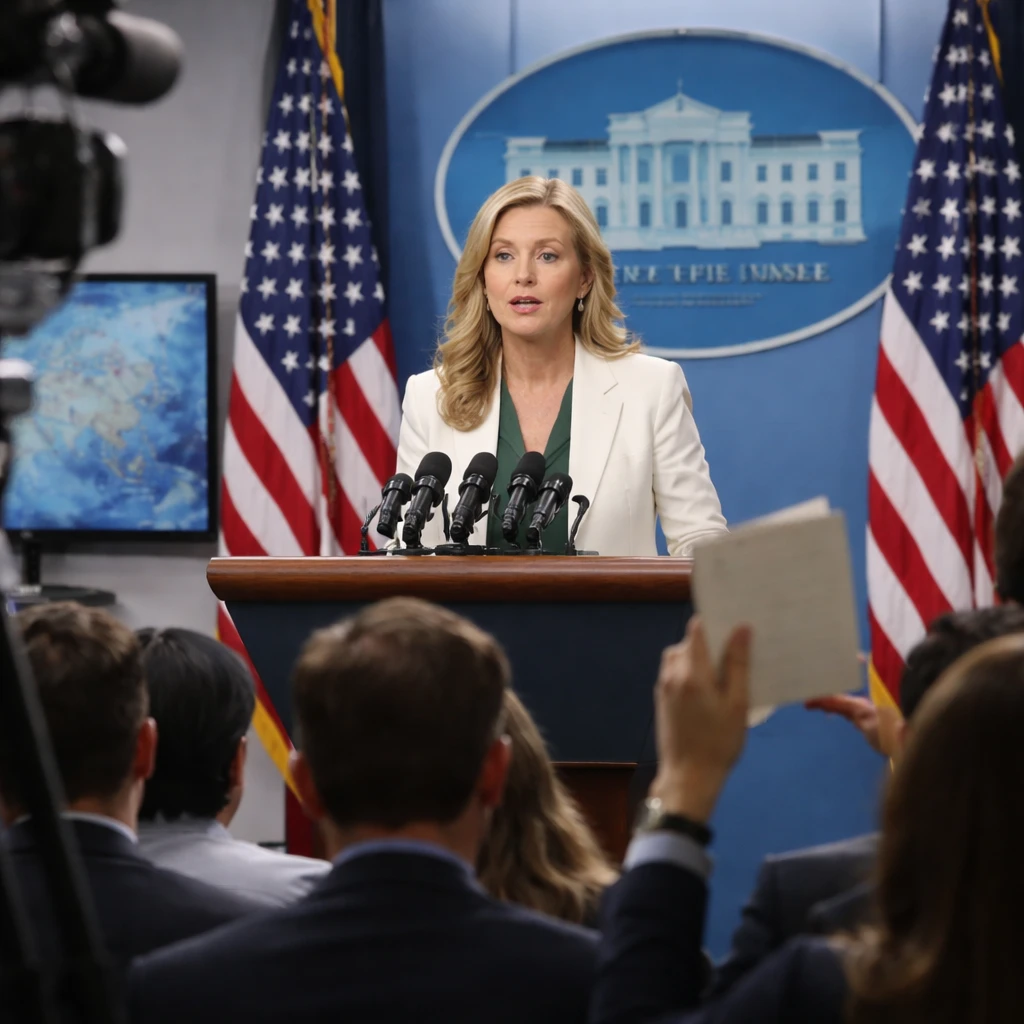
White House Press Secretary Leavitt made a string of foreign-policy statements Wednesday that touched on Iran, maritime transit through the Strait of Hormuz, and a postponed presidential trip to China.
On Fox News, Leavitt described the death of Iran’s Khatib as "a good thing for the US." He also told the network that the president retains full confidence in Tulsi Gabbard.
Turning to the strategic waterway at the center of regional attention, Leavitt said reopening the Strait of Hormuz would help NATO countries more than it would the United States. That observation was among several comments he offered both on television and in a subsequent session with reporters.
In his remarks to the press, Leavitt said the administration still counts obtaining Iran’s nuclear fuel as an option on the table. He framed this as one of the possible approaches available to policymakers, without outlining further steps.
Leavitt also confirmed that China has agreed to postpone the president’s planned trip to the country. He said officials are now working on selecting a new date for that visit.
The statements came in multiple forums on the same day: a televised interview and follow-up exchanges with journalists. Leavitt’s comments covered discrete subjects but together signal the administration’s current public posture on certain diplomatic and security matters.
What he said - concise points
- On Fox News, Leavitt called the death of Iran’s Khatib "a good thing for the US."
- He said the president continues to have full confidence in Tulsi Gabbard.
- Leavitt stated that reopening the Strait of Hormuz helps NATO countries more than the United States.
- He indicated that obtaining Iran’s nuclear fuel remains an option for the administration.
- He disclosed that China agreed to postpone the president’s planned trip and that officials are working on a new date.
Context and considerations
The remarks were delivered across a television interview and press interactions, and they address a range of diplomatic and security topics that the administration is publicly engaging with. Leavitt’s comments about the Strait of Hormuz and the administration’s stated options on Iran’s nuclear fuel were presented as current positions rather than steps already taken. On the China trip, Leavitt confirmed a postponement and noted active efforts to reschedule.
Note on scope: The account above summarizes what Leavitt said in those appearances and briefings. It does not add actions, timelines, or outcomes beyond the statements he made.