
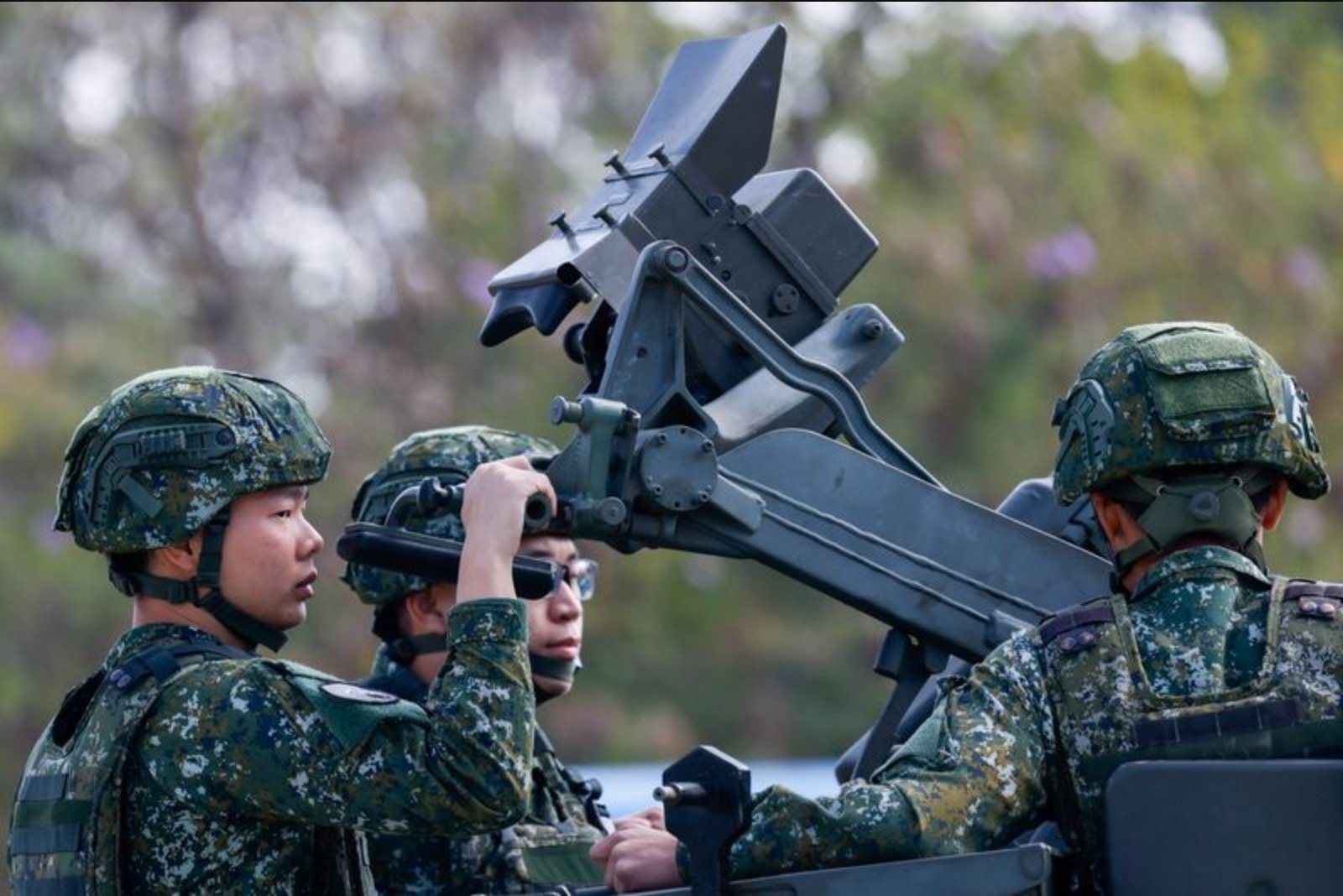
President Lai Ching-te said on Saturday that Taiwan's rapidly expanding economy gives the island the financial capacity to undertake an eight-year, $40 billion special defence budget aimed at countering an intensifying security threat from China.
Speaking at an event marking the 30th anniversary of Taiwan's first direct presidential election - an anniversary that recalls tensions from when China fired missiles into waters near the island - Lai framed the proposed defence package as both a security imperative and an economic opportunity. "With Taiwan's economic growth, we can absolutely afford it," he said, linking the funding plan to U.S. strategic language about collective defence and burden-sharing.
The president argued that his proposals reflect an alignment with the United States' National Security Strategy, which, he said, places emphasis on allied burden-sharing in defence. Lai presented the spending not solely as military expenditure but as a means to cultivate domestic industry, telling listeners that the budget will be used to advance defence-related industrial capacity and to harness artificial intelligence for real-time defence systems.
Despite Lai's insistence on the plan's affordability, the proposal has stalled in the legislature. The opposition, which holds a majority of parliamentary seats, has pushed back, saying the proposals lack clarity and rejecting what it describes as requests for unchecked spending. Lawmakers have refused to approve the full spending package so far.
To prevent delays from disrupting procurement timelines, parliament authorised the government on Friday to proceed with signing approximately $9 billion in arms deals with the United States, even though the broader spending plans remain unapproved. That measure was taken to avoid missing contractual deadlines tied to the arms agreements.
Taiwan's economy has been a central element in Lai's argument. The island, which is the dominant global producer of advanced semiconductors, has experienced a surge in demand tied to artificial-intelligence applications. Lai noted that Taiwan's economy expanded at its fastest rate in 15 years in 2025, a point he used to underline the financial room for the proposed defence package.
On questions of sovereignty and security, Lai reiterated his rejection of Beijing's claim over the island, stating that the determination of Taiwan's future lies solely with its people. China considers Taiwan part of its territory and has not renounced the use of force to achieve control. Recent steps by Beijing have included extensive military activity: it staged war games around Taiwan in December and continues to operate warships and warplanes in the vicinity of the island.
Contextual note - The article also included information about investing tools and data services that claim to help identify investment opportunities for 2026 by combining data and AI-powered insights. Those promotional remarks were presented separately from the coverage of Taiwan's defence and economic situation.