
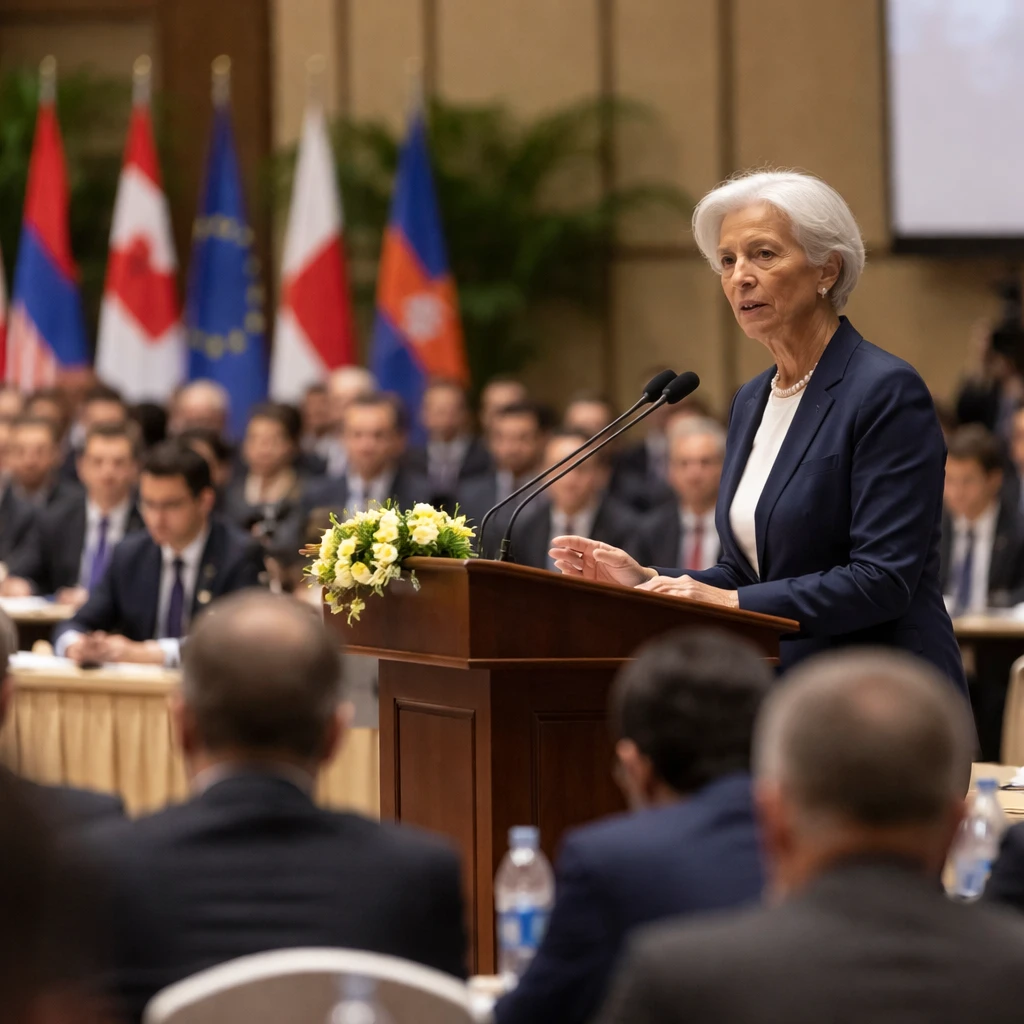
European Central Bank President Christine Lagarde said Thursday that the independence of the U.S. Federal Reserve remains under threat and will need sustained support from both voters and lawmakers to be preserved.
Addressing a gathering of central bankers from French-speaking countries in Cambodia, Lagarde described a challenging backdrop in which multiple economic shocks are simultaneously driving prices higher and slowing overall growth. She framed this combination as a source of increased pressure on the ability of policymakers to make decisions that governments might find politically difficult.
Lagarde underscored that preserving central bank independence is not a task that falls to monetary authorities alone. She said credibility is a key element of protection - implying that trust in a central bank's commitment and consistency supports its capacity to act without political interference.
The ECB president also argued that maintaining independence involves a clear prioritization of inflation management. She called for concentrating narrowly on inflation as the primary objective and taking necessary measures to rein in price increases, even when those actions carry an economic cost.
Reiterating the primacy of price stability, Lagarde emphasized that defending this goal may entail real and immediate costs, but must remain the central focus for policy makers. Her remarks linked the maintenance of central bank credibility and independence directly to a willingness to confront inflation despite short-term trade-offs.
Key points
- Lagarde warned the Federal Reserve's independence is at risk and will require ongoing support from voters and lawmakers - impacting confidence in central-bank decision making.
- She connected the threat to a set of economic shocks that are lifting prices while slowing growth - a dynamic that affects inflation-sensitive sectors and the broader financial markets.
- Lagarde said independence can be defended by focusing squarely on inflation as the main objective and being prepared to act even when measures impose economic costs - a stance with implications for interest-rate policy and market expectations.
Risks and uncertainties
- Political and public support may waver - if voters or lawmakers withdraw backing, central bank autonomy could be weakened, affecting monetary policy credibility. This risk touches financial markets and institutions that rely on predictable policy.
- Concurrent economic shocks that raise prices while slowing growth create policy dilemmas - these conditions increase the probability of difficult trade-offs between inflation control and near-term economic performance, with potential effects on consumers and inflation-sensitive industries.
- Actions to defend price stability can impose immediate economic costs - pursuing tighter policy to curb inflation may slow activity in parts of the economy and influence market rates and investment decisions.
Lagarde's remarks stressed the interdependence of credibility, independence, and a clear inflation mandate. By urging a narrow focus on price stability and underscoring the need for external support from democratic institutions, she highlighted the delicate balance central banks face when confronting simultaneous inflationary and growth pressures.