
Summary
European Central Bank President Christine Lagarde said the ECB will preserve a flexible, data-focused approach to monetary policy as developments in the Middle East continue to play out. Speaking in Bologna, Lagarde emphasized that policy choices will be taken on a meeting-by-meeting basis rather than according to a preset plan, and that the bank will scrutinize incoming information before acting.
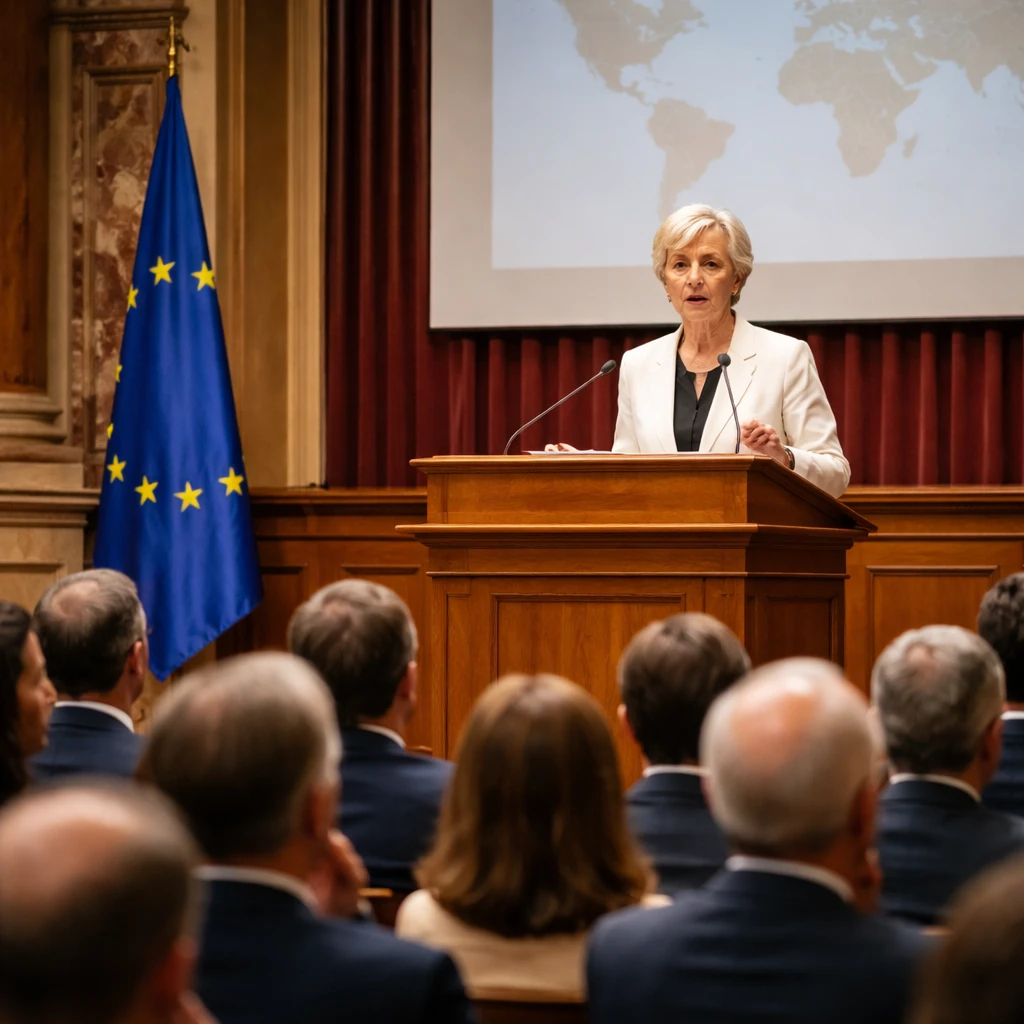
Speaking at Johns Hopkins University in Bologna, Italy, Lagarde laid out the ECB's posture in the face of mounting regional tensions. She said the central bank intends to evaluate data at each policy meeting and avoid committing to a predetermined course. "We will decide our monetary policy meeting by meeting based on data, we have no pre-set stance," she said during a question and answer session.
Lagarde underscored the analytical basis for that flexibility, saying the ECB will rely on the full set of information it can gather and assess. "The ECB will base its decisions 'in view of all the data that we can harness, and that we can analyse, and that we can scrutinize with sufficient confidence,'" she said.
She argued that combining a data-driven methodology with the absence of a pre-specified policy pace "places the ECB and the euro system in a good position to monitor very carefully and to try to understand what the consequences of the current shocks will be in the future."
The remark came amid geopolitical developments in the Gulf. The U.S.-Israeli war on Iran has expanded to include other Gulf countries, raising concerns about potential impacts on inflation and euro zone growth through higher energy costs and supply chain disruptions. Lagarde said the bank will watch these global developments and evaluate their potential effects. "We will monitor global developments very carefully and assess impact of current shocks for the future," she said.
Lagarde's comments frame the ECB's immediate strategy as one of cautious observation and ongoing assessment. By signalling a meeting-by-meeting decision process, the bank is prioritizing real-time data over a fixed trajectory, while keeping a close eye on how disruptions linked to the conflict could feed into prices and growth dynamics in the euro area.
Key points
- The ECB will adopt a meeting-by-meeting policy approach and has no preset stance.
- Decisions will be grounded in the available data that the bank can gather and scrutinize with confidence.
- Geopolitical tensions in the Middle East are being monitored for their potential effects on inflation and euro zone growth through energy costs and supply chain channels.
Risks and uncertainties
- Escalation of the conflict could push energy costs higher, presenting upside risks for inflation and affecting energy-sensitive sectors.
- Supply chain disruptions tied to the broader Gulf conflict could weigh on euro zone growth and impact manufacturing and trade-dependent industries.
- The timing and magnitude of these shocks remain uncertain, requiring the ECB to rely on incoming data rather than a fixed policy path.