
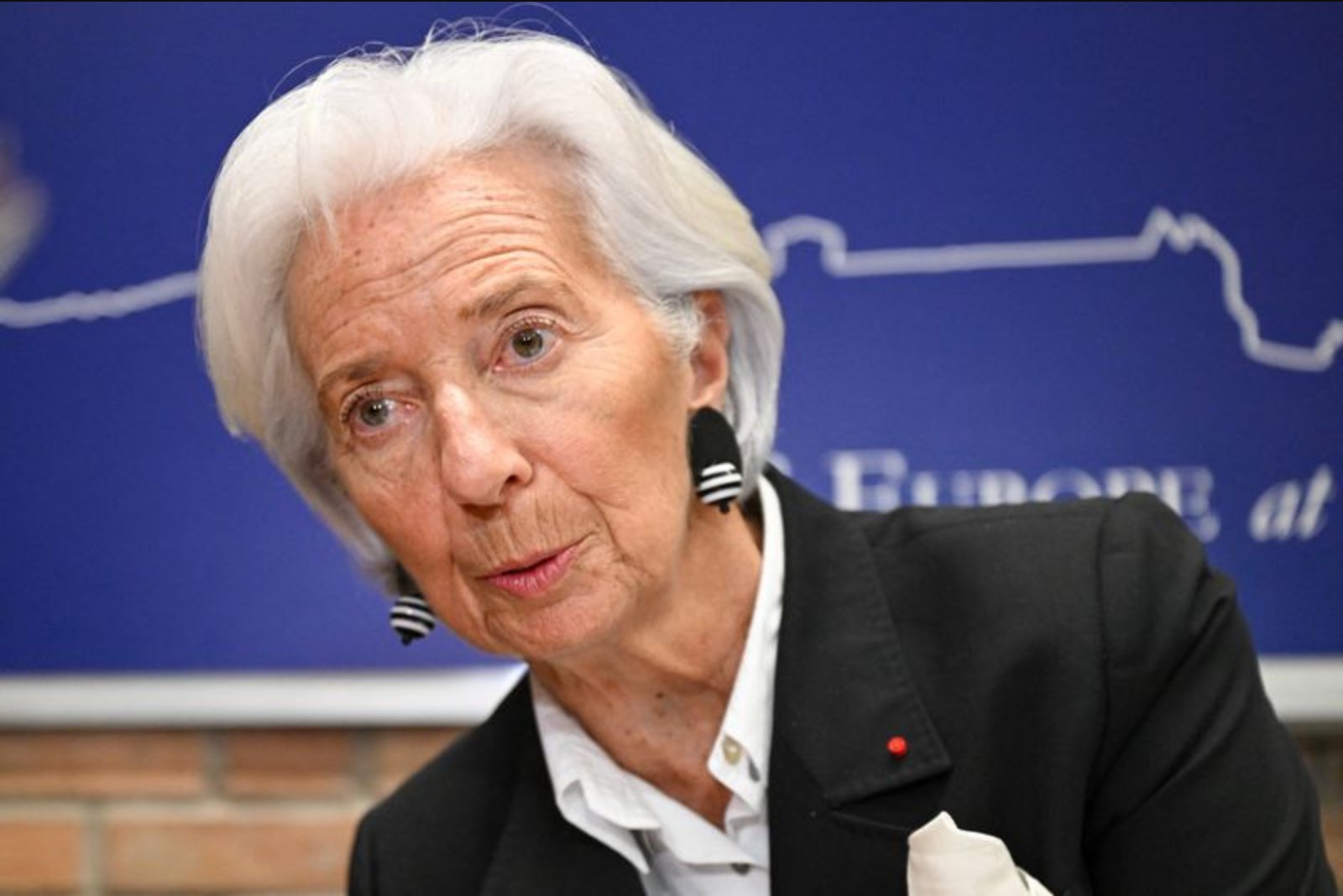
BOLOGNA, Italy, March 5 - European Central Bank President Christine Lagarde said on Thursday the bank has not adopted a fixed policy response to the geopolitical tensions arising from the conflict in the Middle East and will instead decide monetary policy on a meeting-by-meeting basis.
Speaking during a question-and-answer session at Johns Hopkins University in Bologna, Lagarde said the ECB will take decisions "in view of all the data that we can harness, and that we can analyse, and that we can scrutinize with sufficient confidence."
She added that there is "preset pace for our monetary policy stance. And I think that if you bring these two elements together, it places the ECB and the euro system in a good position to monitor very carefully and to try to understand what the consequences of the current shocks will be in the future."
Lagarde's remarks came as conflict in the Middle East intensified. The U.S.-Israeli war on Iran, which has spread to other countries in the Gulf, is cited as creating the risk of upward pressure on inflation and further strain on the euro zone's sluggish growth. The transmission channels mentioned include higher energy prices and potential disruption to supply chains.
The ECB's emphasis on taking a case-by-case approach reflects an intent to assess evolving data points before altering its policy stance. By relying on the full set of available information, the bank aims to calibrate its response to how the geopolitical shocks actually affect inflation dynamics and economic activity over time.
For policymakers, the balance is between remaining vigilant to inflationary pressures that could be amplified by energy cost shocks and avoiding premature policy shifts in response to transitory developments. Lagarde framed the ECB's approach as one that combines a preset pacing of policy with flexible, data-driven decision-making to track the medium-term implications of the recent disruptions.
Market and sector implications
- Energy markets may experience upward price pressure if the conflict heightens supply concerns.
- Supply-chain sensitive sectors could face further disruptions that weigh on activity in the euro zone.
- Monetary policy-sensitive markets will watch incoming data closely for signs of persistent inflation or slowing growth.