
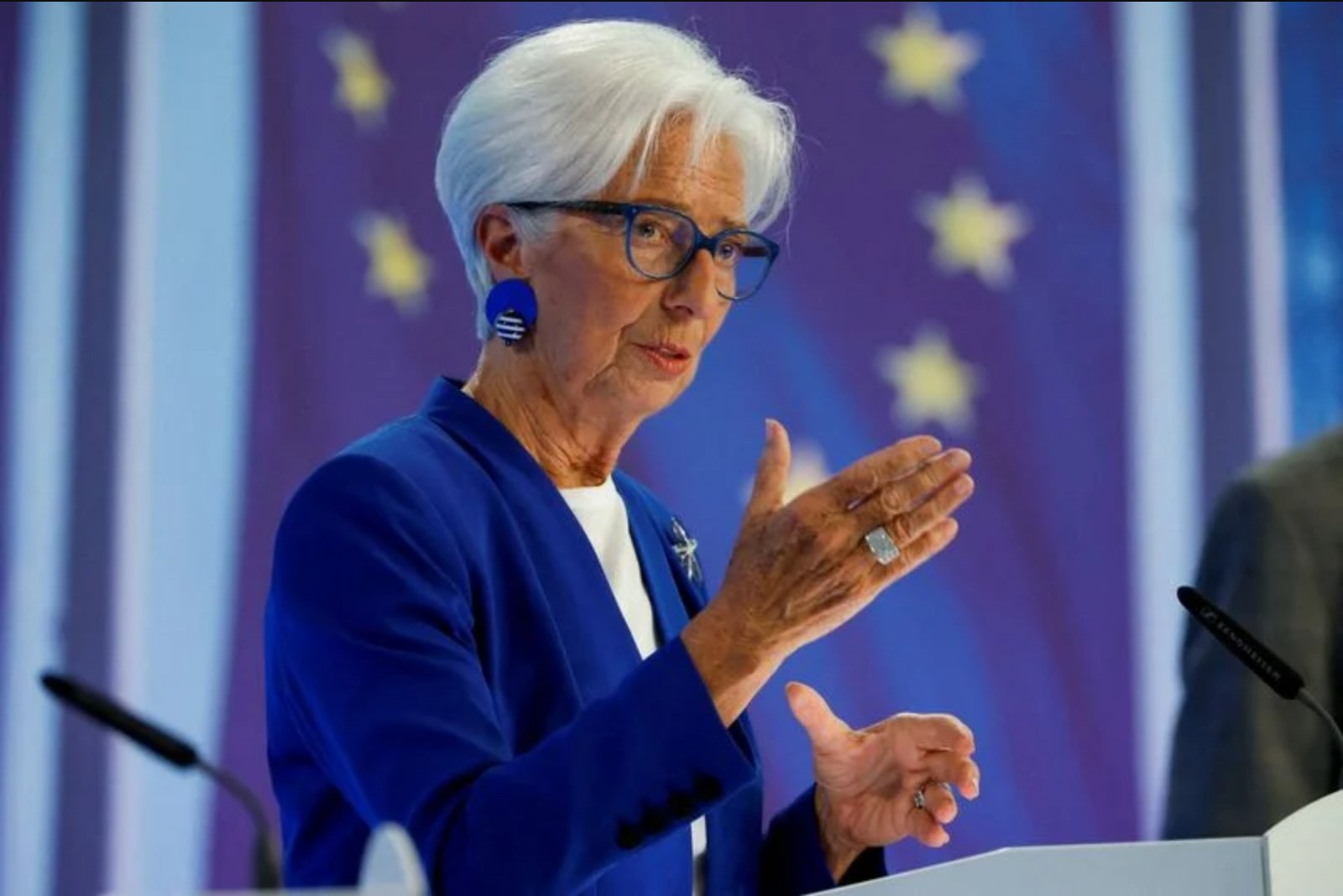
FRANKFURT, June 22 - European Central Bank President Christine Lagarde on Monday urged global leaders to take up the question of Chinese currency undervaluation as part of a wider conversation on macroeconomic imbalances that she warned threaten the global economy.
Lagarde said the Chinese currency, the renminbi, has been identified in International Monetary Fund research as being roughly 15-16% undervalued once the nominal exchange rate is adjusted for international differences in inflation. She presented that finding as one element in a set of distortions weighing on international trade and growth.
"That’s the situation as it is, which justifies completely the fact that there has been, and I hope there will be, further discussions of excessive imbalances, which include a currency aspect to it, between the G7 leaders and beyond," Lagarde said at an event in Brussels.
Leaders of the Group of Seven met last week in France and, according to Lagarde, expressed concern about a range of macroeconomic mismatches. Alongside the Chinese trade surpluses that have risen sharply, the G7 discussion also highlighted persistent U.S. deficits and what Lagarde described as underinvestment within Europe.
Lagarde noted that Europe has found it increasingly difficult to compete with China in areas it once led, citing high-end automobiles as one example. She linked that competitive pressure in part to the lower prices of some Chinese-made goods.
While urging further dialogue on imbalances that have a currency component, Lagarde explicitly rejected the idea of reviving a 1980s-style, coordinated effort to alter exchange rates. On the prospect of a new Plaza Accord - the 1985 international agreement aimed at weakening the dollar - she said the circumstances underpinning that deal were different.
"Times were different," she added, pushing back on proposals for a similar intervention today.
Lagarde's comments framed currency valuation as one of several interconnected pressures shaping international economic relations. By citing IMF analysis and the recent G7 discussions, she signaled a push for multilateral talks that would address trade balances, fiscal positions and investment gaps together rather than in isolation.
Observers will be watching whether the call for deeper discussion at the G7 level and beyond translates into concrete policy coordination or remains a diplomatic appeal aimed at drawing attention to structural imbalances.