
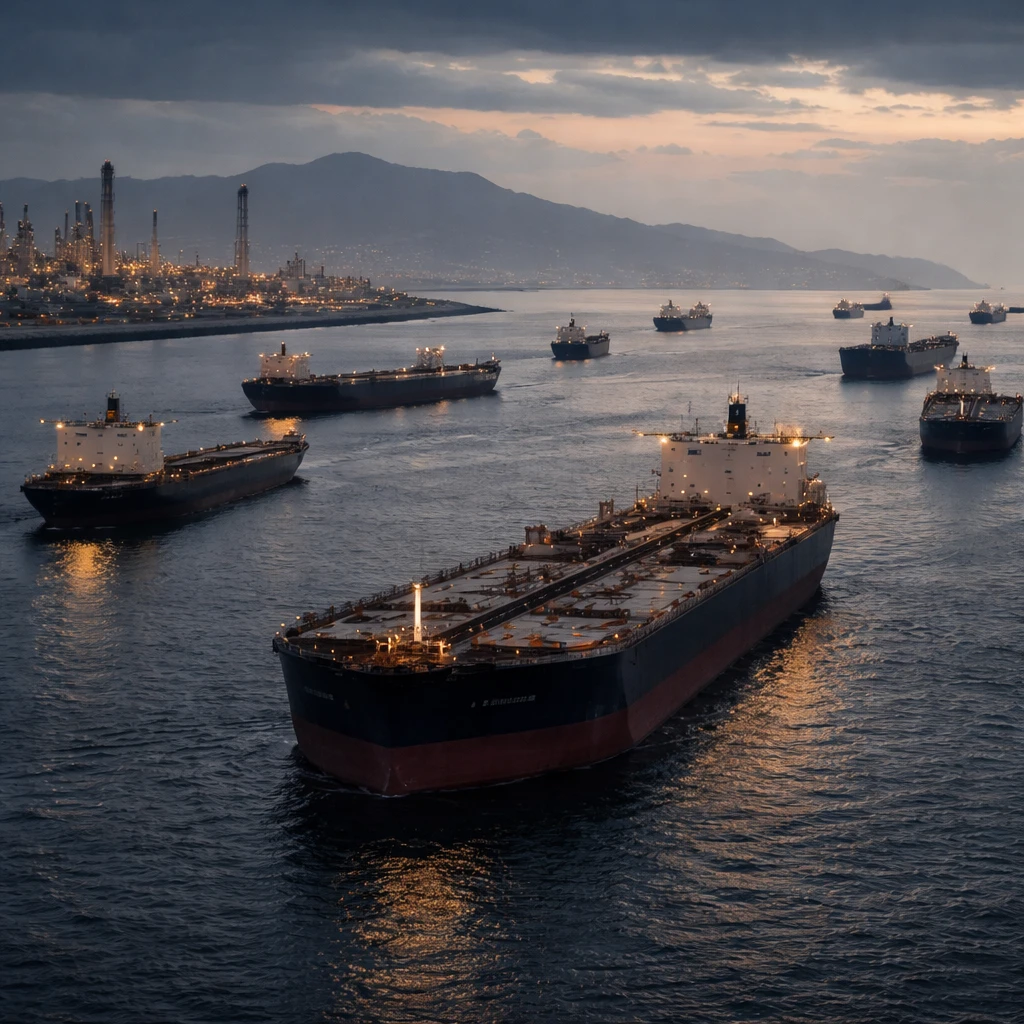
Kuwait has acknowledged that it reduced oil and refinery production on Saturday, attributing the decision to disruptions tied to a decline in shipping activity through the Strait of Hormuz.
In an official statement, Kuwait Petroleum Corp. said the company implemented the cuts as a precautionary measure because maritime traffic in the strategic waterway had slowed. The statement explicitly linked the reductions to what it described as threats to shipping safety, saying the output changes were taken because of the “ongoing aggression by the Islamic Republic of Iran against the state of Kuwait, including Iranian threats against safe passage of ships through the Strait of Hormuz.”
The announcement places Kuwait among several Persian Gulf energy producers that have reported interruptions to supply as regional tensions have escalated. The company framed the move as a defensive operational step in response to the deteriorating security environment around the transit route.
Other regional developments outlined alongside Kuwait’s actions in official and public reporting show a pattern of disruptions affecting the energy supply chain. Iraq began trimming its oil production earlier in the week after a sharp slowdown in Strait of Hormuz shipments led to storage sites reaching capacity. Separately, Saudi authorities halted operations at their largest refinery, and Qatar took its world-leading liquefied natural gas export facility offline following drone strikes.
Taken together, these incidents underscore the vulnerability of global energy supply chains to interruptions in one of the world’s most consequential oil and gas transit corridors. Slower vessel movements through the Strait of Hormuz can cascade into filled storage facilities, curtailed output at producing fields and refineries, and temporary suspension of LNG exports, according to the sequence of events reported by regional producers.
Precise operational details about the scale of Kuwait’s cuts, the duration of the reductions, and the specific facilities affected were not provided in the statement. Likewise, the broader economic implications for markets and freight flows will depend on how long maritime activity remains constrained and whether additional producers take similar steps.
Summary
Kuwait Petroleum Corp. confirmed a reduction in crude and refinery throughput after shipping through the Strait of Hormuz slowed. The company cited alleged Iranian aggression and threats to the safe passage of ships as the rationale. The action adds to a series of supply disruptions across Gulf energy producers, including production curbs in Iraq, a refinery shutdown in Saudi Arabia and a temporary halt at Qatar’s LNG export facility.