
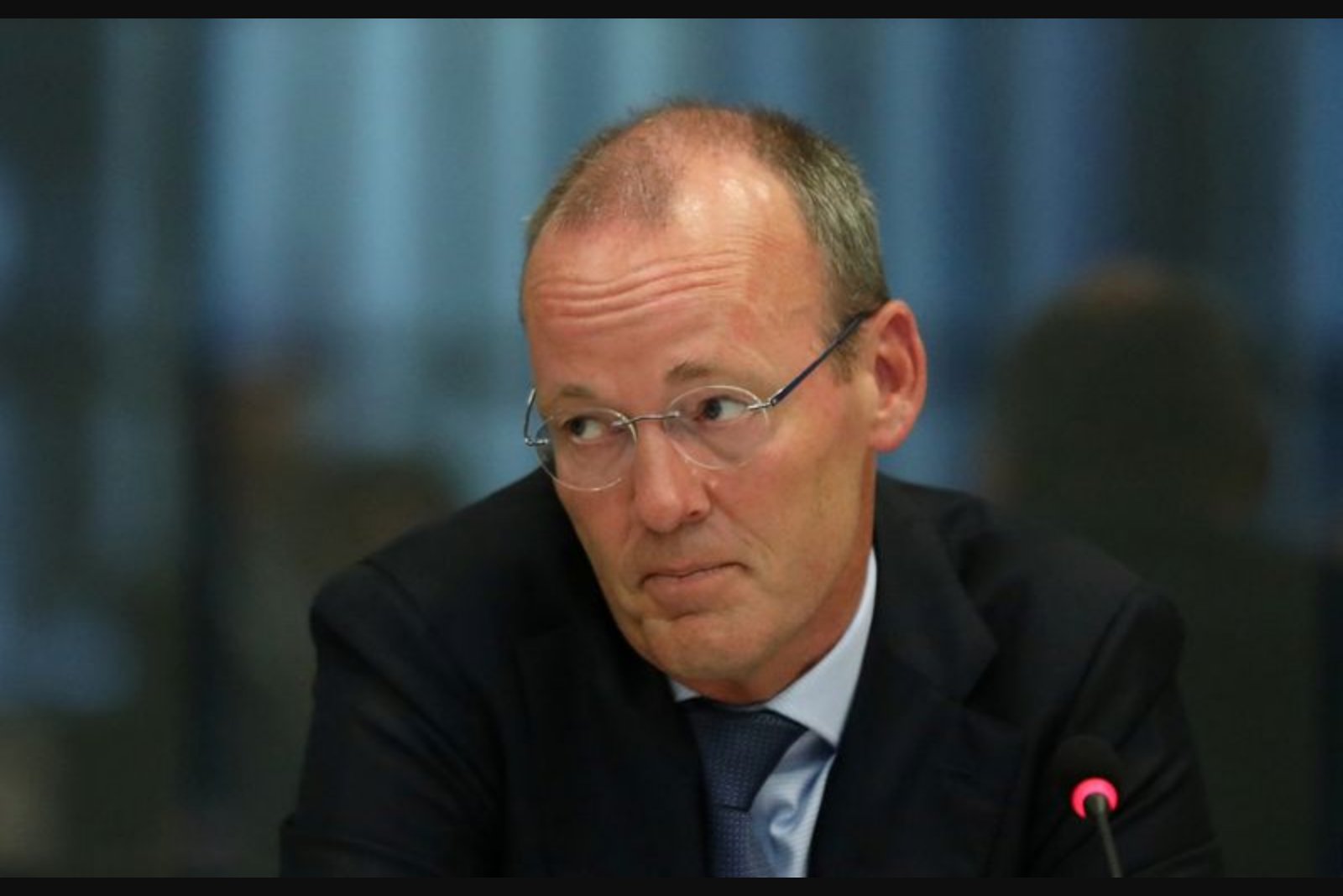
European policy circles are increasingly viewing the former governors of Spain and the Netherlands as the foremost candidates to assume senior leadership at the European Central Bank (ECB) if Christine Lagarde steps down ahead of her term's scheduled end. Officials and economists say an early exit by Lagarde would likely be resolved as part of a broader political negotiation that could assign major roles to both former governors.
Reports indicate Lagarde intends to vacate her post prior to the official end of her mandate to allow outgoing French President Emmanuel Macron to participate in selecting her successor before the presidential election season, which some fear could yield gains for the eurosceptic far-right. That timeline has led market participants and policymakers to anticipate a coordinated filling of not just the presidency but multiple Executive Board positions.
Why a package deal is likely
There are three Executive Board vacancies that will need to be addressed in the near term: Lagarde's own seat, the position held by chief economist Philip Lane due in May 2027, and Isabel Schnabel’s slot at the end of 2027. Economists say the temporal proximity of these openings and the shared pool of qualified candidates make a linked, compromise resolution almost inevitable.
"It’s certain that these decisions will be linked to each other and put in some compromise deal," Piet Haines Christiansen, chief strategist at Danske Bank, said, reflecting a commonly expressed view among analysts that trade-offs across nominations are the norm in such high-level European appointments.
Front-runners and their profiles
Two names consistently surface in commentary: Klaas Knot, the former head of the Dutch central bank, and Pablo Hernández de Cos, the ex-governor of Spain's central bank. Both men served as national central bank governors and were members of the ECB's rate-setting Governing Council, giving them institutional experience and familiarity with the euro area's policy framework.
Knot has been associated with a policy hawk stance during parts of his tenure, frequently dissenting from more accommodative approaches under prior leadership, though his tone reportedly softened toward the close of his mandate, which concluded last June. Hernández de Cos is generally seen as more dovish, but he demonstrated flexibility in 2022 when rising inflation prompted him to alter his views. He moved to head the Bank for International Settlements only last summer, a development some analysts say could influence the timing and attractiveness of potential nominations.
Analysts argue that the order in which positions become vacant could influence who is favoured for the presidency. If the top job opens up immediately, Knot’s recent profile as a pragmatic hawk may give him an advantage. "It could boost Knot’s chances, which is a good outcome because he has credibility and a good reputation as a pragmatic hawk," said Frederik Ducrozet, head of macroeconomic research at Pictet Wealth Management. Ducrozet also warned that Hernández de Cos might be perceived by some as "a little too dovish," a characterization tied to the policy preferences that tend to favour higher-debt southern economies over lower-debt northern ones.
Other observers point to different balancing considerations. Spain has not previously held the ECB presidency, while the Netherlands has, and recent appointments at the central banking level have included hawkish figures from other smaller euro-area countries - notably Croatia’s central banker, Boris Vujcic, who was chosen as the ECB’s vice-president and is known for a hawkish stance. Nomura economist Andrzej Szczepaniak suggested these factors could favour Hernández de Cos despite concerns about his perceived dovishness.
Other contenders and political dynamics
Germany’s Bundesbank chief Joachim Nagel has shown interest in the top ECB role, and existing Executive Board member Isabel Schnabel is also considered a potential candidate, although she may face legal constraints linked to Executive Board term renewals. Notably, Europe’s largest economy has never held the ECB presidency despite hosting the institution in Frankfurt.
Economists interviewed for this piece agreed that the current field of potential appointees is broadly regarded as competent and likely to preserve the ECB’s hallmark of policymaking independence. That brand of independence is under strain elsewhere - the United States has seen public pressure on its central bank from the White House, and in Britain, the Reform UK party has proposed changes to the Bank of England and the budget office. Against this backdrop, the selection of an ECB president with strong market credibility is seen as a priority.
Rebecca Christie, a senior fellow at Bruegel, summarized this sentiment: "Everyone wants to keep the ECB in stable hands and they want the person who is ECB president to have strong market credibility. All the top candidates right now have that."
Timing, wildcards and procedural notes
Observers cautioned that governments across the euro area, which formally select the ECB president before the European Parliament conducts its ratification, could produce an unexpected nominee - history demonstrates surprises are possible. The appointment process typically intertwines with other European leadership negotiations, such as those for the President of the European Commission, creating room for political trade-offs. In the previous round of selections, the commission presidency went to Germany’s Ursula von der Leyen, a move that facilitated France securing the ECB presidency.
Some analysts suggest an early departure by Lagarde could change those dynamics. Spyros Andreoupoulos, founder of Thin Ice Macroeconomics, said an early exit might decouple the ECB presidential selection from the broader Commission negotiations, especially since the current Commission presidency runs until 2029. But consensus remains elusive. As a note to clients, Dutch bank ABN-Amro observed: "It is really too early in the process to have strong convictions on the identity of the next President. There may well be some politics in the decision, which opens the door to new candidates."
Complicating the political arithmetic further, France’s central bank governor Francois Villeroy de Galhau resigned last week, creating an additional appointment for President Macron to fill before the 2027 presidential election season intensifies.
What this means for markets and policy
Market participants and policymakers attentive to central bank independence will watch the nominations closely. The likely outcome, at least among the candidates currently discussed, is continuity - a set of appointments that maintain policy credibility and reduce the risk of sudden directional shifts in interest rates. Yet the final composition of the ECB’s leadership will ultimately be shaped by the political negotiations among member states and the broader European institutional appointments process.