
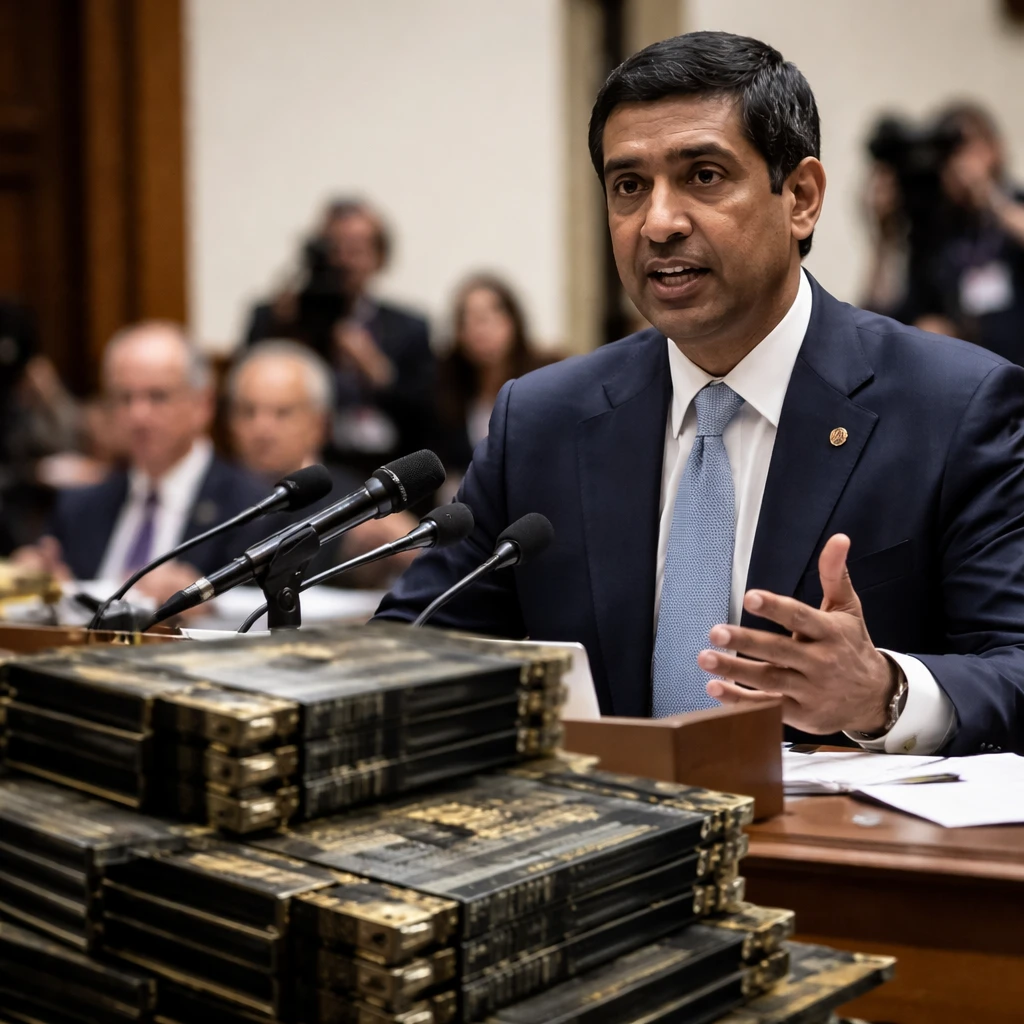
Representative Ro Khanna, a California Democrat who recently assumed the role of ranking member on the House Select Committee on China, said he could support allowing sales of older Nvidia chips to China while preserving limits on access to newer-generation semiconductors.
Speaking to reporters following his first committee hearing in the new post, Khanna did not explicitly endorse President Donald Trump’s decision to permit sales of Nvidia’s H200 artificial intelligence chip to China. Instead, he described a stance focused on maintaining a technological advantage before broadening exports of previous-generation devices.
Khanna said the United States should draw a line between the most advanced processors and earlier iterations. "We certainly shouldn’t be sending them Rubins. We shouldn’t be sending them Blackwells," he said. He added that after the U.S. holds a "two-year, three-year advantage," he would be comfortable ensuring that older chips are available for everyday applications, noting, "that our chips are being used in refrigerators and dishwashers and that that is something that we’re selling."
The H200 chip, released in 2024, is part of Nvidia’s "Hopper" generation. That generation predates the company’s current "Blackwell" architecture and the forthcoming "Rubin" chips that are expected later this year. Khanna’s remarks indicate a willingness to distinguish between generations when considering what technologies to allow for sale.
Khanna’s approach marks a change from the position of his predecessor on the committee, Illinois Democrat Raja Krishnamoorthi. Krishnamoorthi co-sponsored legislation last year that would have blocked sales of such chips to China. In contrast, Khanna suggested a phased approach tied to maintaining a lead in capability before permitting wider export.
At the same time, the committee’s Republican chair criticized the decision by the administration to allow H200 sales to China, reflecting continued disagreement within Congress over how to balance commercial access and national security concerns.
Khanna’s comments represent an early statement of policy preferences as he settles into his new committee role and help frame how the panel may approach semiconductor export questions going forward.