
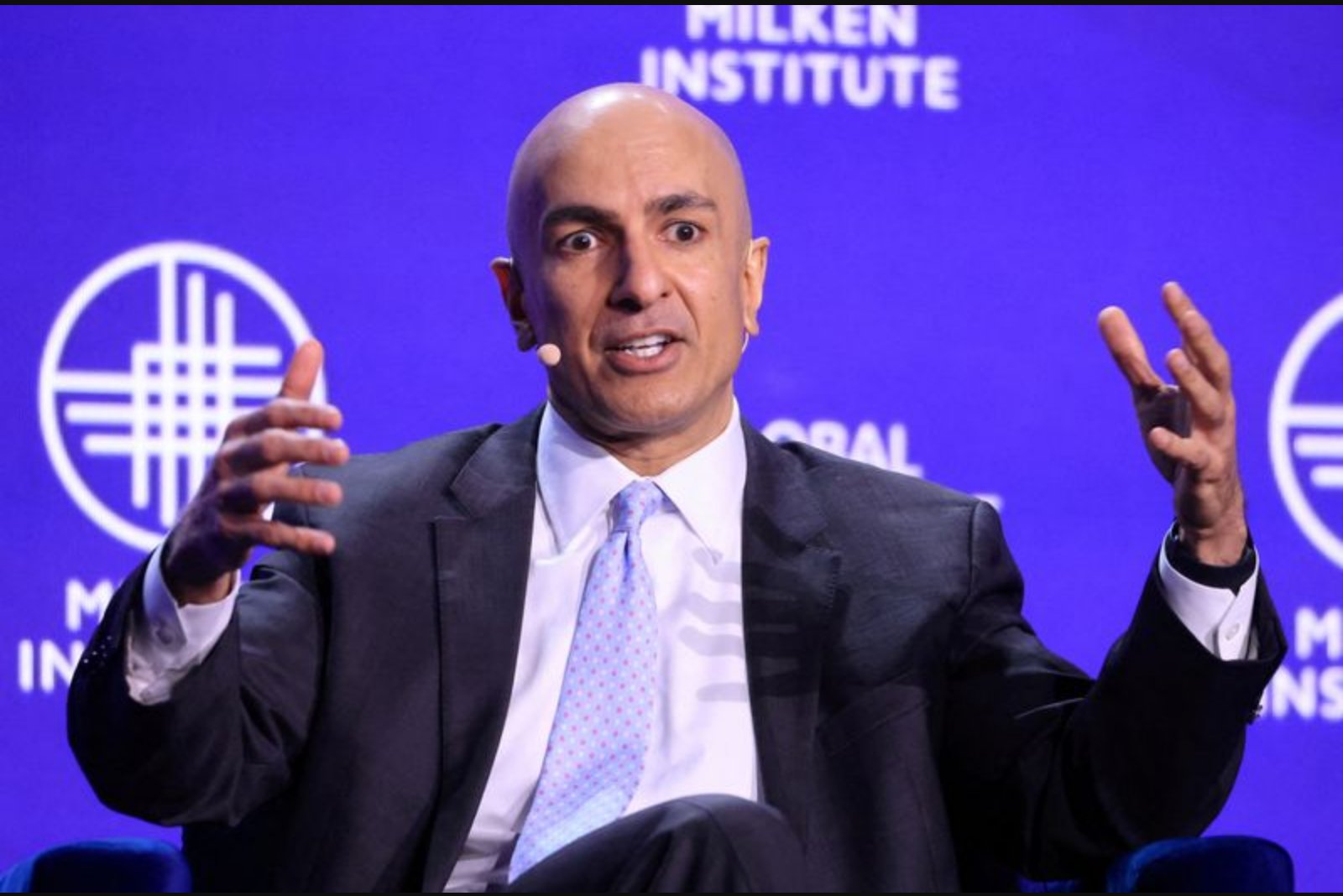
TOKYO, May 27 - Minneapolis Fed President Neel Kashkari said policymakers must keep their attention on inflationary pressures that appear to be building worldwide, even as he declined to predict when the Federal Reserve might next change interest rates.
Speaking in Tokyo, Kashkari described an "inflationary shockwave" emanating from the Middle East conflict that has pushed energy and related prices higher and is affecting nearly every economy. He said those forces are feeding into bond markets and shaping investor concerns about future price trends.
"Weve had high inflation all around the world for five years now, with the conflict in Iran pushing up energy and related prices. Its affecting virtually every economy around the world," he said. "I think that can explain a lot of the concern about inflation, which then obviously works its way into the bond market."
Kashkari noted that when weighing the economic fallout from the war in the Middle East, the immediate threat to inflation appears larger than the risk of a marked deterioration in the labor market, although he said the Fed must "pay attention to both." He described the U.S. labor market as being in a "decent place," while stressing that inflation remains a tangible problem for people day to day. He added that rising energy costs tend to spill over into other parts of the economy with a lag.
Another element shaping his view is the persistence of elevated inflation over a multi-year period. "The other really important factor is just that weve had elevated inflation for five years. That affects my willingness to look through what otherwise should be a temporary supply shock," he said.
Guidance and recent votes
Kashkari said he voted for the Feds decision to hold policy rates steady in April, but he was one of those opposed to keeping dovish forward guidance that suggested a next move could be a rate cut. He argued the Fed should employ neutral guidance that leaves open the possibility of either an increase or decrease in rates depending on incoming data.
Reflecting on data since his dissent, he said: "Since the dissent, which is now several weeks ago, I think most of the data has said the inflationary risks are higher, not lower."
Supply chains, reserves and the duration of the shock
Asked about the timeline for the inflationary effects of a potential resolution to the conflict, Kashkari cautioned that even a quick deal between the U.S. and Iran would likely leave a lasting imprint on inflation. He said it would take months for global supply chains to normalize, and that countries seeking to replenish oil reserves could keep upward pressure on prices for an extended period.
On the subject of guidance tone, he said he continued to prefer neutral language for now: "I think for now, yes. We need to see just what happens (with the Iran war). Negotiations are taking place and headlines are coming out every day. We have to see where those ultimately go."
Market expectations and timing of the next move
Markets have responded to the energy shock by pricing in a chance of a Fed rate increase in October. When questioned about those market-implied bets, Kashkari said it was "far too soon" for him to forecast when the Feds next policy move would occur. He emphasized the need to observe negotiation outcomes and how global supply chains evolve before drawing conclusions.
"I think its far too soon for me to make such a prediction about when the next move would be," he said. "I want to see what happens in those negotiations and see how global supply chains are responding."
Federal Reserve decision-making under a new chair
On the Feds deliberations under incoming chair Kevin Warsh, Kashkari said he expected committee members would be interested to hear the new chairs views on the economy and policy. He expressed confidence that each member would cast votes based on their own assessment of economic conditions and appropriate policy, and that the most persuasive ideas would ultimately carry the committee.
"Everybody, Im confident, will vote based on their own reading of the economy and whats appropriate, and ultimately its going to be the best ideas ultimately that persuade the committee," he said.
Public debt and market sensitivity
Kashkari also raised concerns that very large public debts could contribute to volatility in bond markets, naming Japan and the United States as examples of countries where indebtedness might keep markets jittery. He suggested Japan may be relatively insulated because a large share of its debt is held domestically, while saying the U.S. faces an "unsustainable" fiscal trajectory over the long term that requires political solutions.
Regarding the risk of a debt-driven financial crisis, he said there were no clear signs of such an outcome at present but warned that financial markets can move suddenly and in destabilizing ways.
Kashkari made these remarks while visiting Tokyo to participate in a monetary policy conference hosted by the Bank of Japan and its research arm.