
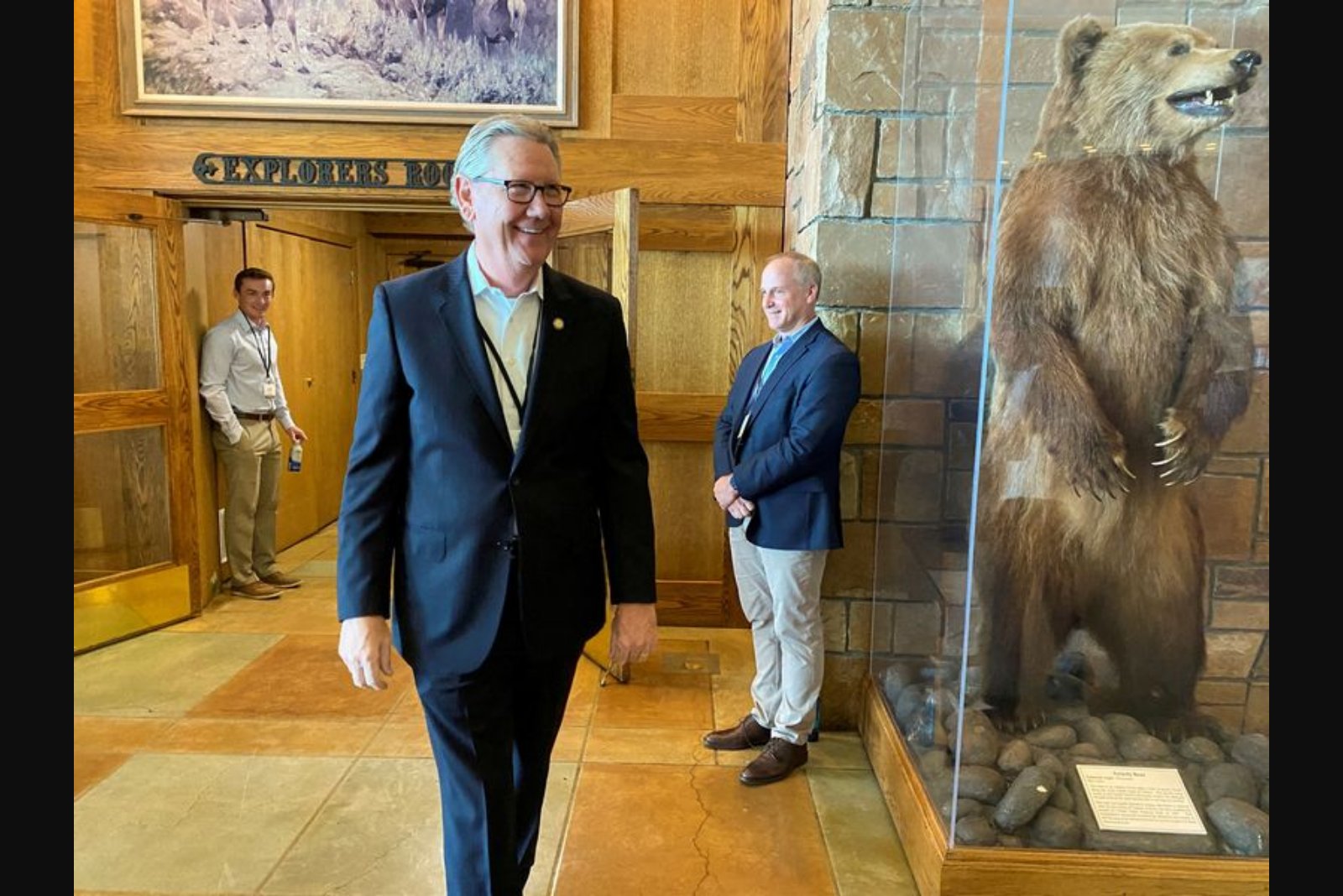
March 3 - Kansas City Federal Reserve President Jeffrey Schmid on Tuesday restated his resistance to cutting interest rates further, saying that the U.S. labor market is presently in balance and inflation remains unacceptably high. In remarks prepared for delivery to the Metro Denver Executive Club, Schmid said inflation has exceeded the Federal Reserve's objective for nearly five years and that current demand is outpacing supply, pushing services prices upward at a pace inconsistent with a move back to the Fed's 2% inflation goal.
"Inflation has been above the Fed's objective for nearly five years now," Schmid said in his prepared comments. He added plainly, "I don't think we have room to be complacent," reflecting his view that more easing would be premature while price pressures persist.
Schmid's prepared text did not address the economic consequences of the recent conflict in Iran, though he noted that the volatile situation in the oil-rich Middle East would, at least in the short term, seem to amplify concerns about price pressures. That point underscores his broader caution on inflation dynamics.
On monetary policy, Schmid has been a steady opponent of additional easing. He dissented on two of last year's rate cuts and backed the Fed's decision last month to maintain the target range for short-term borrowing costs at 3.50%-3.75%.
Echoing concerns about households' ability to absorb higher prices, Schmid observed that inflation is running near 3% and highlighted the tangible impact of elevated inflation on purchasing power, noting that a one percentage point increase in inflation reduces U.S. household purchasing power by $300 billion.
Financial markets had largely anticipated that a deterioration in the labor market, a clear easing of inflation, or some combination of the two would prompt the central bank to cut rates by midyear. However, since the weekend's attack by the U.S. and Israel on Iran, market participants have pushed expectations for another rate reduction further out into the year.
Schmid said he shares the upbeat outlook for economic growth he hears from business contacts and cited the Trump administration's tax reforms as a tailwind for growth. At the same time, he was skeptical that technological advances are currently delivering productivity gains fast enough to permit stronger growth without accompanying inflation.
"I remain open to the possibility, and I'm even optimistic, that AI and other innovations will eventually lead to a non-inflationary, supply-driven growth cycle," Schmid said. "However, based on the current rate of inflation, we are not there yet." His remarks indicate a willingness to consider future productivity improvements while emphasizing that current inflation readings do not justify policy easing.
What this means
- Schmid's stance reinforces a more cautious Fed posture toward cutting interest rates while inflation remains above target.
- Persistent services-price growth and a balanced labor market reduce the immediate case for additional policy accommodation.
- Short-term geopolitical developments in the Middle East may heighten price pressure risks, complicating the policymaking outlook.