
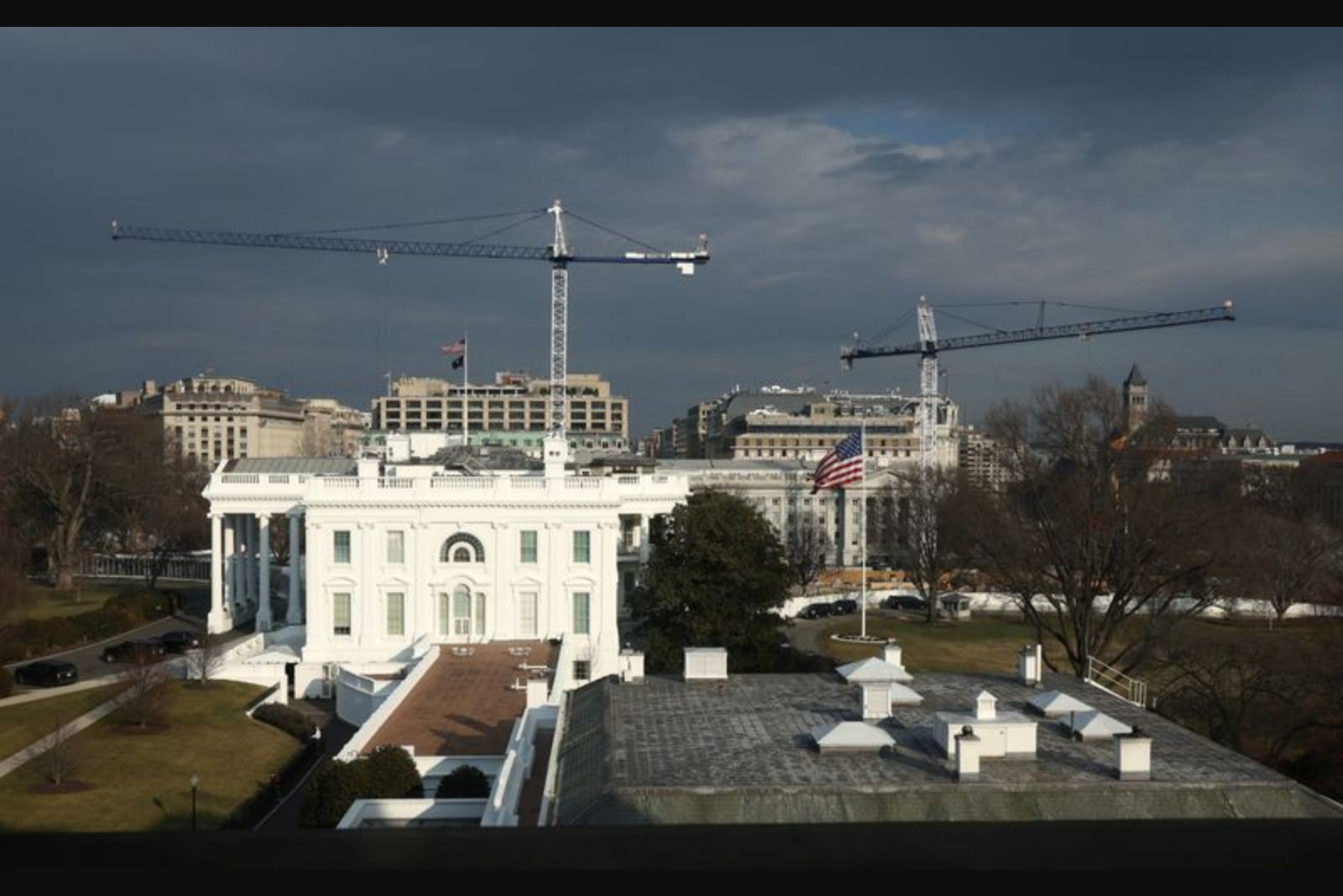
A federal judge on Thursday declined to issue an injunction that would have paused construction of a $400 million ballroom project at the White House, finding the preservationist plaintiffs had not met the demanding standard required to obtain such interim relief.
The decision came in litigation brought by the National Trust for Historic Preservation, which seeks to stop construction until the White House complies with applicable federal statutes and procedural requirements, including congressional authorization. The nonprofit had asked the court for a preliminary injunction to halt work on the proposed ballroom while the lawsuit advances.
U.S. District Judge Richard Leon denied that request, allowing the administration to proceed with the project while the merits of the challenge are litigated. The planned ballroom is to occupy roughly 90,000 square feet (8,360 square meters) and replace the East Wing structure that was demolished last October.
The National Trust filed its suit in December against President Donald Trump and several federal agencies, alleging the project advanced unlawfully without required approvals, without a full environmental impact statement, and without specific authorization from Congress authorizing construction on federal parkland in Washington. The group argued the National Park Service erred by issuing an environmental assessment rather than preparing a full impact statement, and that the assessment was released after demolition had already begun.
In its complaint, the National Trust emphasized a broad legal principle it says applies to changes on federal property in the capital: "No president is legally allowed to tear down portions of the White House without any review whatsoever - not President Trump, not President Biden, and not anyone else," the lawsuit stated.
The administration has defended the legality of the ballroom proposal, saying it is consistent with a long history of presidential renovations and serves the public interest by providing space for state functions. In court filings, the administration noted that the ballroom's design remained under development and that above-ground construction was not planned until April, arguing that an injunction was unnecessary.
Demolition of the East Wing, a building originally constructed in 1902 during Theodore Roosevelt's presidency and significantly expanded in 1942 during Franklin Roosevelt's tenure, was carried out last October. The structure had housed the first lady's offices, a theater and a visitor entrance used to receive foreign dignitaries.
The ballroom is among several notable alterations made since President Trump returned to office in January 2025. Other changes cited by observers include the addition of gold accents in the Oval Office and the conversion of the Rose Garden lawn into a paved patio described by officials as resembling one at Mr. Trump's Mar-a-Lago estate in Florida.
Mr. Trump has publicly defended the ballroom, posting that private donations would fund the project and that it would involve "ZERO taxpayer funding." He described the planned space as a "desperately needed space." The White House has not provided a firm completion date, but said the project should be finished "long before the end" of the president's term.
Judge Leon earlier declined to grant a temporary restraining order sought by the National Trust in December, and his latest decision again leaves the question of the project's lawfulness to be resolved through the ongoing litigation rather than by immediate court-ordered suspension.
Case status and next steps
- The National Trust's lawsuit remains pending; the denial of a preliminary injunction does not decide the case's merits.
- The administration continues to assert the project follows established presidential renovation practices and is necessary for official state functions.
- The timing of above-ground construction and the project's final design were described by the administration as still evolving.