
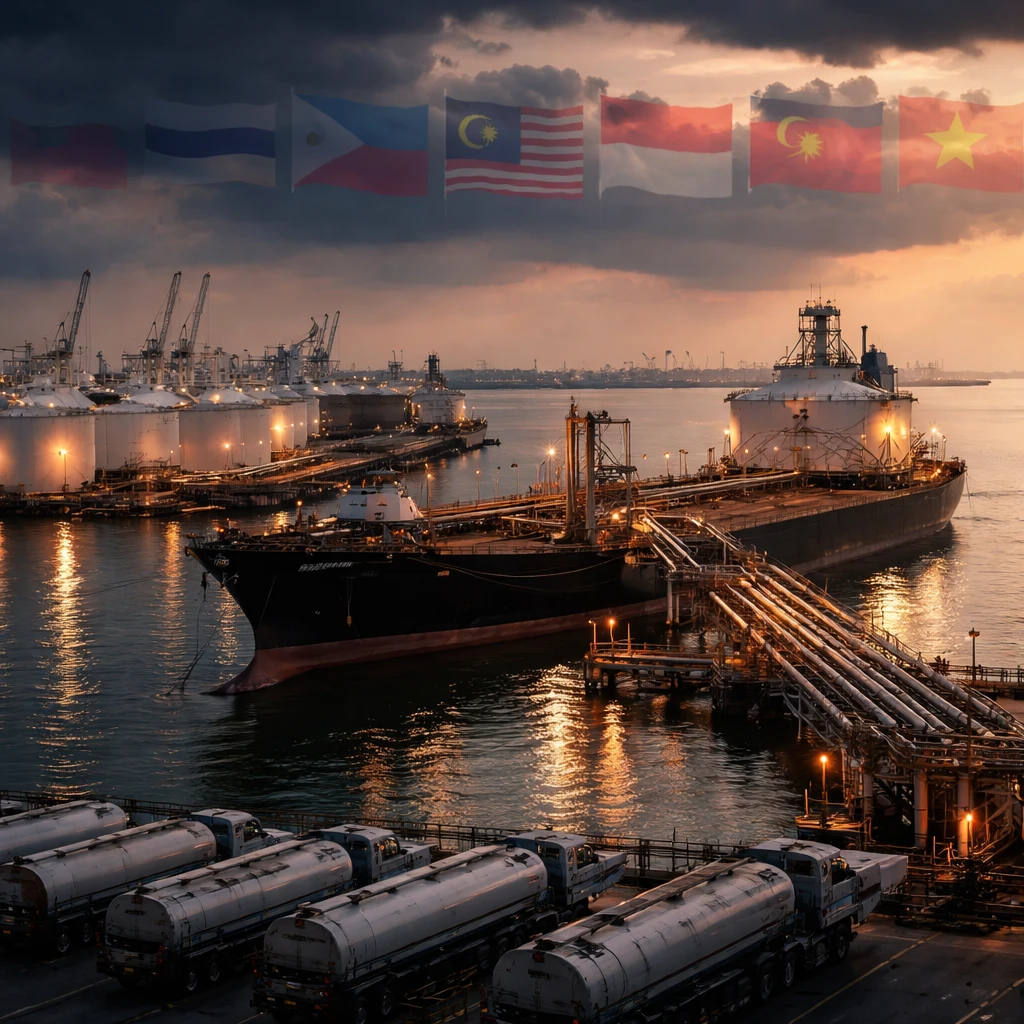
Jefferies analysts say a "higher-for-longer" oil price environment is poised to exert meaningful stress on several economies in the Association of Southeast Asian Nations, with the Philippines and Thailand identified as particularly exposed. The brokerage's equity strategy report argues that renewed geopolitical tensions and supply-side risks have elevated volatility and could widen trade deficits while amplifying inflationary pressures across the region.
Inflationary pass-through and fiscal strain
The report draws attention to a clear divergence in how ASEAN countries will feel and respond to energy-driven inflation. The Philippines is described as highly vulnerable because fuel carries a heavy weight in its consumer price index basket and the country has limited policy buffers to absorb the shock. Indonesia and Malaysia, by contrast, rely on extensive fuel subsidy programs to blunt the impact for consumers, but Jefferies cautions these measures impose significant fiscal burdens.
Thailand has been using its state Oil Fund to help limit retail price spikes. According to the note, that mechanism is coming under increasing strain as global benchmark prices remain elevated, potentially reducing its effectiveness over time.
External balances and market positioning
Net energy importers in the region are likely to see current account positions weaken in the face of the oil price shock. Jefferies points to the Philippines as the most exposed economy because of its persistent trade deficit. Thailand is also likely to experience external pressure as its cost of energy imports rises.
The analysts advise cautious positioning on energy-sensitive sectors in the affected markets. They highlight Malaysia as a more favorable market, noting that its role as a net exporter and the behavior of its currency and equity market can offer a natural hedge against higher crude prices, although fiscal gains for exporters may be constrained by rising domestic subsidy costs.
Monetary policy and broader implications
Jefferies warns that sustained geopolitical risk premia embedded in oil prices could delay the anticipated soft landing for several Southeast Asian economies. Central banks across the region may be compelled to sustain tighter monetary settings to combat imported inflation. The report emphasizes that this stance could dampen domestic consumption if oil prices remain at elevated levels.
Given this environment, the analysts recommend a selective investment approach focused on countries with domestic production capabilities or stronger fiscal defenses against energy volatility.
Limitations: The report underscores the current exposures and policy responses without providing exhaustive country-level fiscal calculations. Where details are limited, the note stresses relative vulnerability rather than precise quantitative forecasts.