
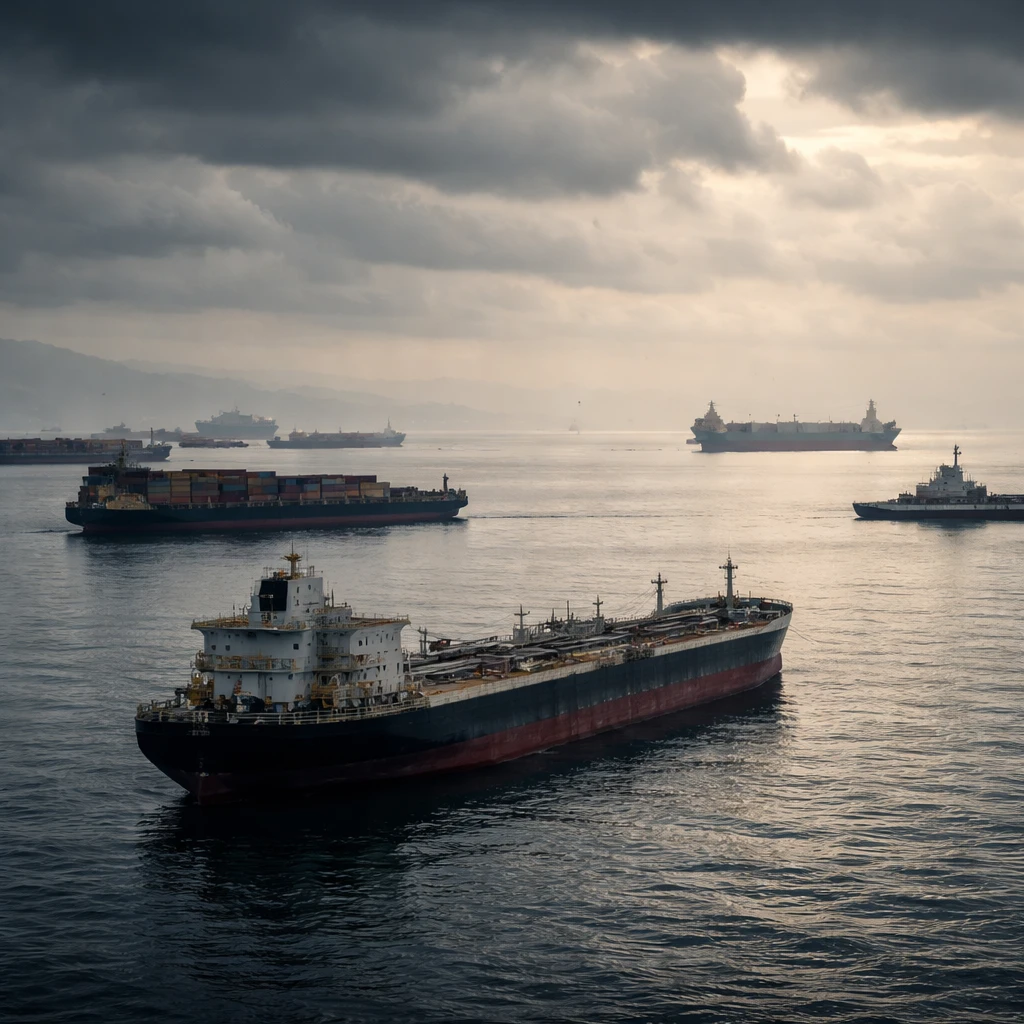
Japan’s principal shipping companies operating in Middle Eastern waters have moved from a state of heightened readiness to effectively stopping operations in the region. On Sunday, the nation’s largest carriers announced they were suspending activities in the Persian Gulf, citing a rapid escalation of military activity following the death of Iran’s Supreme Leader.
Nippon Yusen K.K (TYO:9101), the country’s largest shipping firm, said it has stopped all company-operated vessels from transiting the Strait of Hormuz. Kawasaki Kisen Kaisha, Ltd. (TYO:9107) and Mitsui OSK Lines Ltd ADR (OTC:MSLOY) have likewise ordered their fleets to stay on standby in safer waters.
The shipping decisions track a recent advisory from the U.S. military, which instructed commercial vessels to maintain a 30-nautical-mile separation from American assets to reduce the risk of being caught in any crossfire. At the same time, Iranian state media described the Strait of Hormuz as "practically closed," language that underscores the severity of the current maritime disruption.
Supply and energy exposure
The implications for Japan are acute. The country sources roughly 90% of its crude oil from the Middle East, and the Strait of Hormuz serves as a primary maritime corridor for those cargoes. Refiners such as Cosmo Energy and others report no "immediate" disruptions, a position that depends on the tankers already in safe waters being able to complete their voyages.
That caveat is central. If the U.S. buffer zone widens or if carriers' current "standby" directives convert into permanent rerouting - for example, sending tankers around the Cape of Good Hope - delivery times would extend by weeks and increase transportation costs materially, with knock-on effects for fuel supply and domestic retail fuel pricing.
Air travel and the Doha connection
Aviation has felt the impact immediately. Japan Airlines (JAL) has adjusted schedules, canceling six key rotations between Haneda and Doha through March 3. More than 1,000 passengers have been affected, either left stranded or forced onto alternate flights. The disruption highlights how a concentrated conflict in the Gulf can propagate rapidly through global travel networks.
The challenge for carriers is the airspace itself. Circumnavigating a combat zone drives up fuel consumption and extends flight times, increasing operating costs at a time when airlines are already managing volatile energy prices. The original reporting notes that if the "practical closure" of Gulf airspace persists into the following week, a broader wave of cancellations across major Asian carriers is a distinct possibility.
Market signals and analytical tools
Market participants and investors monitoring specific shipping stocks may be looking for tools to assess the changing risk-reward landscape. ProPicks AI, which evaluates companies including 9101 using a broad set of financial metrics each month, positions itself as a data-driven means to generate stock ideas. The service references past stock picks, including Super Micro Computer (+185%) and AppLovin (+157%), to illustrate outcomes among its flagged opportunities. ProPicks AI claims to analyze fundamentals, momentum and valuation without bias to identify favorable candidates.
Where the real test lies
Ultimately, the immediate calm reported by some refiners depends on the maritime situation stabilizing and the tankers currently anchored or in safe waters completing deliveries. Major uncertainties remain: whether the U.S. military guidance will be broadened, whether carriers maintain temporary standby status or enact longer detours, and how prolonged rerouting would affect downstream fuel availability and prices at Japanese gas stations.
The current environment leaves shipping lines and airlines operating under constrained options, with energy security, logistics lead times and travel networks all vulnerable to further escalation.