
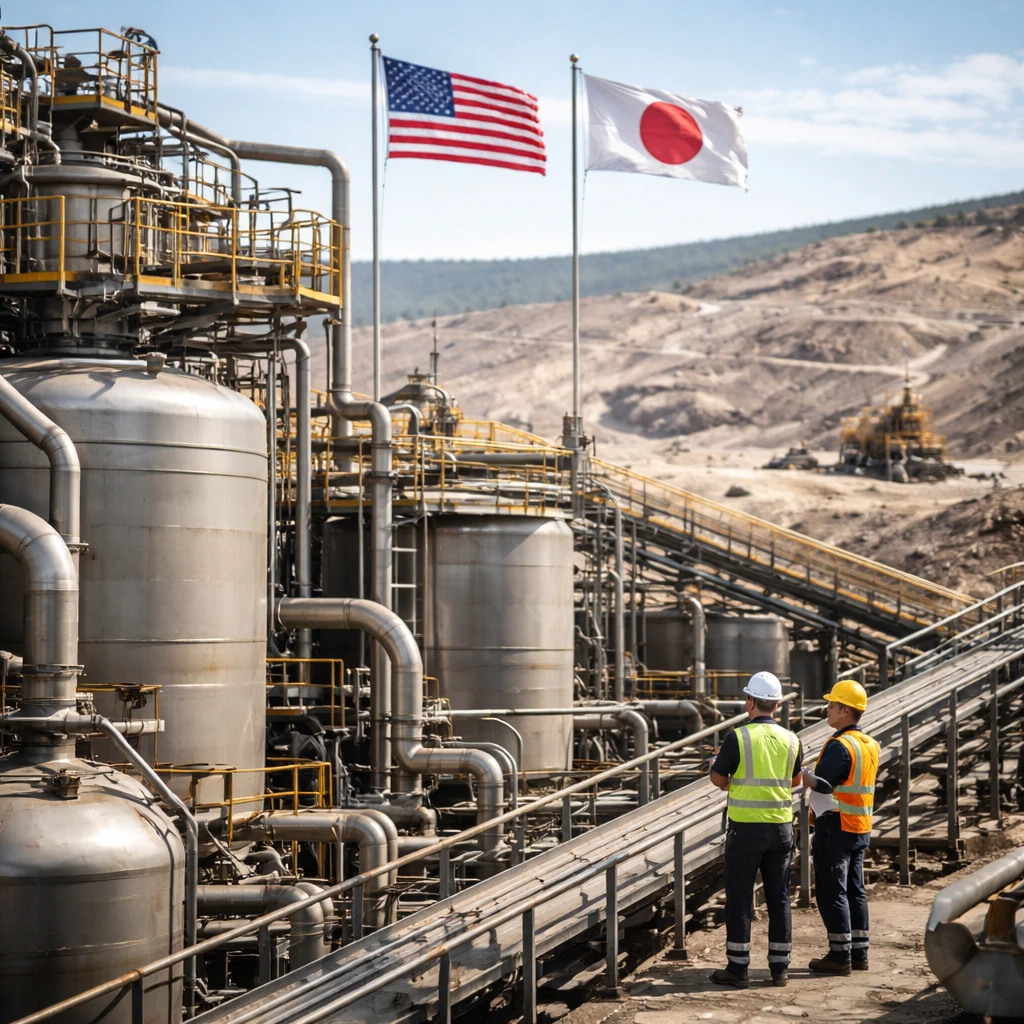
Japan and the United States are preparing to formalize cooperation on the development of several critical minerals, according to reporting ahead of a bilateral summit. The proposed initiatives focus on rare earths, lithium and copper and are intended to bolster supply chain resilience for materials used in strategic technologies.
Japanese companies Mitsubishi Materials and Mitsui & Co are slated to participate in the projects, which include a rare earth refining operation to be located in Indiana and the development of a lithium mine in North Carolina. The participating firms are currently due to take part in these efforts, which are being presented as collaborative industrial projects between the two countries.
Officials have emphasized the strategic nature of these minerals. Rare earths, lithium and copper are cited as essential inputs for the manufacture of specific defense technologies, semiconductors and components used in renewable energy systems. The planned projects are described as part of a broader push to secure supplies of these critical materials.
The announcement is expected to be made during a leaders' summit, where Japanese Prime Minister Sanae Takaichi will meet with U.S. President Donald Trump in Washington D.C. The meeting is scheduled for March 19 and is the designated forum for the two sides to agree on the joint development plans.
Context and implications
The initiatives underline a diplomatic and industrial effort to align sourcing and processing of key minerals across allied economies. By committing to specific project locations in the United States and naming corporate participants, the planned cooperation links upstream mining and refining activity with cross-border industrial policy goals.
Summary
Japan and the U.S. are set to announce joint projects to develop rare earths, lithium and copper, involving Mitsubishi Materials and Mitsui & Co, with project sites including Indiana and North Carolina. The measures are framed as steps to secure critical-mineral supply chains that support defense, semiconductor and renewable energy manufacturing.
Key points
- Planned collaboration targets rare earths, lithium and copper development.
- Japanese firms Mitsubishi Materials and Mitsui & Co are due to participate in the initiatives.
- Projects include a rare earth refining facility in Indiana and a lithium mine in North Carolina; sectors impacted include defense, semiconductors and renewable energy components.
Risks and uncertainties
- Participation by the named Japanese firms is described as "due to take part," indicating planned involvement that could change prior to formal agreement; this affects industrial and mining sectors tied to the projects.
- The announcement is tied to a leaders' summit scheduled for March 19; timing and final agreement are contingent on that diplomatic meeting.
- While presented as measures to secure supply chains, the projects do not by themselves guarantee long-term supply stability for defense, semiconductor and renewables manufacturing.
Note: This article reports planned initiatives and cited participants as described in advance of a bilateral summit.