
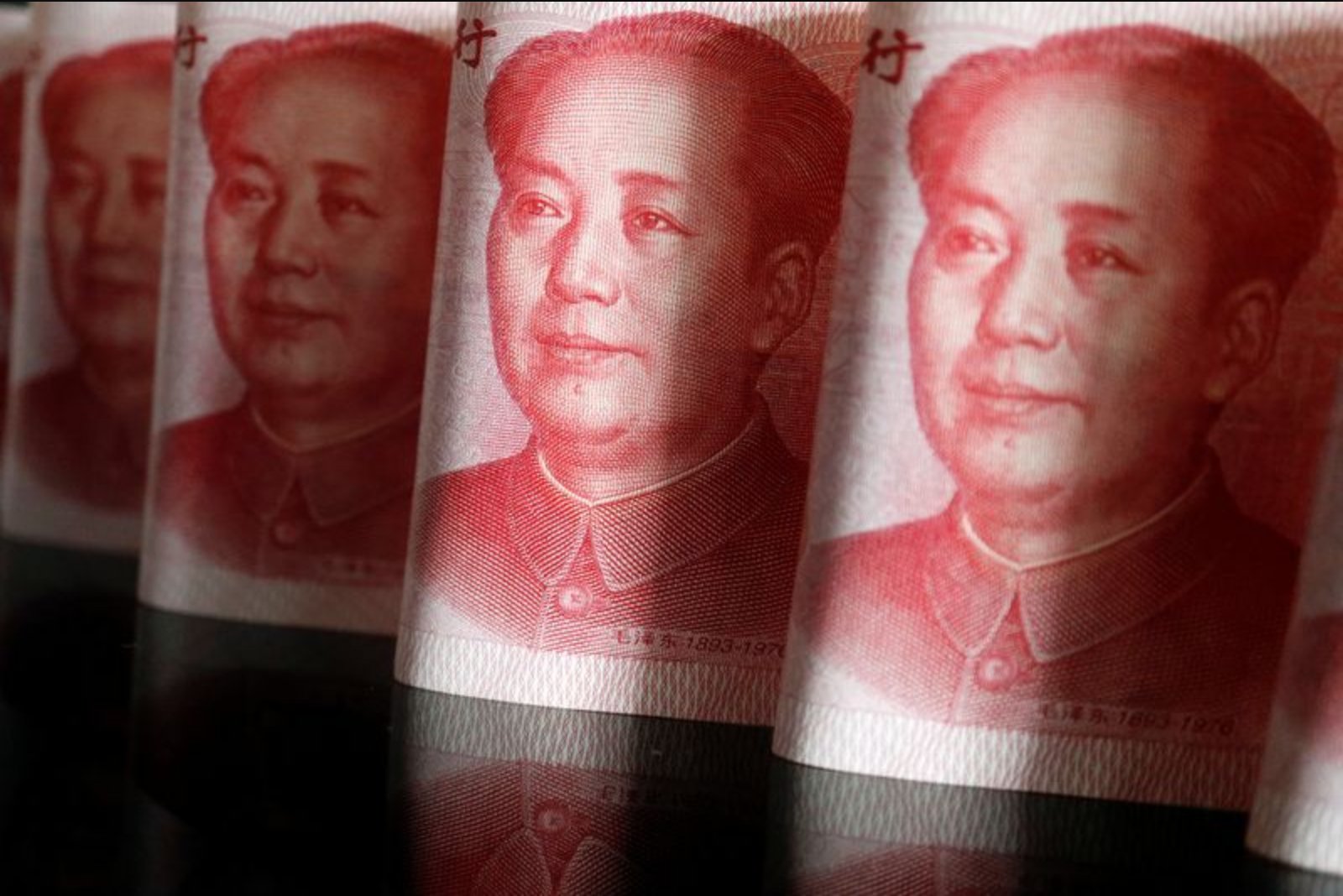
Chinese bank lending likely picked up in January, returning to the brisk pace seen a year earlier, according to an average of economists polled. The survey - which compiled 20 economists' estimates - pointed to about 5 trillion yuan ($721.17 billion) in net new yuan loans issued last month, a substantial rise from the 910 billion yuan recorded in December.
The projected January lending tally is only marginally below the 5.13 trillion yuan in new loans seen in January 2025, suggesting that credit demand at the start of this year held up near last year's level. Market observers say a predictable monetary policy environment helped underpin demand for credit.
Citi Research highlighted a specific operational signal in its note: "The bills discount rate has been steady throughout January, which could hint at steady loan extension at the beginning of the year," Citi analysts wrote. A steady bills discount rate can be interpreted as reflecting both policy stability and calmer short-term financing conditions that support bank lending decisions.
The central bank is scheduled to publish official loans and money supply figures between February 10 and 15, a closely watched release that will confirm whether the survey's estimates match the official data.
Policy backdrop and demand drivers
Policymakers in Beijing have been emphasizing measures to lift consumption, seeking to reduce the economy's reliance on exports and investment as household spending has remained weak. Officials have pledged "more proactive" macroeconomic policies, and the government will present its next five-year plan and this year's growth target at the upcoming annual parliamentary session next month.
Those policy intentions, together with operational stability in short-term lending rates, are among the factors cited for a strong start to lending in January. However, the broader economic picture contains mixed signals.
Factory activity readings offered contrasting pictures. The official purchasing managers' survey indicated that factory activity eased in January, a slowdown attributed to weak domestic demand and typical seasonal patterns that affect certain manufacturers. By contrast, a private-sector PMI, which likely captured a different mix of respondents, showed that activity expanded at a faster pace, supported by a rebound in export orders and higher output ahead of Lunar New Year holidays.
Monetary tools, deflation and credit dynamics
The central bank has reduced rates on some structural monetary policy instruments and signaled there could be further targeted measures. Still, deflationary pressure is a constraint: with consumer prices weak, Capital Economics warned that real lending rates remain elevated, which tends to dampen loan demand.
Capital Economics' China economist Zichun Huang noted another fiscal-side constraint: "And with the government unlikely to widen its budget deficit target this year, the pace of government bond issuance is set to slow," he said. A slower government bond issuance schedule could limit a source of financing that has supported credit growth, the research house argued, and taken together these factors point to potential weakening in credit expansion in the months ahead.
The direction of fiscal policy and the pace of bond issuance will therefore be important to watch, since any acceleration in government bond sales could feed into broader measures of financing.
Survey estimates for broader liquidity measures
The poll also included estimates for money supply and wider credit aggregates. Respondents expected the broader M2 measure of money supply to have risen 8.4% year-on-year in January, a touch slower than the 8.5% growth recorded in December.
Outstanding yuan loans were projected to have grown 6.2% from a year earlier, a slight deceleration from the 6.4% growth seen the prior month. Total social financing (TSF) - a comprehensive metric that includes off-balance-sheet financing such as initial public offerings, bond sales and loans from trust companies - was expected to increase to 7.05 trillion yuan in January, up from 2.21 trillion yuan in December. Analysts noted that any uptick in government bond issuance would tend to lift TSF.
Looking ahead, a January poll suggested that China's overall economic growth is likely to slow this year relative to the 5% expansion recorded in 2025, reflecting policymakers' challenges in tackling structural weaknesses and the need for calibrated measures to support longer-term growth.
Bottom line
Economists surveyed expect a rebound in bank lending in January to roughly 5 trillion yuan, driven in part by a steady short-term bill discount rate and policy efforts to shore up consumption. Nevertheless, mixed activity indicators, deflationary pressures and potential limits on fiscal loosening leave uncertainty about whether credit growth can be sustained through the year.
($1 = 6.9332 Chinese yuan renminbi)