
Economy March 17, 2026

Israel Says It Targeted Iran’s Security Chief in Monday Strikes; Fate Remains Unclear

Tel Aviv reports senior Basij commander killed as Tehran signals it will publish a message from the targeted official

By Ajmal Hussain
Israel Says It Targeted Iran’s Security Chief in Monday Strikes; Fate Remains Unclear

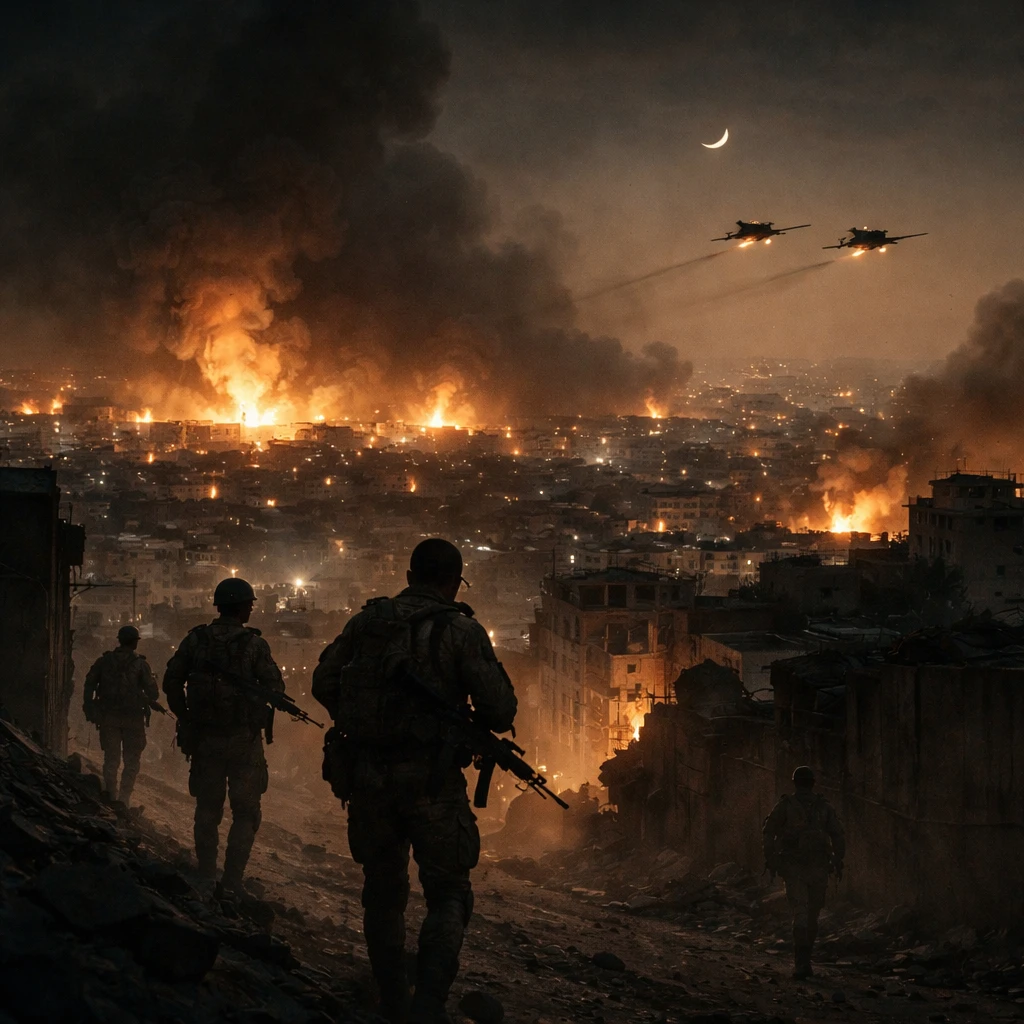
Israeli forces targeted Iran’s security chief, Ali Larijani, in airstrikes on Monday and say they believe he was killed, while Iranian state media announced it will soon release a message from Larijani. The Israeli military also reported the killing of Brig. Gen. Gholamreza Soleimani, the commander of the Basij militia, a volunteer paramilitary group embedded across Iran. The strikes have concentrated on Iran’s internal security apparatus as part of a strategy aimed at fostering internal unrest.

Key Points

  • Israel reported targeting Ali Larijani, Iran’s security chief, in Monday airstrikes and stated it believes he was killed; Iranian state media said it will publish a message from Larijani soon.
  • The Israeli military said Brig. Gen. Gholamreza Soleimani, who led the Basij for the past six years, was killed in the same strikes; the Basij is a largely volunteer paramilitary force with units embedded across Iran.
  • Reported strikes concentrated on Iran’s internal security forces - including police, the Islamic Revolutionary Guard Corps, and the Basij - reflecting an intent to pressure Iran’s security apparatus and potentially create conditions for internal unrest. Sectors implicated include national security and internal security institutions.

Israeli forces carried out airstrikes on Monday that targeted a senior Iranian security official, Ali Larijani, and the Israeli government believes Larijani was killed in those attacks, according to published reports. Iranian state media said on Tuesday that it intends to publish a message from Larijani soon, creating an apparent inconsistency in public statements about his status.

In a separate but related announcement, the Israeli military said it had killed Brig. Gen. Gholamreza Soleimani in Monday’s strikes. Soleimani had served as commander of the Basij for the past six years, the military said. The Basij is described by Iranian officials as a largely volunteer paramilitary force with units embedded across the country.

The pattern of strikes described by Israeli authorities has focused heavily on elements of Iran’s security architecture. Reported targets include Iran’s police forces, the Islamic Revolutionary Guard Corps - often referred to by its acronym IRGC - and the plainclothes Basij militia. According to statements attributed to Israeli officials, the intent behind concentrating strikes on those forces is to create conditions that might foster a popular uprising against Iran’s ruling authorities.

Public reports contain elements that are not fully aligned. On one hand, Israeli sources said they believe Larijani was killed. On the other hand, Iranian state media announced plans to publish a message from Larijani, an action that suggests either continued communications or a posthumous release. The differing signals leave the status of the targeted official unclear to outside observers.

The reported death of the Basij commander and the focus on security institutions were emphasized in the statements attributed to Israeli authorities. The Basij’s role as a volunteer-based force embedded in communities across Iran was noted in reporting as a reason the group is a central target in these operations.


Clear summary: Israel says it targeted Iran’s security chief Ali Larijani in Monday airstrikes and believes he was killed; Iranian state media says it will publish a message from Larijani soon. Israel also reported killing Brig. Gen. Gholamreza Soleimani, commander of the Basij.

Risks

  • Uncertainty over the status of Ali Larijani: Israeli assertions that he was killed contrast with Iranian state media’s announcement that it will publish a message from him, leaving confirmation unresolved. This uncertainty affects clarity about leadership within Iran’s security apparatus.
  • Unclear effectiveness of the strategy: Israeli strikes are reported to be aimed at fostering conditions for a popular uprising against Iran’s regime, but the outcome of such a strategy is not determined in available reports.
  • Potential impacts on Iran’s internal security networks: with strikes reported against police, the IRGC, and the Basij, the degree to which these operations affect the operational capacity of those organizations remains uncertain.

More from Economy

S&P: Gulf lenders face up to $307 billion of domestic deposit withdrawals if fighting escalates Mar 17, 2026 Japan and U.S. to Cooperate on Development of Rare Earths, Lithium and Copper Mar 17, 2026 Germany Sets Ambitious Goal to Double Data Centre Capacity and Quadruple AI Processing by 2030 Mar 17, 2026 IATA Projects Air Travel Will More Than Double by 2050 Mar 17, 2026 Federal Court to Consider Injunction Request Over $400 Million White House Ballroom Project Mar 17, 2026