
Israeli air strikes on Monday are reported to have likely killed Ali Larijani, who served as a top Iranian security official, according to accounts published by the Wall Street Journal that cited people familiar with the matter. The WSJ said Iranian state media was expected to issue a statement from Larijani soon, although at the time there was no official confirmation from Iran's government or state-backed outlets.
Other reports have named Gholamreza Soleimani, the commander of Iran's Basij paramilitary unit, as another casualty. The Basij force was noted in reports for its role in suppressing anti-government protests earlier in the year. As with the report about Larijani, Iranian authorities had not publicly corroborated the claims.
In related diplomatic developments, U.S. President Donald Trump asked that a planned meeting with Chinese leader Xi Jinping next month be postponed. That request followed a recent public warning from the president that the meeting could be delayed should China fail to apply its influence with Iran to help reopen a critical shipping lane.
Over the weekend President Trump urged China to deploy its navy to secure the Strait of Hormuz, the strategic waterway south of Iran through which roughly one-fifth of the world's oil supply transits. Observers noted Beijing's economic ties to Tehran, including oil purchases, as a factor that could limit Chinese willingness to comply with such a request. Reports say Tehran has permitted Chinese tankers to pass through the strait while simultaneously warning of attacks on vessels carrying goods that it judges could benefit the U.S. or its allies.
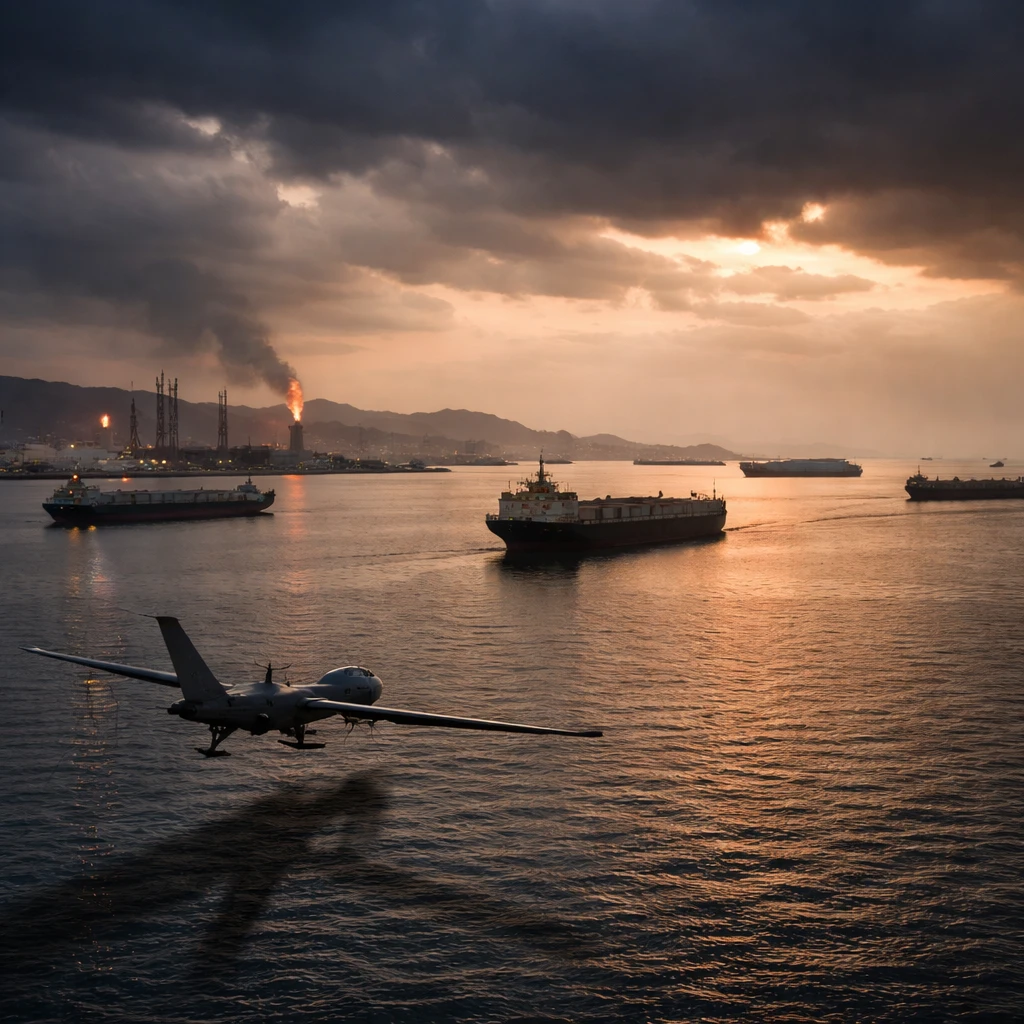
Commercial shipping through the Strait of Hormuz has largely ground to a halt as container operators weigh safety risks and face difficulty securing insurance for transits. The near standstill has squeezed global shipping routes and heightened concerns about energy flows.
Early on Tuesday a projectile struck a tanker at anchor near a port in the United Arab Emirates, according to reporting by the New York Times that cited the United Kingdom Maritime Trade Operations Center. The vessel, which was near the port of Fujairah at the southern end of the strait, suffered only minor damage, the reports said. Officials in the UAE also attributed a separate fire at a key oil industry hub to a drone strike.
Markets responded to the events with gains in oil prices. Brent crude futures, the global benchmark, was reported up 2.6% at $102.80 a barrel, while U.S. West Texas Intermediate crude futures rose 3.0% to $95.32 a barrel.
Analysts and policymakers are watching the situation closely because the prospect of a prolonged conflict has stoked fears of an energy shock. Those concerns include the potential to lift inflationary pressures worldwide, which could force some central banks to once again contemplate raising interest rates.
One immediate policy reaction came from the Reserve Bank of Australia, which raised rates to a 10-year high and explicitly flagged "material" inflation risks stemming from the Iran conflict.
Investor uncertainty about how the fighting might evolve showed up in equity markets. European stocks rose in early trading, Asian markets staged a tentative recovery, and U.S. futures were pointing lower, reflecting uneven global sentiment as investors reassess risk amid heightened geopolitical tensions.
This remains a developing story. Updates will be posted as more information becomes available and as officials provide further confirmation or comment.