
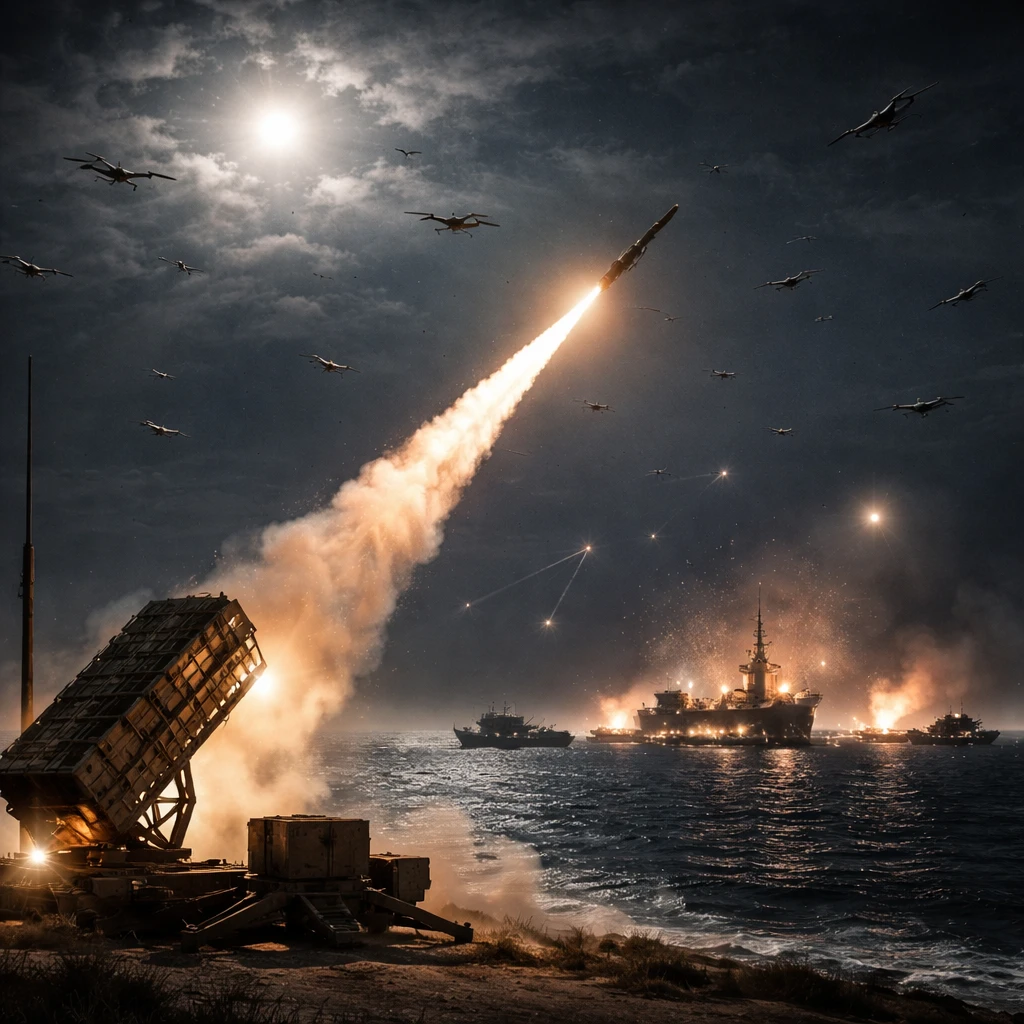
Since Saturday, Iranian forces have launched hundreds of Shahed-136 drones at U.S. military installations and oil facilities across the region, creating what military analysts describe as a war of attrition that forces defenders to trade costly interceptors for low-cost unmanned aircraft.
The Shahed-136 drones, which cost roughly $20,000 each, have been deployed in large numbers around the Middle East following the assassination of Supreme Leader Ali Khamenei on Saturday. In response, U.S. and partner forces have been firing Patriot interceptor missiles to protect bases and energy infrastructure. Those interceptor missiles are estimated to cost about $4 million apiece.
Kelly Grieco of the Stimson Center said Iran appears to be betting that defenders will run down both their interceptors and the political will to sustain their use before Iran exhausts its drone supply. The approach, she said, is calibrated to degrade air-defense inventories over time rather than to ensure the immediate destruction of every incoming projectile.
Reports indicate that at current consumption rates, Qatar's Patriot stocks could be depleted in a matter of days. Meanwhile, air-defense systems belonging to Qatar, the United Arab Emirates and the U.S. Fifth Fleet have been absorbing the effects of hundreds of Iranian projectiles during the campaign.
On social media, President Donald Trump downplayed concerns about weapons shortages, asserting on Truth Social that the United States possesses a virtually unlimited supply of munitions. He wrote that wars can be fought forever and very successfully using just these supplies. That public claim differs from assessments by some military advisers, who warn that inventories of high-end interceptors are under significant strain.
Analysts monitoring the campaign express concern that Iran may be conserving its most dangerous ballistic missiles for use only after Western defenses have been worn down. The confrontation entered its fourth day on Tuesday, and there was no immediate sign of when Tehran's drone strikes might end.
Implications and context
The current sequence of attacks highlights a strategic choice by Iran to employ large numbers of inexpensive drones to impose material and logistical costs on defending forces. The expenditure mismatch - modest outlays for Shahed-136 drones versus multimillion-dollar interceptors - is central to why analysts characterize the operations as attrition-oriented. The strain on Patriot inventories in Qatar and elsewhere underscores the operational pressure on regional air defenses and the associated logistical challenges.