
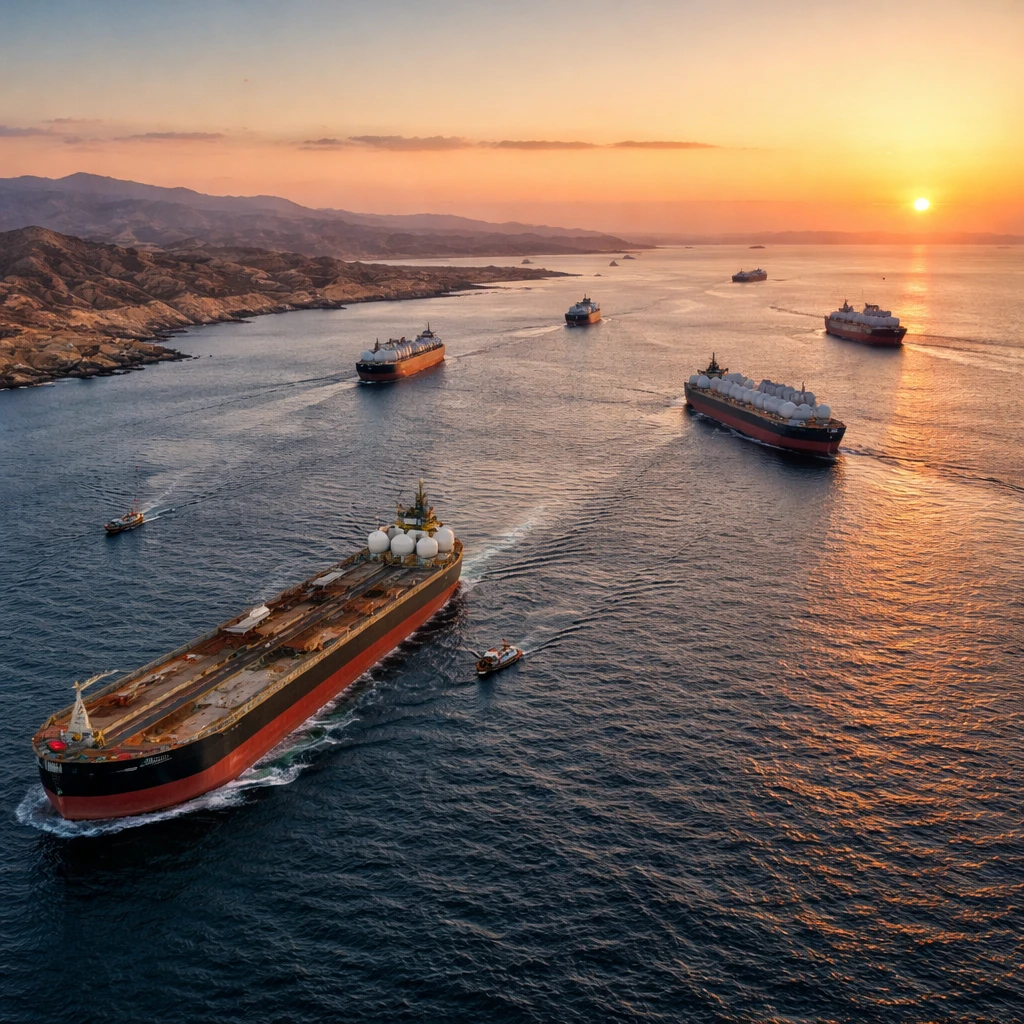
Iran is evaluating a legislative proposal that would enable the country to collect transit fees from ships passing through the Strait of Hormuz, a lawmaker said on Thursday.
The measure under consideration would require countries whose ships use the strait for general shipping, energy transit and delivery of food supplies to pay tolls and taxes to Iran, the lawmaker told the Iranian Students' News Agency. The strait is a strategic waterway through which about one-fifth of the world’s oil and liquefied natural gas moves.
The proposal comes against a backdrop of recent disruptions. Since the start of the U.S.-Israeli war on Iran, Tehran has disrupted maritime transit through the strait for vessels it says are linked to its war adversaries and their allies.
On Thursday, Mohammad Mokhber, an adviser to Iran’s supreme leader, said a "new regime for the Strait of Hormuz" will be established after the eventual end of the war, according to Mehr news agency. Mokhber indicated that the new approach would allow Tehran to impose maritime restrictions on countries that have sanctioned Iran.
"By using the strategic position of the Strait of Hormuz, we can sanction (the West) and prevent their ships from passing through this waterway," Mokhber said, as reported by Mehr.
Parliamentary consideration of tolls and taxes would formalize a mechanism for Tehran to charge for access to the waterway, applying to ships involved in shipping, energy transit and food supply movements. The lawmaker’s account to the Iranian Students’ News Agency framed the draft legislation as covering those specific categories of transit.
The reporting notes both the strategic significance of the strait and recent Iranian actions to limit movement of vessels it considers connected to opposing parties in the conflict. Beyond the parliamentary discussion and Mokhber’s comments, the coverage does not supply further details on timing, tariff levels, or which nations would be affected if the legislation were enacted.
Key elements remain under review in parliament, and statements from senior advisers indicate Tehran envisions using the strait’s position as leverage over states that have imposed sanctions. At present, the information available does not spell out implementation specifics or a timetable for any change in regime governing passage.