
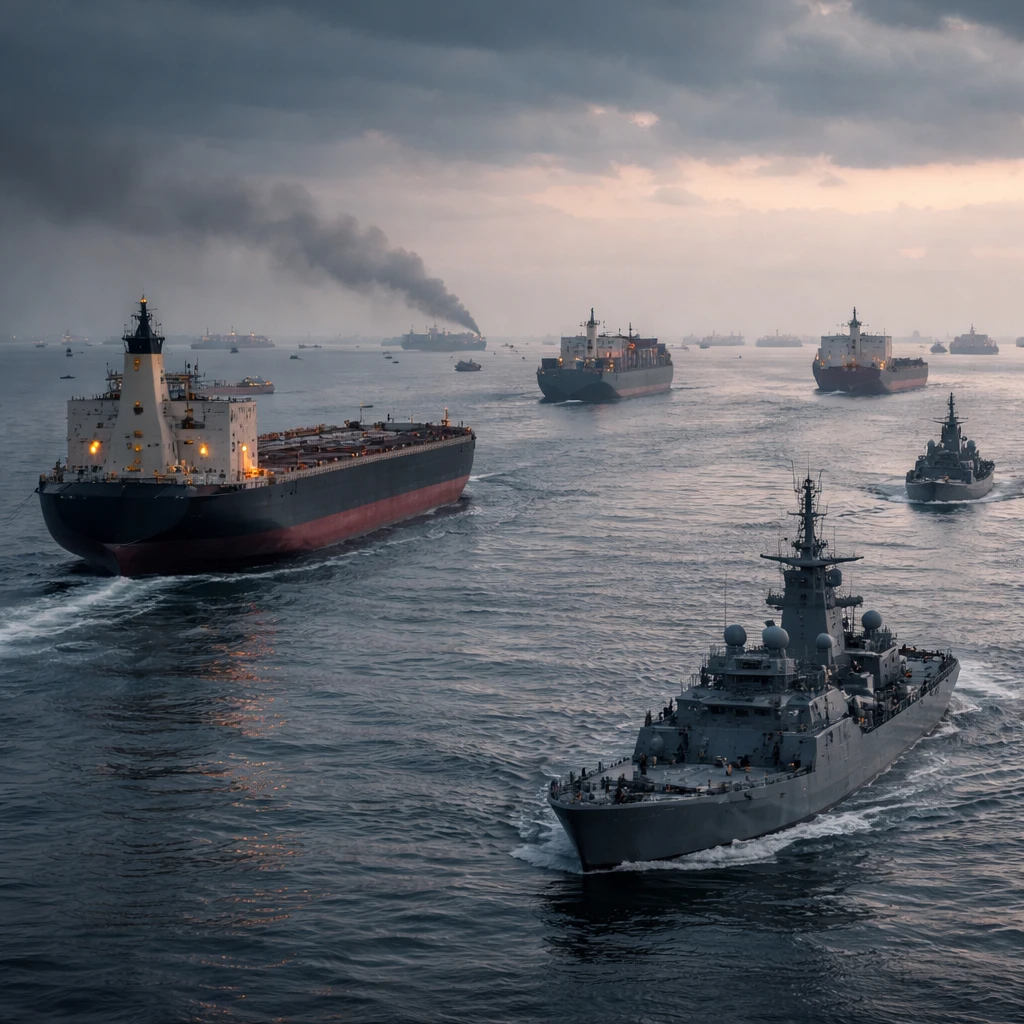
ING's economics team has revised its forecasts after the Strait of Hormuz became effectively blocked, an event that has compelled oil tankers and cargo ships to reroute. The bank said its earlier March assumptions about the situation are now out of date and that the evolving conditions require fresh guidance ahead of its April Monthly Update.
Three scenarios
To steer its macroeconomic and market analysis, ING has outlined three scenarios.
- Scenario 1 - Base case: ING assumes that high-intensity combat will end within two weeks, but anticipates a subsequent period of lower-intensity strikes stretching for several months. The bank expects the Strait of Hormuz to remain closed for longer than it had first thought. This pathway allows for a temporary ceasefire or a tacit stand-down, potentially accompanied by maritime escorts and preliminary talks on sanctions. The bank also notes that regime change remains possible over time, driven internally.
- Scenario 2 - Optimistic case: In this alternative, the conflict concludes sooner than in the base case and the Strait of Hormuz reopens within a short period.
- Scenario 3 - Protracted conflict: ING envisions extended combat followed by a prolonged, lower-grade confrontation that sustains uncertainty about access to the Strait. Under this outcome, a ceasefire could emerge with third-party guarantees likely involving Russia or China, accompanied by phased sanctions relief and the establishment of a maritime security regime for Hormuz. Even so, lasting peace may prove elusive and the region could settle into a fragile equilibrium susceptible to periodic flare-ups.
Impacts on energy flows and macroeconomics
ING's base case does not expect structural harm to oil or gas production facilities. At present the bank is observing delays in energy and other shipments rather than permanent output losses, although it warns that prolonged disruptions could eventually cause reductions in production.
ING describes the situation primarily as a supply-side shock that pushes up inflation and complicates the policy choices facing central banks. Across regions the bank has revised inflation forecasts upward by more than it has revised growth forecasts downward.
Key takeaways
- ING has replaced its March assumptions with three scenarios to reflect the practical blockade of the Strait of Hormuz and resulting shipping reroutes.
- The bank views the episode mainly as a supply shock that increases inflationary pressures and poses challenges for central banks.
- Energy and other shipments are delayed rather than structurally reduced in ING's base case, though prolonged delays could cause production cuts.
Risks and uncertainties
- The length and intensity of combat are uncertain - extended hostilities could sustain disruption to maritime transit through the Strait.
- Prolonged shipping delays carry the risk of turning temporary disruptions into structural reductions in oil and gas output.
- Even with negotiated ceasefires or third-party guarantees, a fragile regional equilibrium could leave space for recurring flare-ups that maintain market uncertainty.
Conclusion
ING's updated framework sets out a range of outcomes from a relatively quick de-escalation to a drawn-out period of instability. The bank's analysis places the immediate economic pressure on supply chains and inflation, while noting that structural damage to energy production is not its main expectation under the base case. ING will use these scenarios to inform its April Monthly Update and subsequent market guidance.