
Summary
Indonesia’s finance minister has publicly defended a shift away from the fiscal orthodoxy that has underpinned investor confidence for decades. Purbaya Yudhi Sadewa, who took office in September, says his policies - including a large transfer of government funds into state-owned banks to spur lending - are necessary to meet growth ambitions. Despite criticism from ratings agencies and a recent downgrade of the sovereign outlook to negative, he remains confident the results will speak for themselves.
Context and market reaction
Investor sentiment has turned more cautious toward Indonesia, the Southeast Asian economy of about $1.4 trillion. A market rout in January wiped roughly $120 billion from the equity market. Foreign investors had sold a net $415 million in Indonesian equities as of March 5 and about $240 million in sovereign bonds, according to the finance ministry’s data.
Ratings concerns have also surfaced. This week Fitch revised Indonesia’s sovereign credit rating outlook from stable to negative - the latest in a run of warnings that have weighed on market confidence. Critics point to perceived uncertainties about policy direction and the sustainability of fiscal discipline that had been hallmarks of post-Asian financial crisis management.
Minister’s defense and tone
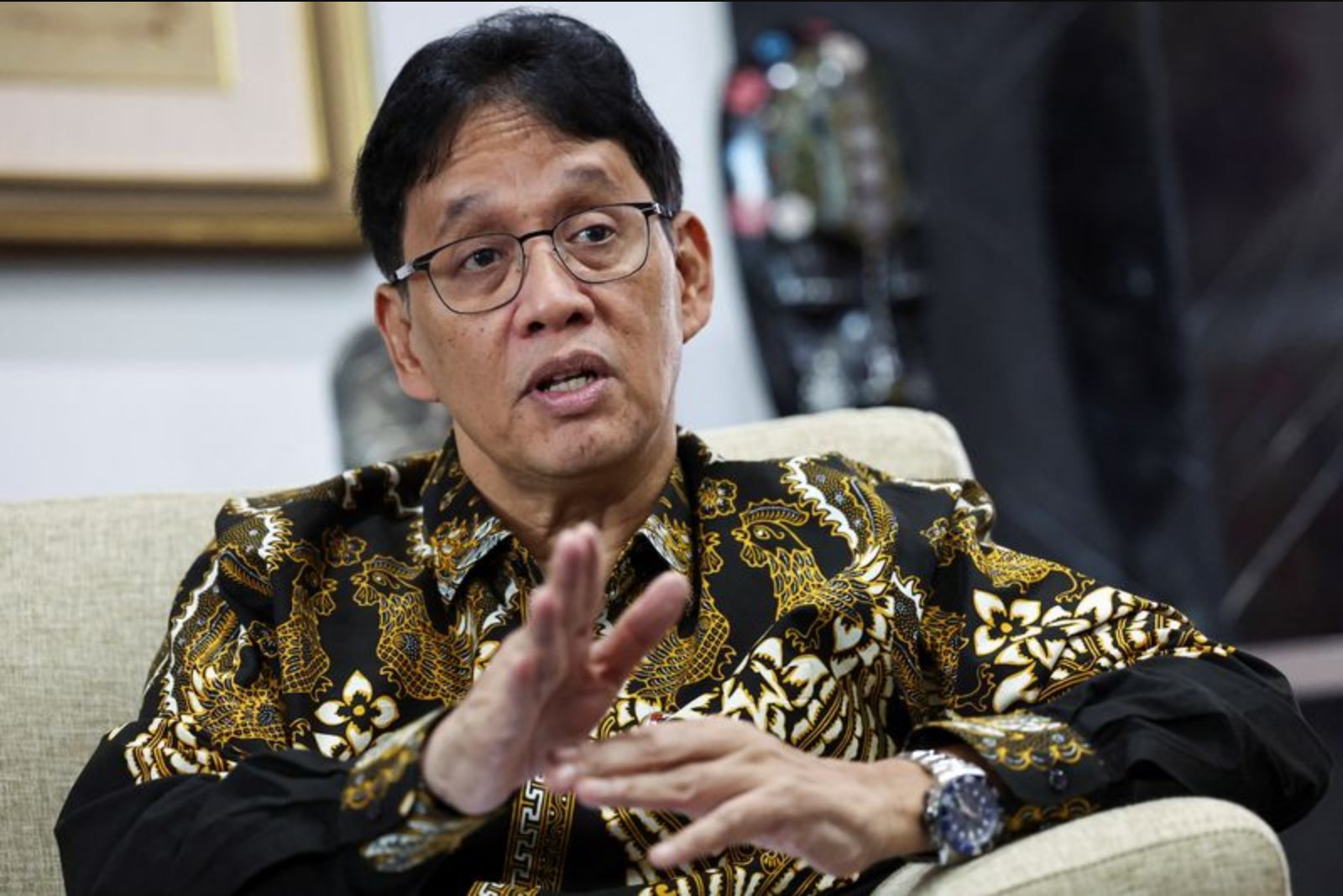
Purbaya, a 61-year-old economist with a doctorate from Purdue University, has adopted a direct and confrontational public style that contrasts with his predecessor. In an interview, he rejected the notion that his approach indicates incompetence, saying: "I know what I’m doing." He also argued that, by international standards, current fiscal policy is sound.
That bluntness has extended to public remarks about observers and commentators. When a prominent magazine characterized the government’s bank liquidity injection as a raid on the "rainy-day pot," he called the magazine "stupid." After Citigroup suggested the fiscal deficit could breach the legal 3% of GDP cap in 2026, he publicly dismissed the commentary and urged people to "ask a PhD," referring to his own credentials.
Policy shift: state bank liquidity injection
The most contentious policy to date was the reallocation of over 200 trillion rupiah - roughly $12 billion - from funds held at the central bank into state-owned lenders. The government says the move aims to accelerate private sector credit growth by boosting liquidity in banks that can channel loans to businesses and households.
At an official handover last year, Purbaya described himself as a "surprise minister," and acknowledged that his predecessor had likened his style to that of a "cowboy." Observers in Jakarta’s policy community have reported discomfort with his unconventional manner, according to three individuals familiar with cabinet dynamics who spoke on condition of anonymity because of the sensitivity of the topic.
Trust and credibility questions
Analysts say Purbaya has more work to do to rebuild the trust that many investors associated with his predecessor. One economist noted there had been a long-standing comfort with a visible competence in fiscal management, and that the abrupt change in style has prompted doubts even if there remains competence within the government.
Purbaya accepts that skepticism is partly a function of his recent appointment and public demeanor. Still, he maintains that measurable economic data will be the ultimate test of his policies.
Fitch downgrade and the minister’s response
Purbaya addressed the prospect of ratings agencies revising their outlooks. On the eve of Fitch’s review, he was asked if the agency would follow Moody’s in adjusting its view. He replied: "If they are smart enough, they will not follow Moody’s," and added that decisions grounded in data should not find Indonesia moving in a negative direction.
When Fitch did shift the outlook to negative, Purbaya signaled he would not be swayed. He argued that if growth accelerates to between 5.6% and 6%, as he expects could happen, that performance would undermine the basis for a negative view. "The best way to contradict you is by giving you the best economic figures," he said.
Recent growth figures and validation
Indonesia registered its strongest expansion in three years in 2025, with fourth-quarter growth accelerating more than analysts had forecast. The fourth quarter was Purbaya’s first full quarter in office. A poll of economists had expected Q4 growth of 5.01%, but official data put the outturn at 5.4%.
Despite the more robust reading, some economists questioned the authenticity of the numbers. Purbaya challenged critics to disprove the figures and pointed to corroborating indicators such as economic activity measures, industrial electricity consumption, and consumer confidence, which he said is close to a historic high. He noted that the government uses both standard GDP measures and market-based signals to corroborate the direction of the economy.
Fiscal rules and the deficit ceiling
Concerns have focused on whether the government might breach the legal fiscal deficit limit of 3% of GDP in 2026. Purbaya has consistently sought to reassure stakeholders that he is mindful of the cap. He emphasized that under current projections and policy choices he does not anticipate exceeding the threshold under routine circumstances.
Nonetheless, public commentary from international financial institutions and market analysts has pressed the government on this risk. Purbaya has publicly dismissed some of those assessments, arguing they underestimate Indonesia’s growth trajectory and data underpinnings.
Timeline and accountability
Purbaya has set a tight timeline for judgment of his stewardship. He said that six months would be the period within which it would become clear whether the economy is moving in the right direction under his policies. He invited critics to judge his performance if indicators deteriorate, and predicted they would instead see improvement.
Political and institutional backdrop
The change in fiscal leadership followed the departure of a long-serving predecessor who had been widely viewed as a symbol of fiscal discipline. That predecessor served under three presidents in two separate stints as finance minister and was seen as a stabilizing figure. President Prabowo Subianto initially retained her after his 2024 election win to signal policy continuity, but she was later removed from the post.
Purbaya’s appointment and ensuing policy choices reflect a different emphasis - a drive toward faster growth in line with the government’s stated ambitions. The trade-off has been greater scrutiny from investors and ratings agencies about the durability of fiscal rules that have underpinned Indonesia’s post-crisis economic reputation.
What to watch
Market participants and policymakers will be monitoring several indicators closely: sovereign bond flows and yields, equity market performance, updates to fiscal deficit projections, bank lending growth following the liquidity transfer, and forthcoming quarterly GDP and activity indicators that Purbaya has highlighted as validation points.
How those metrics evolve over the coming months will shape whether investor unease cools or intensifies.
Currency conversion used in public reporting: $1 = 16,900.0000 rupiah.
End of article