
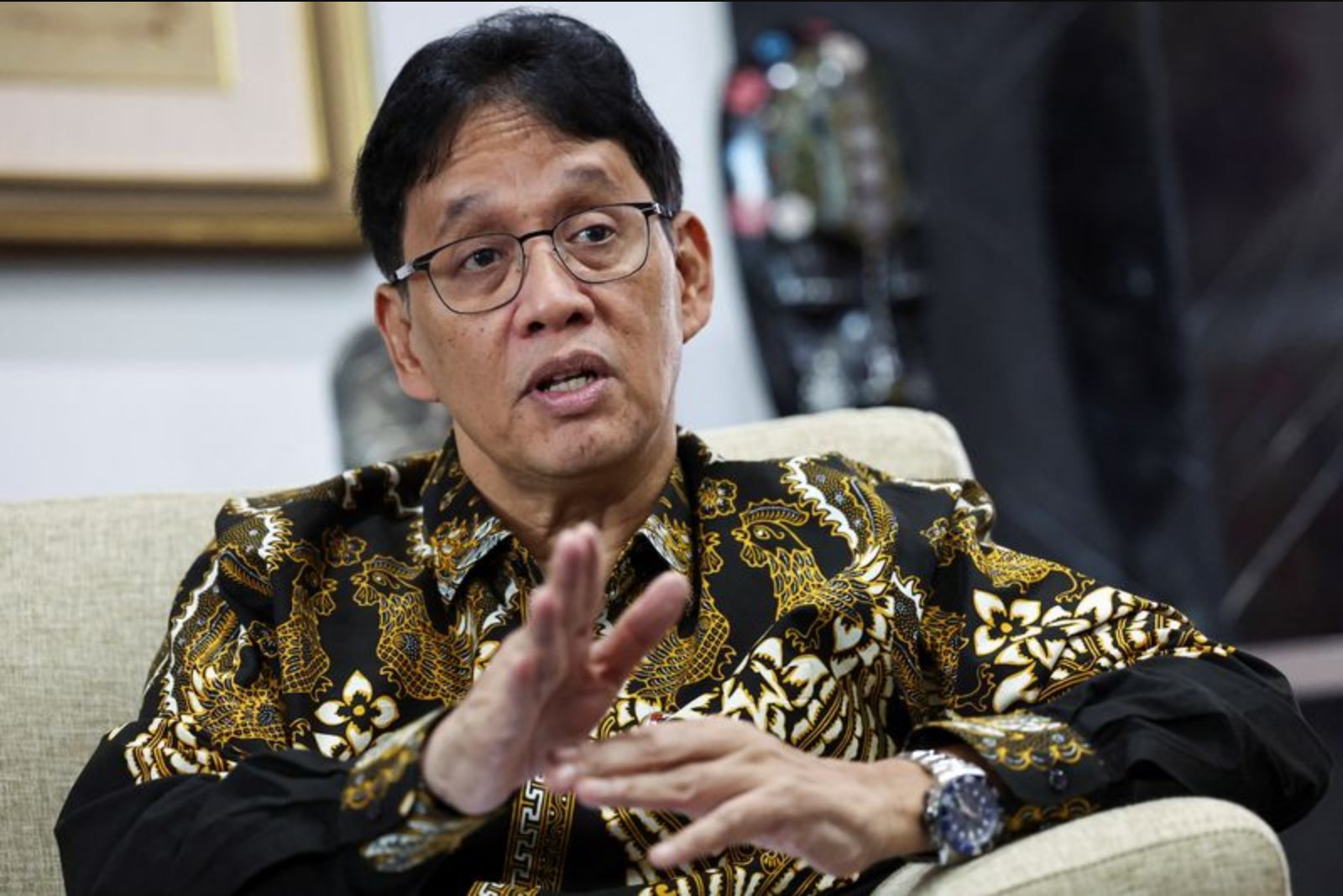
Indonesia’s finance minister, Purbaya Yudhi Sadewa, has dismissed mounting investor unease about the new government’s fiscal direction, saying that while his approach differs sharply from past orthodoxy it remains sound by international measures.
Ratings pressure and market turmoil have thrust the finance ministry’s choices into the spotlight. Fitch recently shifted Indonesia’s sovereign outlook from stable to negative, the latest signal that concerns over policy clarity and fiscal discipline have intensified. Those worries have weighed on sentiment for the $1.4 trillion economy and coincided with other negative moves in capital markets.
January’s market rout wiped about $120 billion off the value of stocks listed in Indonesia. Foreign investors have been net sellers of domestic equities, offloading $415 million as of March 5 according to IDX data, and disposing of $240 million in sovereign bonds, the finance ministry reports. Together, these flows and ratings actions have amplified investor questions about Jakarta’s economic stewardship, particularly in a period of heightened global uncertainty that some worry could compound domestic strains.
Purbaya, a 61-year-old economist with a doctorate from Purdue University, acknowledged that his arrival in the finance ministry - a surprise replacement for his predecessor in September - has unsettled some international observers. But he rejected characterizations that he lacks competence. "By any international standard, we are conducting good fiscal policy," he told reporters in a one-on-one interview, adding: "I know what I’m doing."
His tenure marks a pronounced shift from the style of his predecessor, who had been widely seen as a guardian of fiscal discipline. That former minister served under three presidents across two separate terms and was removed from office by President Prabowo Subianto. Prabowo had initially signalled continuity by keeping her on after the 2024 election, when Indonesia’s GDP had been growing at about 5% for several years. But policy differences soon emerged between that stewardship and Prabowo’s campaign promises of much faster expansion and a large increase in public spending, including an ambitious $20 billion programme to provide free meals.
Where his predecessor exercised caution and diplomacy, Purbaya has been more forthright and unconventional - a tone that some in Jakarta’s policy circles find unsettling. He has acknowledged being labelled a "surprise minister" and said his predecessor had compared his style to that of a "cowboy." In public settings he has at times been dismissive of outside criticism, once calling an Economist magazine characterisation of a liquidity move as akin to raiding a "rainy-day pot" "stupid."
The most contentious of Purbaya’s early policies was a transfer of more than 200 trillion rupiah - roughly $12 billion - from the central bank to state-owned lenders, aimed at jump-starting private sector credit growth. The shift was framed as a direct lever to increase lending and support the broader objective of higher GDP growth.
When international banks and commentators questioned the durability of Indonesia’s fiscal path, Purbaya answered publicly. After Citigroup warned the fiscal deficit could breach the legal ceiling of 3% of GDP in 2026, he said the Citigroup author was not "a real economist" and suggested critics should "ask a PhD" - a reference to his own academic credentials. Ahead of Fitch’s review, he expressed confidence that the agency should not simply mirror other downgrades if it relied on current data.
"If they are smart enough, they will not follow Moody’s," he said, half-joking to the camera. "If they are using data as their base of decision, I don’t believe there’s a way, there is a room, to say that we are moving in a negative direction." He added that if economic growth were to rise to between 5.6% and 6%, that outcome would demonstrate the prevailing negative calculations about Indonesia’s trajectory were incorrect.
On the ground, Indonesia reported its strongest economic expansion in three years in 2025, with growth accelerating in the fourth quarter, driven by robust household spending and elevated investment. That quarter was Purbaya’s first fully under his stewardship. A poll of analysts had expected Q4 growth of 5.01%, but the official figure came in at 5.4%.
Some economists have questioned the authenticity of the GDP data, and Purbaya challenged critics to disprove the headline numbers. He pointed to market-based indicators such as measures of economic activity, industrial electricity consumption and a near-record level of consumer confidence as corroborating signals that the economy is moving in the right direction. "We have this GDP figure from normal sources of the economy, but we are also using every market-based figure that can confirm that we are moving in the right direction," he said.
Purbaya has imposed on himself a short timetable to demonstrate that his policies are working. "Six months from now, are we moving in the right direction or not? If, let’s say, we are moving in the wrong direction, you can lambaste me as much as you like," he said. "But I think it will be the other way around."
Summary
Indonesia’s finance minister, Purbaya Yudhi Sadewa, has defended a series of unconventional fiscal moves intended to accelerate credit and growth, saying his approach is consistent with international fiscal standards despite recent ratings pressure and market selling. He argues that stronger near-term growth and corroborating market indicators will validate his strategy, while acknowledging that investor confidence must be rebuilt.
Key points
- Purbaya has shifted more than 200 trillion rupiah from the central bank to state-owned lenders to stimulate private credit growth - a central element of his pro-growth agenda that has attracted criticism and scrutiny. (Sectors impacted: banking, credit markets.)
- Fitch downgraded Indonesia’s sovereign outlook to negative, contributing to investor concern; markets have reflected the unease, with a January sell-off that erased $120 billion in market value and net foreign sales in equities and sovereign bonds. (Sectors impacted: equities, sovereign bond market, broader financial markets.)
- Official Q4 economic data showed growth of 5.4%, above analyst expectations of 5.01%, which Purbaya cites alongside market-based indicators as evidence the economy is on a healthier path. (Sectors impacted: consumer-facing sectors, investment-related industries.)
Risks and uncertainties
- Ratings actions and investor skepticism - The downgrade of Indonesia’s outlook to negative and the potential for further agency concern could continue to pressure capital flows and market sentiment, particularly for sovereign debt and equities. (Markets affected: sovereign bond market, equity market.)
- Fiscal ceiling and legal constraints - Public debate over whether the fiscal deficit may breach the 3% of GDP legal limit in forthcoming years creates policy uncertainty and raises questions about the sustainability of increased spending. (Areas affected: fiscal policy, government financing costs.)
- Data credibility and market confidence - Some economists have questioned the reliability of headline GDP figures; ongoing doubts about data authenticity could undermine investor trust and complicate efforts to demonstrate that growth is driven by underlying fundamentals. (Impacted: foreign investor sentiment, macroeconomic policy credibility.)
Contextual note
Purbaya has said that stronger growth outcomes would be the clearest rebuttal to critics and ratings agencies that perceive Indonesia’s policy direction as riskier. He has set a six-month horizon to show whether his strategy is yielding the intended results.
Exchange rate reference: $1 = 16,900.0000 rupiah.