
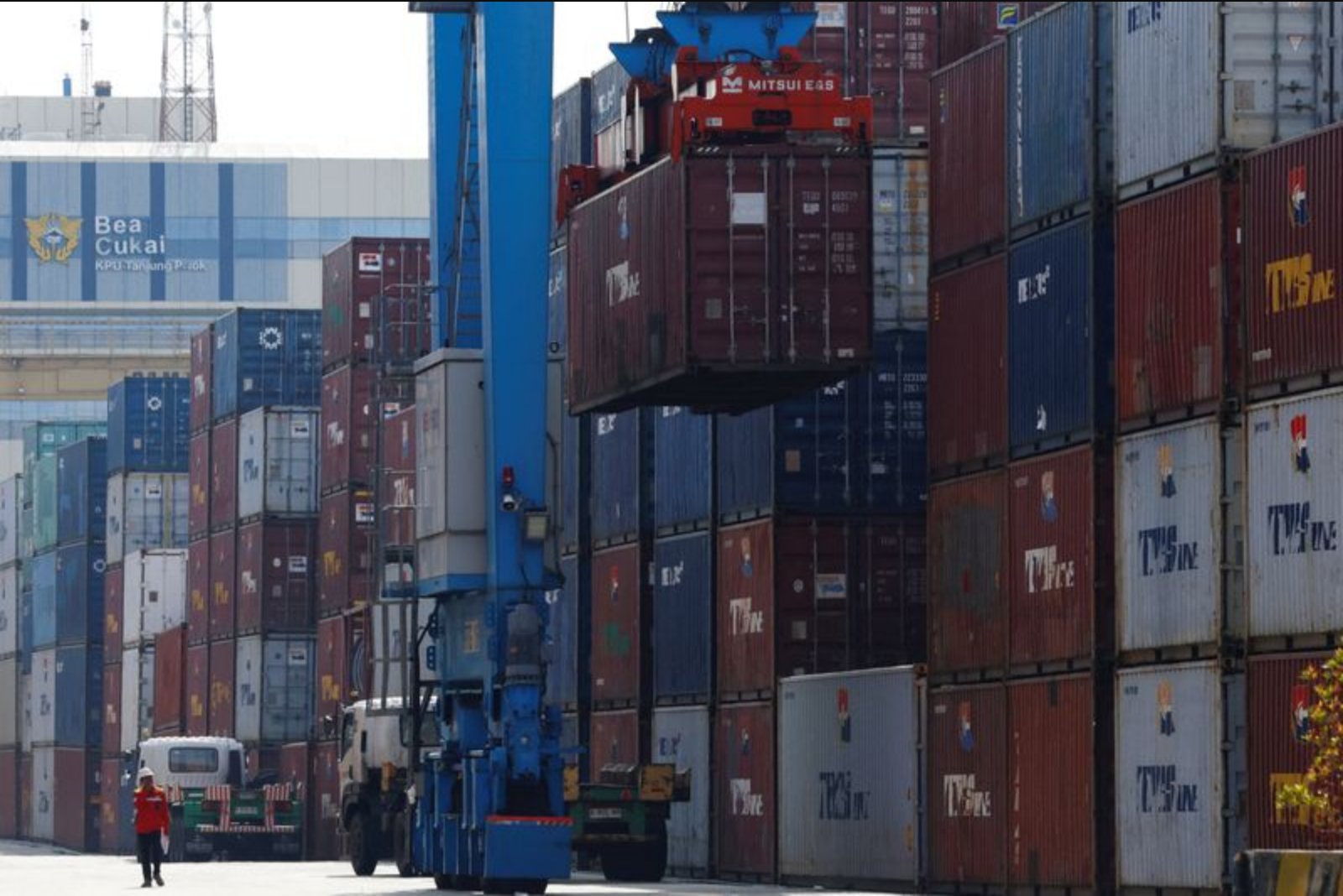
Indonesia and the United States concluded a bilateral trade accord in Washington that reduces U.S. tariff rates on Indonesian exports to 19% from the previous 32% level, while carving out exemptions for a set of commodities that are central to Indonesia’s export mix.
The agreement was signed in the U.S. capital by Indonesia’s senior economic minister, Airlangga Hartarto, and U.S. Trade Representative Jamieson Greer after several months of negotiations. Airlangga said during an online press briefing that "This deal respects the sovereignty of both countries," and described the arrangement as a "win-win" for both sides.
Key exemptions under the deal include palm oil, which represents roughly 9% of Indonesia’s overall exports, along with Indonesian coffee, cocoa, rubber and spices, Airlangga said. Those commodities will be tariff-free under the agreement.
The new 19% tariff rate aligns Indonesia with several of its regional peers. It matches the rate applied to countries such as Malaysia, Cambodia, Thailand and the Philippines. Vietnam, by contrast, has a slightly higher rate of 20% under its U.S. arrangements. Malaysia, which is also a major palm oil exporter, similarly benefits from tariff exemptions for palm oil and for cocoa and rubber.
Officials framed the deal as timely coming after a difficult start to 2026 for Indonesian markets. Recent headwinds cited by market observers include a warning from index provider MSCI in the prior month that Indonesia’s equity market faced a risk of being downgraded to "frontier" status over transparency concerns, and a change by Moody’s two weeks ago that cut the country’s credit rating outlook, citing reduced predictability in policy making.
Yose Rizal Damuri, executive director of CSIS Indonesia, suggested the U.S. agreement could be used as a platform to rebuild investor trust if Jakarta leverages the commitments multilaterally and pursues deregulation based on them. "If Indonesia could multilateralize some of its commitments to the United States and use them as a basis for deregulation, that would increase trust in Indonesia and that’s something that should be taken advantage of, optimized," he said.
Textiles are addressed separately in the pact. Under the arrangement, certain Indonesian textile products will face a 0% levy subject to a quota mechanism that has yet to be finalized. That quota will be tied to the quantity of U.S.-sourced materials used in production, specifically cotton and man-made fibres.
Airlangga said the U.S. had dropped requests to include a number of non-economic provisions in the agreement, specifying that proposed provisions related to nuclear reactor development and the South China Sea were not part of the final text.
In exchange for tariff reductions and commodity exemptions, Indonesia agreed to remove tariff barriers on most U.S. goods across sectors and to address a range of non-tariff barriers, including local content requirements, according to a White House fact sheet. The agreement also obliges Indonesia to accept U.S. product standards in several regulated areas, notably vehicle safety, emissions, medical devices and pharmaceuticals.
The agreement contains provisions aimed at addressing U.S. concerns over global supply chains for critical minerals and the role of foreign-owned processing facilities. Under the pact, Indonesia will constrain "excess production" at foreign-owned mineral processing plants by ensuring output conforms to Indonesian mining quotas. Minerals explicitly cited in the agreement include nickel, cobalt, bauxite, copper and manganese.
Jakarta additionally committed to take action against companies owned or controlled by foreign countries when the practices of those companies are judged to harm U.S. trade interests. The deal also commits Indonesia to facilitate U.S. investment in critical minerals and energy resources and to cooperate with U.S. firms to accelerate development of the country’s rare-earth sector.
Airlangga said the pact will take effect 90 days after both sides complete their respective legal procedures, while noting that the text could be adjusted by mutual consent prior to entry into force.
President Prabowo Subianto traveled to Washington to participate in the signing and to attend the first leaders’ meeting of U.S. President Donald Trump’s Board of Peace. During the visit, Prabowo and Trump signed a document titled "Implementation of the Agreement Toward a NEW GOLDEN AGE for the U.S.-Indonesian Alliance," which the White House said is intended to bolster economic security and growth between the two nations.
Separately, Indonesian and U.S. companies signed commercial agreements earlier in the week with an announced combined value of $38.4 billion.
Summary
The United States and Indonesia have agreed to lower U.S. tariffs on Indonesian goods to 19% from 32%, while exempting palm oil and several other key agricultural exports from tariffs. The accord, signed in Washington, also includes commitments by Indonesia to accept U.S. product standards, reduce non-tariff barriers, constrain excess mineral processing by foreign-owned facilities and facilitate U.S. investment in critical minerals. The deal becomes effective after legal steps in both countries and follows a difficult start to 2026 for Indonesian markets.
Key points
- Tariff adjustment: U.S. levies on Indonesian goods fall to 19% from 32%, with palm oil, coffee, cocoa, rubber and spices excluded from tariffs - impacts agribusiness and export sectors.
- Standards and non-tariff changes: Indonesia will accept U.S. product standards for vehicles, emissions, medical devices and pharmaceuticals and will address local content and other non-tariff barriers - impacts manufacturing and regulated goods exporters.
- Critical minerals and investment: The deal imposes controls on "excess production" at foreign-owned mineral processors and commits Indonesia to facilitate U.S. investment in critical minerals and rare-earth development - impacts mining, processing and energy sectors.
Risks and uncertainties
- Policy and implementation risk: The pact takes effect only after legal procedures in both countries and allows for changes by mutual consent, leaving timing and final details uncertain - impacts exporters, manufacturers and investors relying on the timeline.
- Market sentiment and ratings risk: Indonesia has faced recent setbacks to investor confidence, including an MSCI warning about a potential downgrade to "frontier" status and Moody’s cutting the credit rating outlook, meaning trust in policy stability remains an uncertainty - impacts equity and sovereign credit markets.
- Enforcement and scope risk: Commitments to limit "excess production" and to act against foreign-owned firms harming U.S. trade interests require enforcement mechanisms; effectiveness of those measures is not detailed in the public summary - impacts mining and foreign investment flows.