
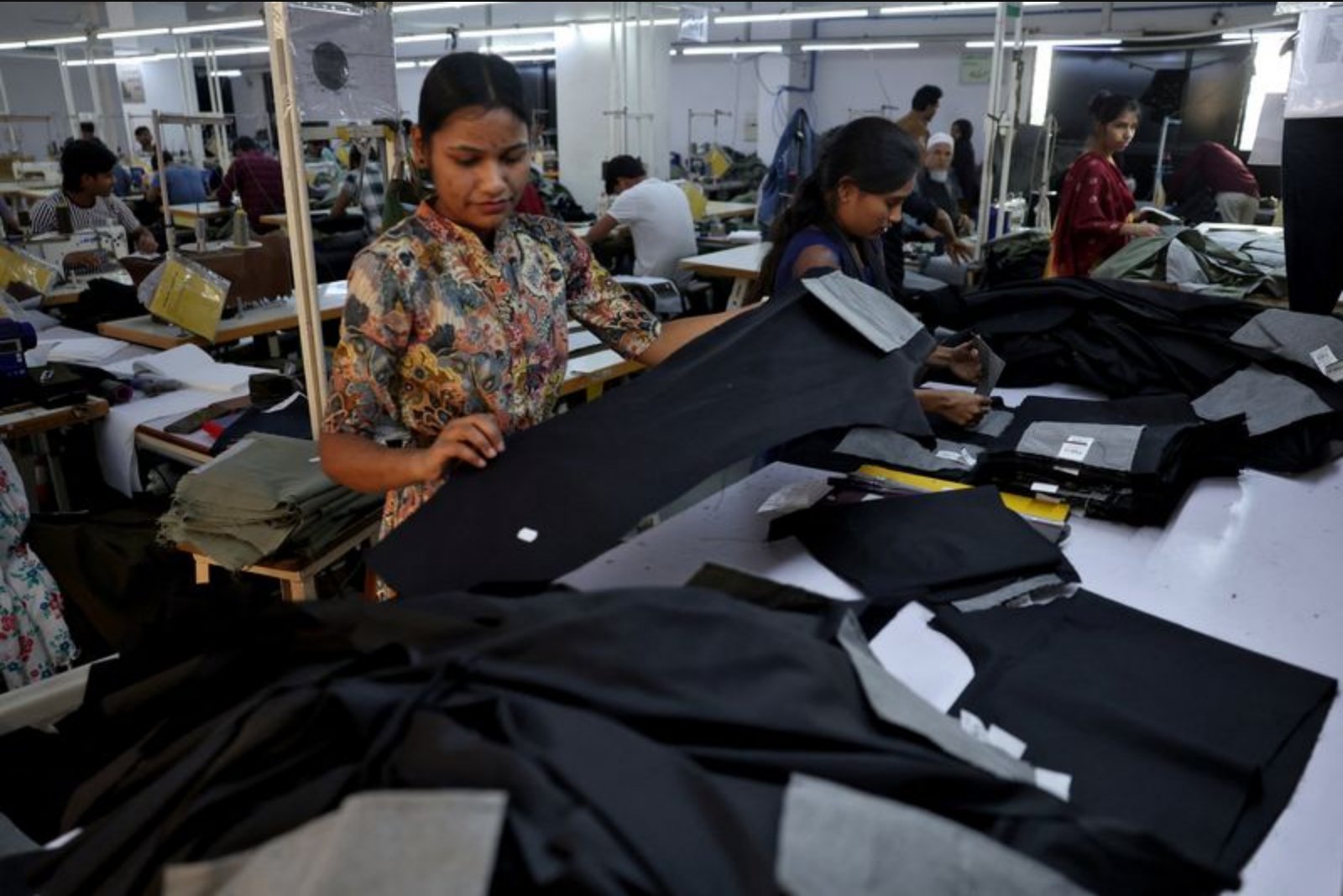
BENGALURU, March 2 - India’s factory sector posted its strongest expansion in four months in February as robust domestic demand pushed up orders and output, according to the latest PMI reading. The survey also showed exports slowed to their weakest rate in nearly a year-and-a-half.
The rise in factory activity supports expectations that India’s economy will remain resilient this quarter following a 7.8% expansion in the October-December period, a performance that was buoyed by a 13.3% increase in manufacturing. For the full fiscal year ending in March, the economy is projected to grow 7.6%.
HSBC India Manufacturing Purchasing Managers' Index (PMI), compiled by S&P Global, increased to 56.9 in February from 55.4 in January, though it fell short of a preliminary reading of 57.5. Readings above 50 indicate expansion.
"India’s final manufacturing PMI reflected an acceleration in manufacturing activity in February. Output expanded at a faster rate for a second month, supported by stronger domestic orders," said Pranjul Bhandari, chief India economist at HSBC. "However, growth in new export orders continued its slowing trend that began in mid-2025, somewhat restricting employment creation in the manufacturing sector."
The survey, carried out between February 9 and February 23, recorded new export orders rising at the slowest pace in 17 months. The report noted U.S. tariff uncertainty as a factor despite a recent trade deal, citing that tariffs on Indian goods had been reduced to 18% from 50% prior to the survey window. Last week, President Donald Trump announced new global tariffs following the Supreme Court's move to quash some levies.
Domestically, new orders - a key gauge of demand - climbed at their fastest rate since October. Production likewise increased at the quickest pace in four months, with firms pointing to efficiency gains, strong demand, and investment in technology as supporting factors.
Input cost inflation remained moderate and unchanged from January. Nonetheless, manufacturers raised their selling prices at the fastest rate in four months as stronger demand enabled them to pass on higher costs to customers.
Employment rose to a four-month high but gains were marginal overall - only 4% of surveyed firms reported hiring, while the majority made no changes to staffing levels. Business confidence for the year ahead improved to a four-month high, signaling firms expect robust growth despite weak external demand.
Year to date, 2 out of 3 global portfolios are beating their benchmark indexes, with 88% in the green. Our flagship Tech Titans strategy doubled the S&P 500 within 18 months, including notable winners like Super Micro Computer (+185%) and AppLovin (+157%). AI computing powers are changing the stock market; Investing.com's ProPicks AI includes dozens of winning stock portfolios chosen by our advanced AI.