
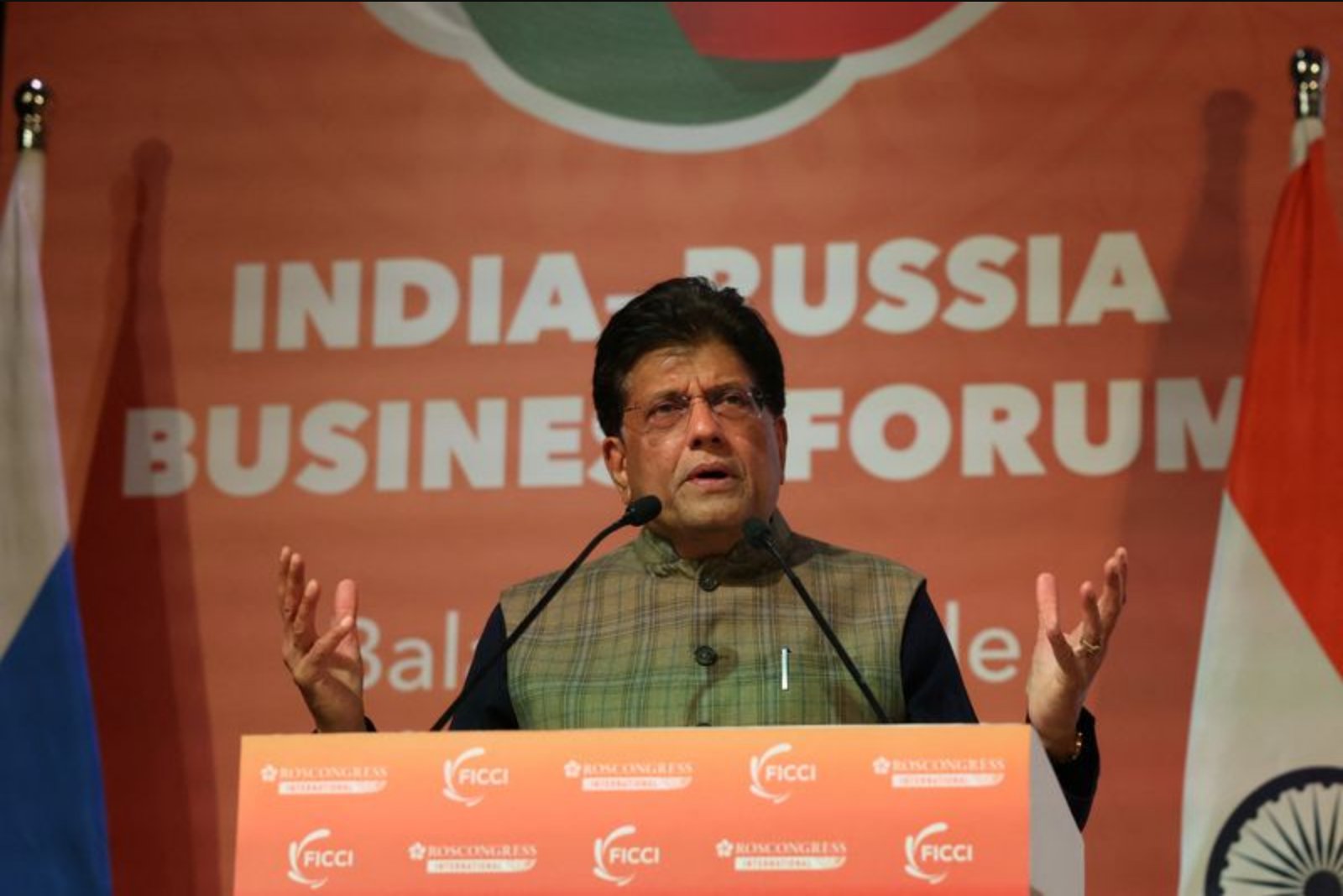
India is pursuing a trade pact with the United States that gives it a competitive edge, but New Delhi will not rush to conclude an agreement while Washington's tariff policy remains unsettled, Trade Minister Piyush Goyal said on Friday. Goyal told broadcaster CNN-News18 that India wants to negotiate the "best possible opportunities" in any deal with the U.S., but that the government will "wait and watch" how the Trump administration proceeds on tariffs.
The comments come as the future of trade deals negotiated by the U.S. faces uncertainty following a court decision that undercut the administration's legal authority to impose broad emergency tariffs. Since that ruling, President Donald Trump announced a temporary 10% duty on imports from all countries, including India, and has said he would raise the levy to 15% - the upper limit permitted under the statute he has cited.
Goyal also confirmed he met with U.S. Commerce Secretary Howard Lutnick for a luncheon in New Delhi on Thursday. The meeting was unannounced, reflecting Lutnick's private visit to India, and covered trade and economic partnership issues, according to Goyal. The timing of the talks followed a period of high-level engagement between the two capitals that had anticipated further steps in negotiations.
New Delhi had been preparing to sign a legal agreement with Washington in March, but Goyal said he would not set a timeline for finalizing trade deals. Earlier plans included sending an Indian trade delegation to Washington, a trip that was postponed last week after the U.S. Supreme Court struck down parts of the administration's tariff authority.
Prior to the court ruling, officials from both nations had reached a framework under which U.S. tariffs on India would be reduced to 18% from 50% - a prior rate that included a 25% punitive tariff tied to India's purchases of Russian oil. In the wake of the judicial decision and shifting U.S. measures, the path forward for previously negotiated bilateral deals remains unclear: China has urged the U.S. to abandon tariff measures, the European Union has paused its approval process, and India has delayed planned talks.
Summary
India is intent on securing favorable terms in a trade agreement with the United States but is holding off on definitive commitments while Washington adjusts its tariff approach following a court ruling. New Delhi continues to engage diplomatically, exemplified by a recent meeting between Trade Minister Piyush Goyal and U.S. Commerce Secretary Howard Lutnick.
Key points
- India seeks the "best possible opportunities" in a U.S. trade deal and will monitor Washington's next steps on tariffs before finalizing agreements.
- Following a court decision that limited the U.S. administration's tariff authority, President Trump imposed a temporary 10% duty on all nations and signaled a potential increase to 15%.
- Negotiations that had aimed to reduce U.S. tariffs on India to 18% from a previous 50% rate - which had included a 25% punitive charge related to Russian oil purchases - are now in limbo, and a planned Indian trade delegation to Washington was postponed.
Risks and uncertainties
- Legal and policy uncertainty in the U.S. over tariff authority - this affects bilateral negotiations and timing for agreements.
- Temporary and potentially escalating duties (10% now, possible rise to 15%) that apply broadly - these measures influence trade flows and commercial planning.
- Delays in planned diplomatic engagements, such as the postponed Indian trade delegation and paused EU approvals, which leave outcomes and implementation dates uncertain.