
Overview
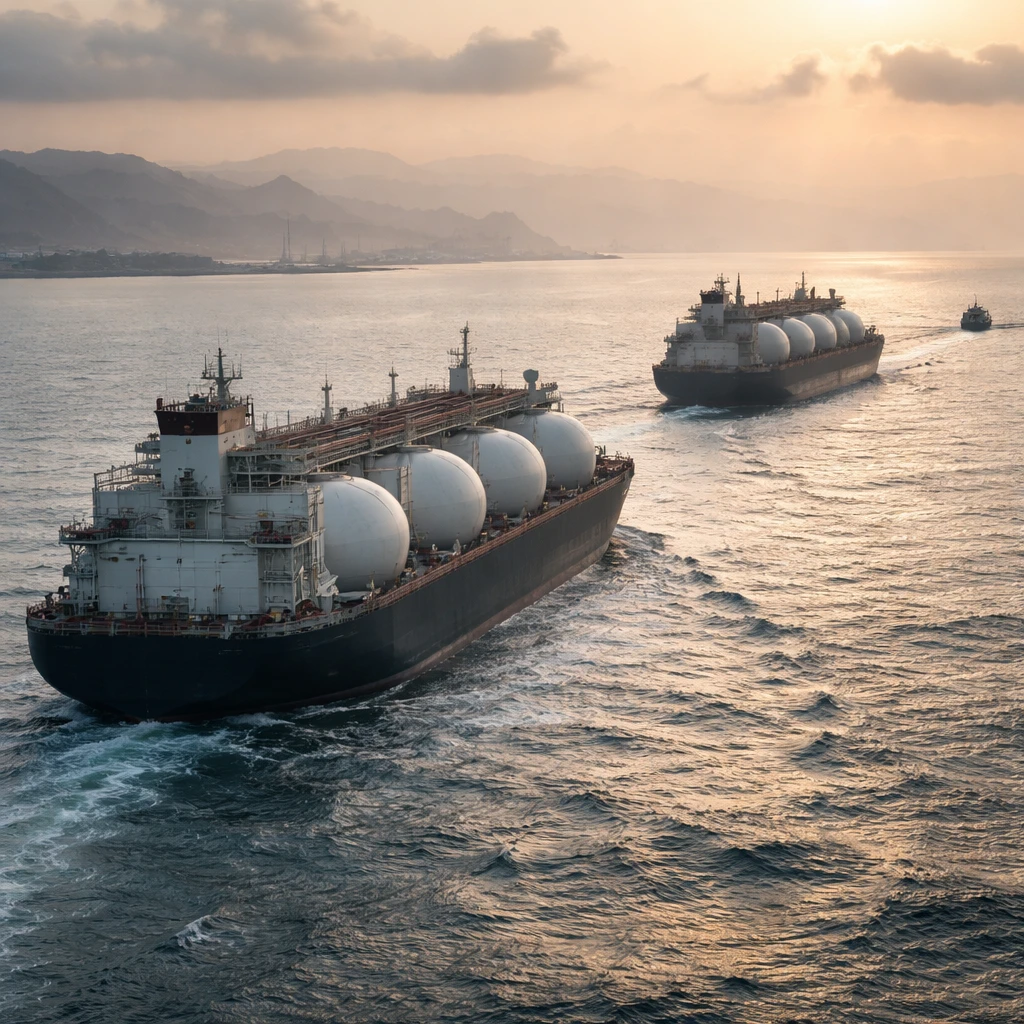
Two liquefied petroleum gas (LPG) tankers have successfully transited the Strait of Hormuz and are currently bound for India, a development that offers a short-term reprieve in the midst of a supply squeeze tied to the ongoing Persian Gulf conflict. The vessels were reportedly allowed safe passage following an arrangement between New Delhi and Tehran, providing a logistical lifeline to an economy confronting acute shortages of cooking and industrial fuel.
Vessels, ownership and charter
The tankers involved are named the Shivalik and the Nanda Devi. Both ships were chartered by the state-run Indian Oil Corp. (NS:IOC) and are owned by Shipping Corp of India Ltd. (NS:SCI). Sources familiar with the matter indicate the ships were permitted to pass through a waterway that had been effectively shuttered for nearly a fortnight, operating under a sensitive diplomatic arrangement reportedly negotiated between the two capitals.
Official confirmation and tracking data
Neither Iranian officials nor the Indian Ministry of External Affairs have issued formal confirmation of the reported deal. Independent ship-tracking information, however, shows the Shivalik has already cleared the strait after loading at Ras Laffan in Qatar. The tracking data provide operational verification of at least one vessel's successful transit.
Why this matters to India
The passage carries particular weight for India, which is the world’s second-largest importer of LPG and depends on the Middle East for roughly 90% of that supply. LPG serves both household cooking needs and feedstock requirements for petrochemical production. Domestic gas dealers have faced massive crowds amid shortages, and industrial operators have warned of the risk of shutdowns should supplies remain constrained.
Market and supply-chain implications
The arrival of these two tankers is expected to bring temporary relief to consumers when the ships dock next week. Observers note that the successful passage has raised hopes that other tankers currently waiting near the mouth of the Persian Gulf may be able to follow. Analysts have pointed to the use of AIS signals that identify the vessels as "government vessels" as a possible element of the de-escalation approach used to move ships through the high-risk zone.
Outstanding questions
Indian Oil Corp. and other state-run refiners are now assessing whether the allowance constitutes a one-off exception or the beginning of a more stable "energy bridge" through one of the world’s most volatile maritime chokepoints. The immediate operational success does not resolve the underlying regional tensions, which remain a persistent variable for energy markets and supply-chain planners.
Key points
- Two LPG tankers, the Shivalik and the Nanda Devi, have transited the Strait of Hormuz and are en route to India, providing short-term relief from fuel shortages.
- The vessels were chartered by Indian Oil Corp. (NS:IOC) and are owned by Shipping Corp of India Ltd. (NS:SCI); ship-tracking shows the Shivalik cleared the strait after loading at Ras Laffan in Qatar.
- The move underscores the vulnerability and importance of Middle East supply lines for India - notably for household cooking fuel and petrochemical feedstocks - and could affect shipping, energy and industrial sectors.
Risks and uncertainties
- Official silence - Iranian authorities and India’s Ministry of External Affairs have not formally confirmed the reported arrangement, leaving diplomatic details unclear; this uncertainty affects political risk assessments in energy markets.
- Durability of corridor - It is not yet clear whether the passage represents a one-off concession or the start of a reliable energy corridor; a short-lived arrangement would limit its benefit to consumers and industry.
- Regional conflict persistence - The broader conflict remains unresolved and could reclose the route or disrupt additional shipments, posing ongoing logistical and market risks to shipping and energy sectors.
As these shipments approach Indian ports next week, market participants and state refiners will be watching closely to determine whether the pathway through the Strait of Hormuz can provide more sustained relief or whether the arrangement will remain a temporary operational fix against a backdrop of continued regional volatility.