
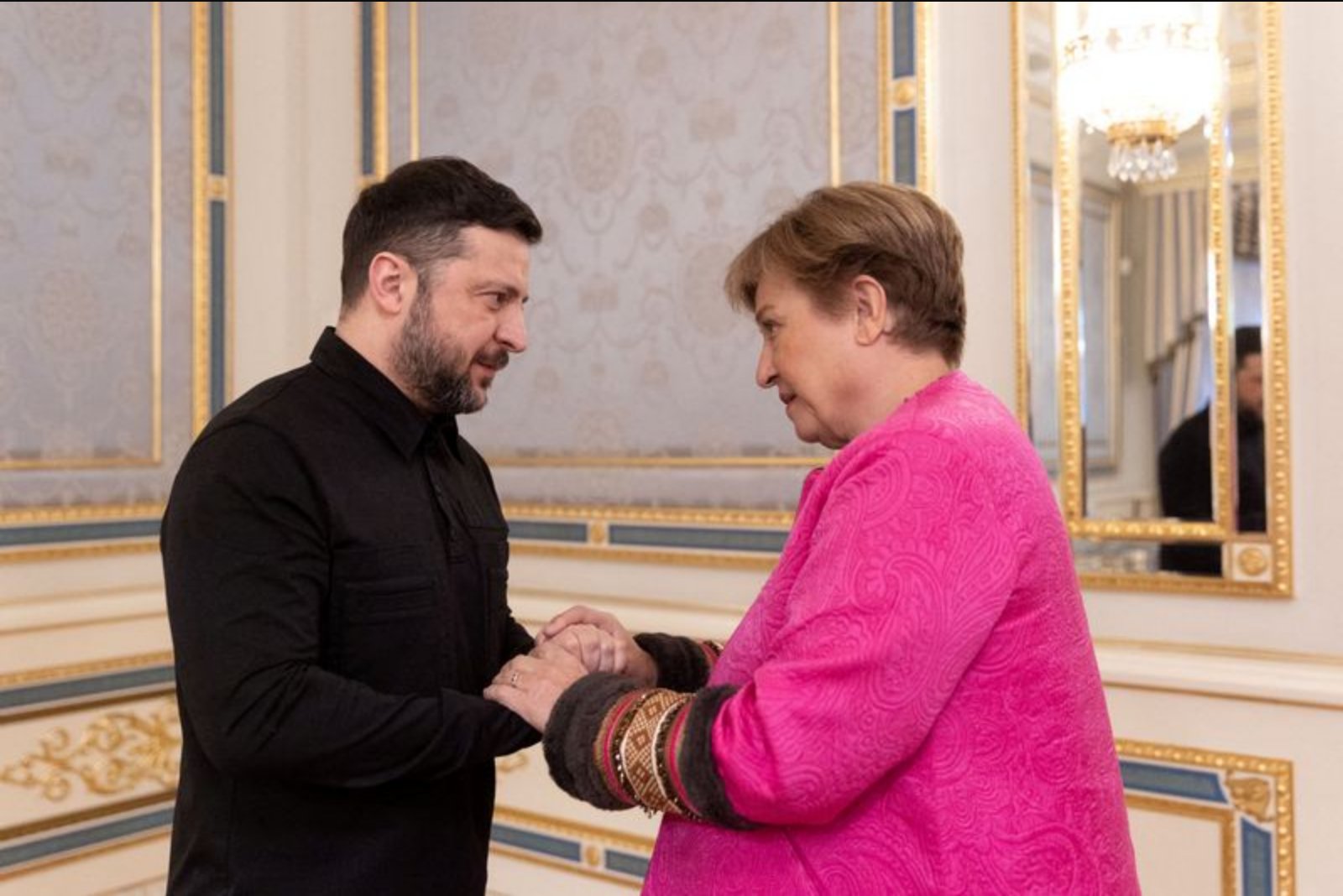
KYIV, March 18 - An International Monetary Fund mission began formal talks with Ukraine's government on Wednesday, focusing on macroeconomic policy and structural reforms that the Fund says are conditions for further financial support.
Priscilla Toffano, the IMF's representative in Ukraine, said in a statement that "The discussions will cover macroeconomic policies and key structural reforms." The visit comes after the IMF disbursed $1.5 billion last month as part of a new $8.1 billion lending programme; additional tranches are contingent on Ukraine meeting the programme's conditions.
Officials and economists in Kyiv stressed that the discussions are occurring against a backdrop of a rapidly widening budget deficit. With the conflict against Russia entering its fifth year, the government estimates it will need substantial external financing to cover the gap. Authorities and economists have put the external financing requirement for this year in a range between $45 billion and $52 billion.
Lawmakers and policy analysts said the mission is expected to press for measures aimed at raising revenue and improving the tax base. Specifically, the talks are likely to focus on increasing taxes on individual entrepreneurs and small businesses, reducing the size of the shadow economy, and creating a level playing field for commercial activity.
Kyiv's parliament is under pressure to approve a package of legislative changes by the end of March that would raise taxes for individual entrepreneurs and small businesses. Government officials estimate the changes would affect roughly 250,000 entrepreneurs. The draft measures also call for higher taxes on Ukrainian digital platforms and a reduction in value-added tax exemptions.
So far, parliament has delayed votes on several key provisions and has been unable to secure sufficient support for increases targeting digital platforms. Observers in Kyiv have noted the political difficulty of approving such measures amid wartime conditions.
Market and investment voices in the country have framed the vote as decisive for unlocking continued international support. "No IMF programme - no money," wrote Sergiy Fursa, a deputy director at Dragon Capital, on Facebook, arguing that parliamentary approval of the fiscal changes would be beneficial both for wartime survival and for laying foundations for a more effective economy.
Ukraine has implemented tax increases on one prior occasion since Russia's full-scale invasion on February 24, 2022. In December 2024 the government raised personal income tax rates as well as taxes on businesses and banks. Nonetheless, the combination of sustained defence spending and extensive frontline combat has left the fiscal position pressured beyond the relief those measures provided.
The bulk of state revenues are allocated to defence, while pensions, public sector wages, and other social expenditures remain dependent on foreign financial assistance. IMF backing is viewed as critical not only for stabilising Ukraine's macroeconomic and financial outlook but also for leveraging other forms of international support.
European Union funding is closely linked to the presence of IMF support. The EU has approved a 90 billion euro loan package for Ukraine, but implementation of that assistance has been delayed by Hungary's Prime Minister Viktor Orban, who has so far held up progress.
As Kyiv navigates the parliamentary process and negotiations with the IMF, the immediate fiscal choices lawmakers make will determine whether further disbursements under the current lending programme are forthcoming and how quickly other international financing can be mobilised.