
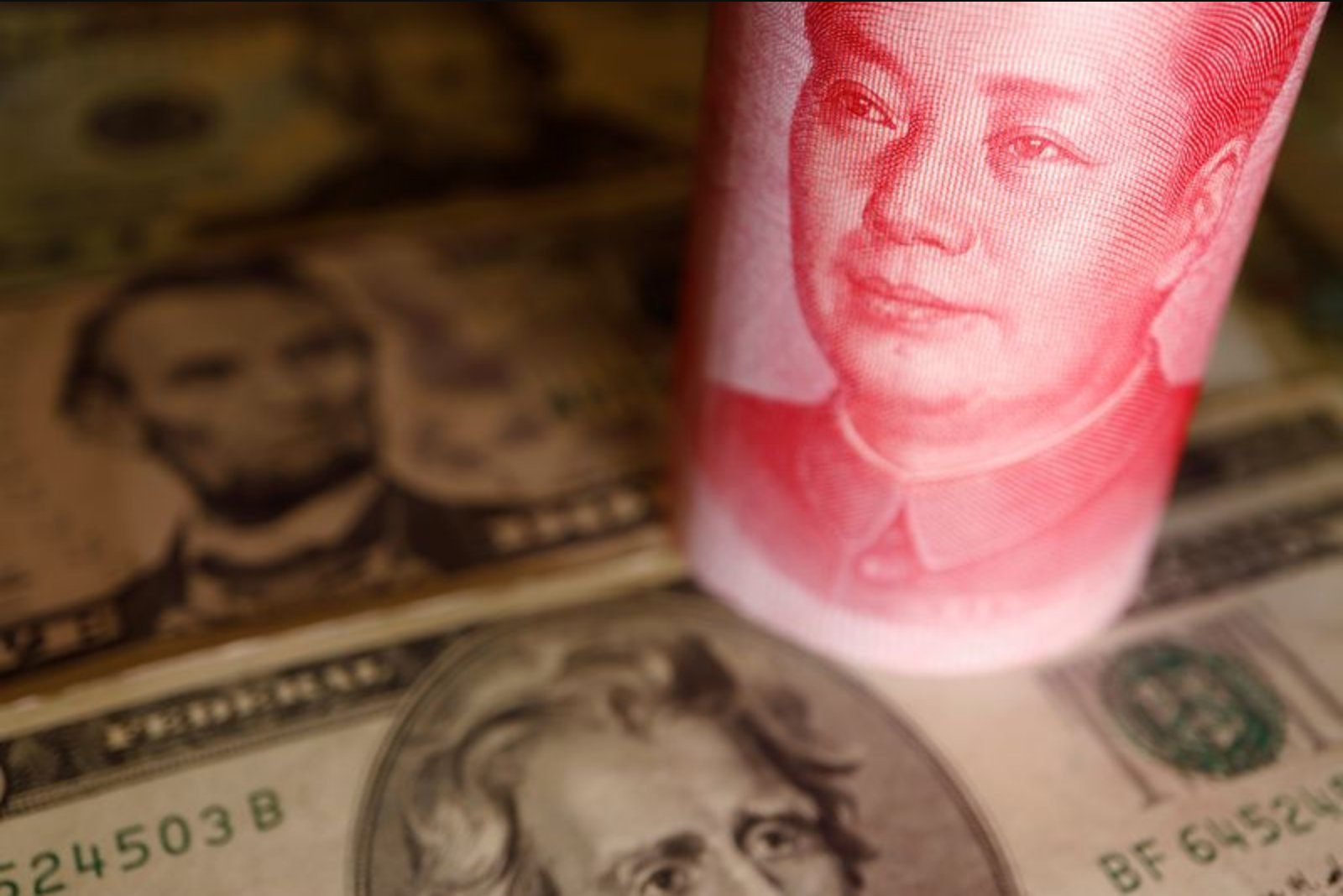
HONG KONG, Feb 27 - The Chinese yuan has climbed noticeably against the U.S. dollar, reflecting a combination of strong export performance and a weaker dollar amid lower U.S. interest rates. After posting a 4.4% gain last year, its largest annual rise since 2020, the yuan has appreciated by roughly 2% so far in 2026 and now sits close to three-year highs.
On Friday the People’s Bank of China (PBOC) took a concrete step intended to blunt the pace of appreciation, announcing it will eliminate the 20% risk reserve requirement on foreign exchange forward contracts starting March 2. That change reduces the implicit cost of buying dollars, and is a reversal of the September 2022 decision that had raised reserve requirements to address steep yuan depreciation and capital outflows.
Analysts expect the central bank has additional policy options should it wish to slow the currency's advance further. Below is a review of the principal tools at the PBOC's disposal and how they have been used recently.
FX reserve requirements for financial institutions
The recent decision to scrap the 20% reserves requirement for forex forward contracts is designed to make it less costly for market participants to buy dollars, thereby cushioning upward pressure on the yuan. Wang Qing, chief macroeconomic analyst at Orient Golden Credit Rating, said: "It sends a clear policy signal that regulators want to prevent excessive yuan appreciation, which will help stabilize market expectations."
Beyond that step, the PBOC could increase the mandatory amount of foreign exchange that lenders must hold as reserves. Raising those onshore reserve requirements would compel banks to buy dollars, tightening the supply of dollars in the onshore market and reducing the incentive to hold long-yuan positions.
Currently, the mandatory reserve level for foreign exchange holdings stands at 4%. That figure had been cut from 6% in 2023, a prior move intended to support the currency when it faced downward pressure.
Counter-cyclical factor in daily guidance fix
Since December the PBOC has been setting its official daily guidance for the yuan at levels deliberately weaker than what market forecasts suggested. This counter-cyclical factor acts as a signaling tool to guide market expectations and blunt rapid appreciation. The gap between the PBOC's fixation and market projections has expanded in recent days to record levels, underscoring the central bank's increasing unease with the speed of the currency's gains.
State bank dollar buying
In December, major state-owned banks in China stepped into the onshore spot market to buy dollars and hold them, an unusually forceful measure intended to check yuan strength. Reuters reporting at the time noted that those lenders did not appear to recycle the purchased dollars back into the swap market, a pattern consistent with an effort to tighten dollar liquidity and make long-yuan speculative positions more costly.
Although the PBOC was not visibly active in the market, currency expert Brad Setser of the Council on Foreign Relations suggested in a blog post that state banks may have been acting on the central bank's behalf. He said: "All the activity is with the state banks," and estimated a "nearly unprecedented" level of backdoor intervention in December.
Verbal guidance and hedging advice
PBOC officials frequently use public statements to emphasize the bank's objective of keeping the yuan "basically stable" and to caution against currency overshooting. Alongside such statements, the central bank has repeatedly encouraged market participants to use derivatives to hedge currency risk rather than relying on one-way directional bets on the yuan.
Direct market intervention
In more extreme circumstances the PBOC has the authority to buy or sell foreign currencies directly in market operations to influence the exchange rate. Historical episodes have seen the central bank sell dollars to support the yuan when it was under pressure. In recent years, however, signs point to more restrained direct intervention: China's foreign currency reserves have been relatively stable, which suggests the central bank has largely avoided overt market activity.
Each of these instruments - reserve ratios, guidance fixes, state bank activity, public statements, and the option of direct intervention - gives the central bank a toolkit to moderate the rate at which the yuan strengthens. Officials appear to be layering measures and signals, combining technical adjustments with market messaging, rather than relying on any single mechanism.
How Beijing balances these tools will shape onshore dollar liquidity, market expectations, and the incentives facing exporters, importers, and financial institutions that operate across currency markets.