
Overview
China’s dependence on imported hydrocarbons leaves the country exposed to supply shocks stemming from heightened tensions in the Middle East, according to analysts at Barclays. The bank’s assessment focuses on how a sustained rise in Brent crude toward $100 per barrel could play out for China’s energy security, inflation and growth.
Import reliance and transit exposure
China imports about 75% of the crude it consumes, and around 90% of those imports arrive by sea. Large volumes of crude come from Gulf producers such as Saudi Arabia, Iraq, the UAE, Kuwait and Qatar. When Iranian crude is included, the country’s dependence on Middle Eastern and nearby sources becomes even more pronounced: Barclays cites commodities analytics data estimating Iran accounted for roughly 12% of China’s oil imports last year.
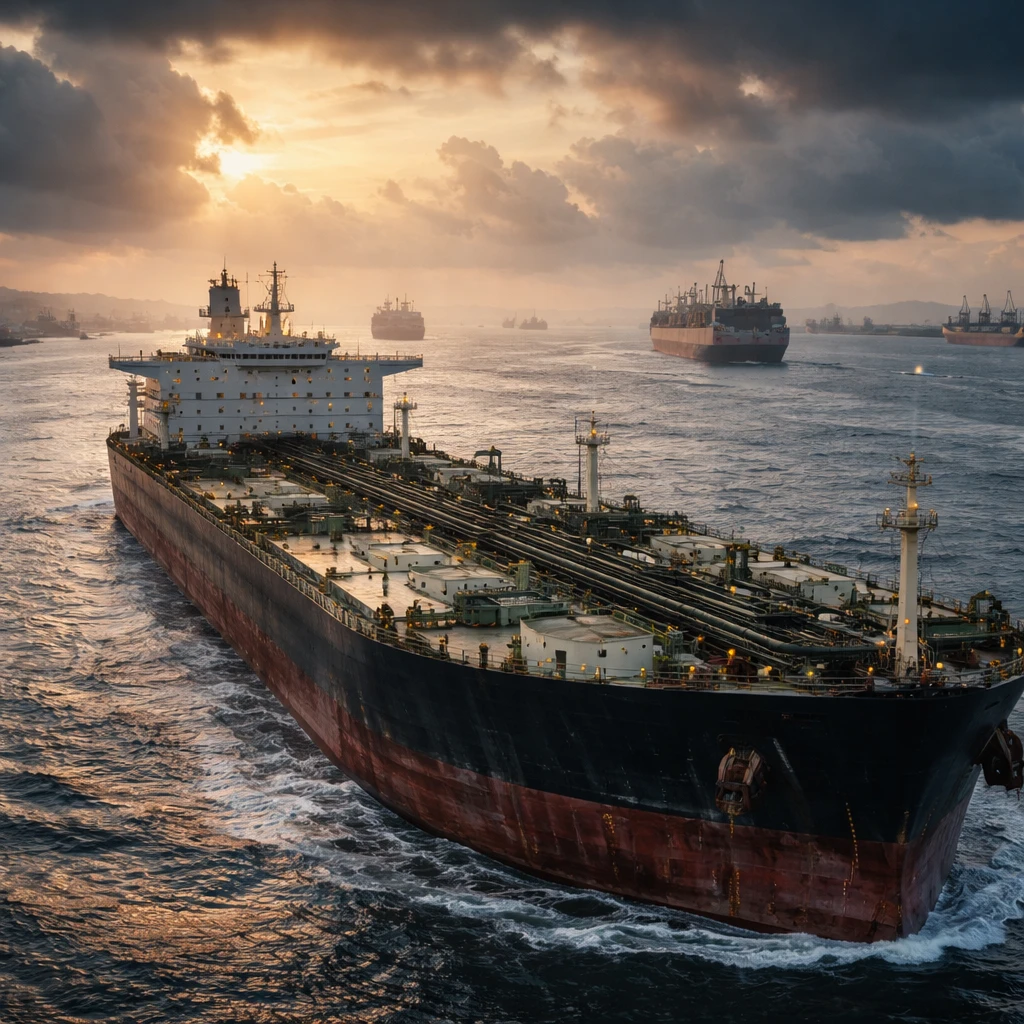
Barclays estimates that oil shipments moving through the Strait of Hormuz represent more than 35% of China’s total oil consumption. Because that waterway is a major conduit for Gulf supplies, any disruption there would pose material risks to China’s energy flows.
Natural gas exposure
The bank also highlights China’s vulnerability in natural gas markets. China is the world’s largest importer of liquefied natural gas, and about 30% of its LNG imports are linked to shipments that transit the Strait of Hormuz, including significant volumes from Qatar. This overlap in crude and LNG transit routes concentrates exposure to the same chokepoint.
Buffers and supply flexibility
Despite these vulnerabilities, Barclays points to a set of mitigating factors. China holds substantial strategic petroleum reserves, estimated by the bank at roughly 1.2 billion barrels - about 104 days of import cover. The country has also shown an ability to substitute supplies: Iranian barrels have at times been replaced by volumes from other producers, including Russia, and additional imports could be sourced from countries such as Brazil, Malaysia, Angola and Canada.
Another important buffer is China’s accelerating shift toward renewable energy, which has reduced oil’s share of total energy consumption over recent years. Barclays frames this evolving energy mix as a factor that lowers the economy’s sensitivity to oil price shocks compared with earlier periods.
Projected macro impact
Using a scenario in which oil trades around $100 per barrel through 2026, Barclays estimates headline inflation in China could increase by about 0.3 percentage points. The bank also expects economic growth to slow modestly, citing higher production costs and weaker consumption as the channels for that drag.
Nonetheless, Barclays concludes that China’s growing supply flexibility and changing energy composition mean the macroeconomic fallout from oil shocks is likely to be less severe than in the past.
Key takeaways
- China’s heavy reliance on seaborne oil imports and LNG that transit the Strait of Hormuz creates concentrated exposure to Middle East disruptions.
- Large strategic petroleum reserves, alternative supplier options and a rising share of renewables provide meaningful buffers against sustained price spikes.
- Barclays models suggest $100 per barrel oil in 2026 could raise headline inflation by around 0.3 percentage points and modestly slow growth.
Sectors and markets affected
The analysis implies impacts would be felt across energy-intensive sectors including manufacturing and transportation, and could ripple into consumer spending through higher production costs. Financial markets tracking inflation expectations, energy prices and trade-sensitive sectors would also be exposed.
Methodological caveat
Where Barclays provides estimates, the bank’s scenario assumes oil near $100 per barrel in 2026 and evaluates the likely channels for inflation and growth effects. The assessment does not offer precise forecasts beyond the stated estimates and highlights the role of energy mix and supply adjustments in moderating the outcome.