
Economy February 11, 2026

House Approves Resolution to End Trump’s Canada Tariff Emergency; Measure Moves to Senate

House vote signals congressional resistance to tariffs but faces long odds in Senate and potential presidential veto

By Jordan Park
House Approves Resolution to End Trump’s Canada Tariff Emergency; Measure Moves to Senate

The U.S. House of Representatives voted 219 to 211 to approve a resolution aimed at rescinding the national emergency declaration that underpinned tariffs on Canada. Six Republicans joined Democrats in supporting the measure. The resolution now advances to the Senate where it is unlikely to secure the two-thirds majority needed to override a presidential veto. The vote marks a notable congressional pushback against the tariffs, which critics say act as a tax on U.S. households.

Key Points

  • House of Representatives passed a resolution 219-211 to end the national emergency used to impose tariffs on Canada, with six Republicans joining Democrats.
  • The resolution advances to the Senate but is unlikely to collect the two-thirds support necessary to override a presidential veto.
  • The tariffs have been criticized as an effective tax on Americans, with the Tax Foundation estimating average household cost increases of $1,000 in 2025 and $1,300 in 2026; the tariffs were raised from 25% to 35% on goods outside the USMCA and a 100% tariff has been threatened.

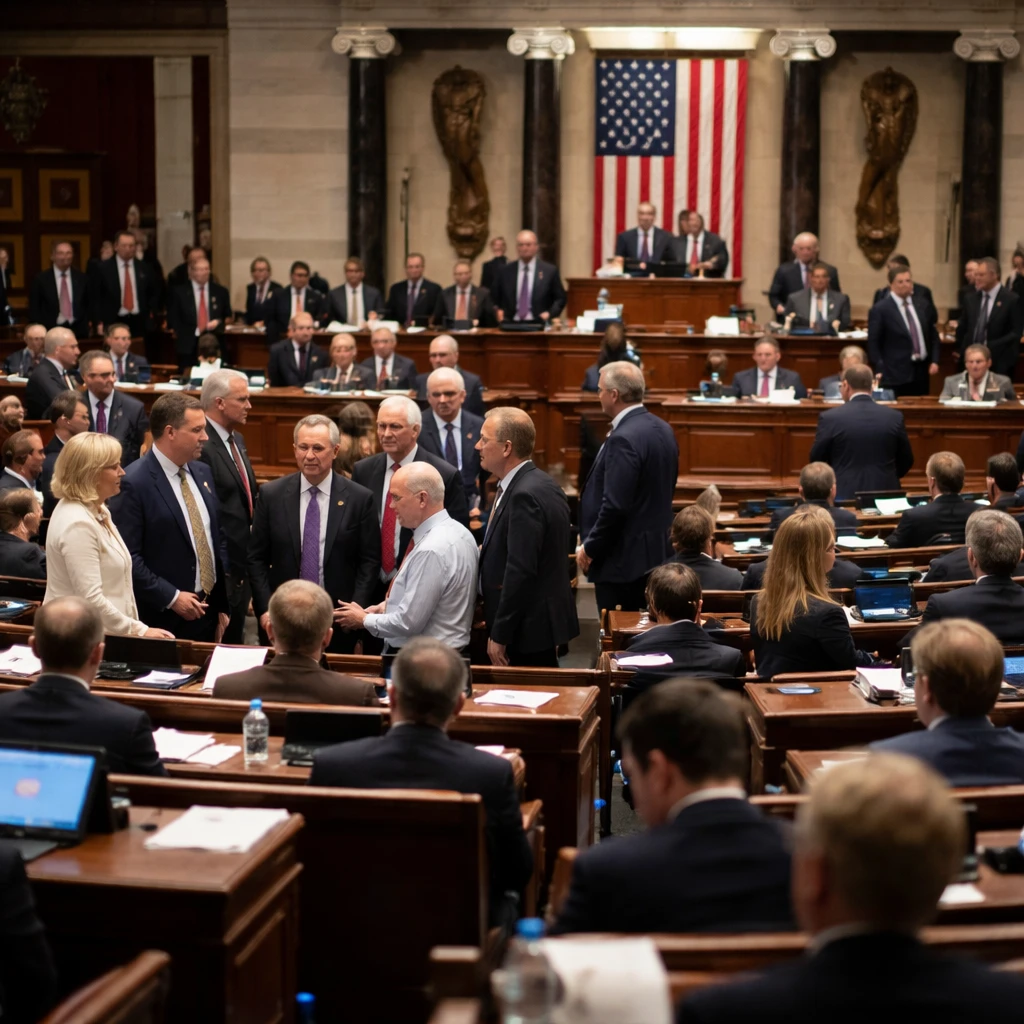
The U.S. House of Representatives on Wednesday evening approved a resolution intended to terminate the national emergency declared by President Donald Trump that authorized tariffs on goods from Canada. The measure passed by a 219 to 211 margin, with six Republicans breaking with most of their party to join Democrats in supporting the move.

The timing of the vote follows a separate House action earlier this week in which lawmakers voted to overturn a procedural block on measures that challenge the president's tariffs. Together, the steps reflect mounting congressional activity directed at the trade measures.

By approving the resolution, the House now sends the matter to the U.S. Senate. However, the outlook in that chamber is uncertain: even if the Senate were to pass the measure, a presidential veto is widely expected and would require a two-thirds majority in both chambers to overturn. Given that threshold, the resolution faces long odds of becoming law without executive assent.

Supporters of the House measure framed the tariffs as harmful to American consumers. A non-partisan study by the Tax Foundation cited in congressional debate estimated the tariffs would translate into an average tax-like increase of $1,000 per U.S. household in 2025 and $1,300 in 2026.

Those tariffs were initially imposed at a 25% rate in early-2025 and were later raised to 35% on goods not covered by the U.S.-Mexico-Canada Agreement. More recently, the president has threatened to escalate tariffs to 100% on Canada, a step described by critics as effectively imposing a trade embargo should Canada pursue a trade deal with China.

Wednesday's vote also opens the door to additional congressional challenges to other tariff measures, including the so-called "liberation day" levies introduced last year. While the House action does not by itself change policy, it signals a degree of bipartisan concern in Congress about the domestic economic impact of the administration's trade steps.

With the resolution now in the Senate, its future will depend on the level of support among senators and whether the White House chooses to sustain or withdraw a veto. For the moment, the House passage represents a clear expression of opposition in at least one chamber of Congress to the tariffs imposed on Canada.

Risks

  • The Senate is unlikely to provide the two-thirds majority needed to overturn a presidential veto, reducing the measure's chances of becoming law - impacts legislative resolution of trade policy.
  • If the president issues a veto as widely expected, the tariffs would remain in place, prolonging cost pressures on consumers and import-dependent industries - impacts household budgets and trade-exposed sectors.
  • The administration's threat of a 100% tariff on Canada introduces the possibility of a trade embargo scenario, which would increase uncertainty for businesses that rely on cross-border supply chains - impacts manufacturing and commerce tied to Canada.

More from Economy

Supreme Court Term Spotlight: High-Stakes Cases Shaping Law and Policy Feb 20, 2026 Trump Vows Fresh 10% Global Tariff After Supreme Court Limits His Trade Authority Feb 20, 2026 Supreme Court Ruling Narrows Presidential Tariff Options, Treasury Secretary Says Feb 20, 2026 Supreme Court Curbs Emergency Tariff Authority, Sparking Market and Policy Reactions Feb 20, 2026 Brazil Says U.S. Supreme Court Decision Restores Country's Edge in American Market Feb 20, 2026