
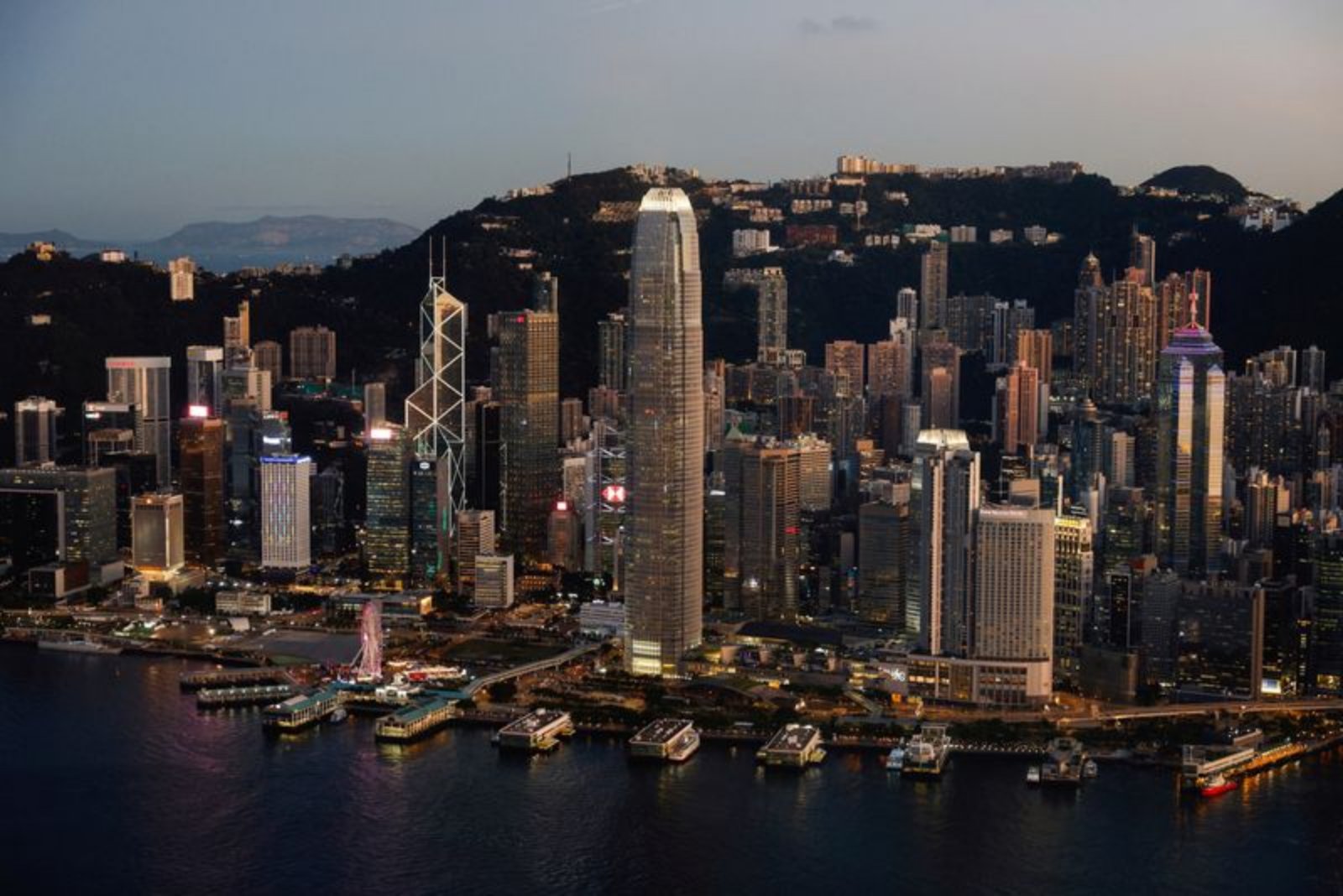
Private residential property values in Hong Kong continued to climb in January, posting a 0.5% increase that extended a run of monthly gains to eight, according to official data released Wednesday. The Rating and Valuation Department's figures showed an uptick in prices month-on-month, following a revised 0.4% rise in December.
For the year 2025 as a whole, residential prices rose 3.7% after several years of declines. That gain represented the first annual increase since prices previously peaked in 2021. Nonetheless, prices remain well below their earlier highs, having fallen nearly 30% over the past five years.
Analysts and major financial institutions have revised up their expectations for the market this year, citing a mix of improved market sentiment and demand dynamics. Over the last week, J.P. Morgan increased its forecast for 2026 home-price growth to a range of 10% to 15%, up from an earlier 5% to 7% estimate. The firm pointed to factors it says underpin the outlook - a resilient local stock market, robust interest from mainland Chinese buyers and lower levels of property inventory.
Goldman Sachs has also raised its projection for price gains to 12%, up from its prior forecast of 5%. Morgan Stanley, in a separate update last month, forecast a 10% rise in home prices this year, citing a pickup in investment demand and strengthening rental conditions.
Commenting on the market's trajectory, Karl Chan, head of Hong Kong property research at J.P. Morgan, said the sector has moved beyond what he described as an "early-stage recovery" into a phase of expansion, noting home prices have rebounded by more than 10% since a trough in March 2025.
The official home price index measures activity in the secondary market. In the primary market, developers have responded with higher pricing and reduced incentives; J.P. Morgan observed that developers have raised asking prices by roughly 4% to 5% in recent months and trimmed average discounts by about 5%, a sign of a firmer outlook among builders.
Developers have also become more active in securing land for future projects. Earlier this month, Kerry Properties acquired a parcel on eastern Hong Kong Island at a winning bid about 17% above market estimates, demonstrating a willingness among some firms to pay a premium in competitive land auctions.
Market sentiment has fed into equities linked to the property sector. Hong Kong's Hang Seng Properties Index has climbed by more than 20% so far this year. In response to the changing outlook, Goldman Sachs adjusted its stock recommendations last week, upgrading Henderson Land and Sino Land to "Buy" to reflect their leverage to the housing upcycle, while downgrading CK Asset to "Neutral" because of its relatively smaller exposure to the city's residential market.
The recovery has also coincided with policy measures intended to support the property sector. Since 2024, Hong Kong's government has lifted restrictions on property purchases and loosened required down-payment ratios as part of efforts to shore up a key pillar of the economy.
Monetary conditions have shifted in tandem with U.S. policy because Hong Kong's currency is pegged to the U.S. dollar. Major Hong Kong banks cut interest rates in October, marking the fifth reduction since September 2024 and following easing moves by the U.S. Federal Reserve. Those rate moves have been part of the broader backdrop supporting borrowing costs and housing demand.
Data summary:
- January private home prices: +0.5% month-on-month
- December revised change: +0.4%
- 2025 annual change: +3.7%
- Five-year cumulative decline: nearly 30%
- J.P. Morgan 2026 forecast: 10% to 15% (up from 5% to 7%)
- Goldman Sachs 2026 forecast: 12% (up from 5%)
- Morgan Stanley 2026 forecast: 10%
The figures and market reactions paint a picture of a property market that, while still beneath its earlier peak, is showing renewed momentum driven by a combination of policy easing, developer behavior, and revised expectations among institutional investors and analysts.