
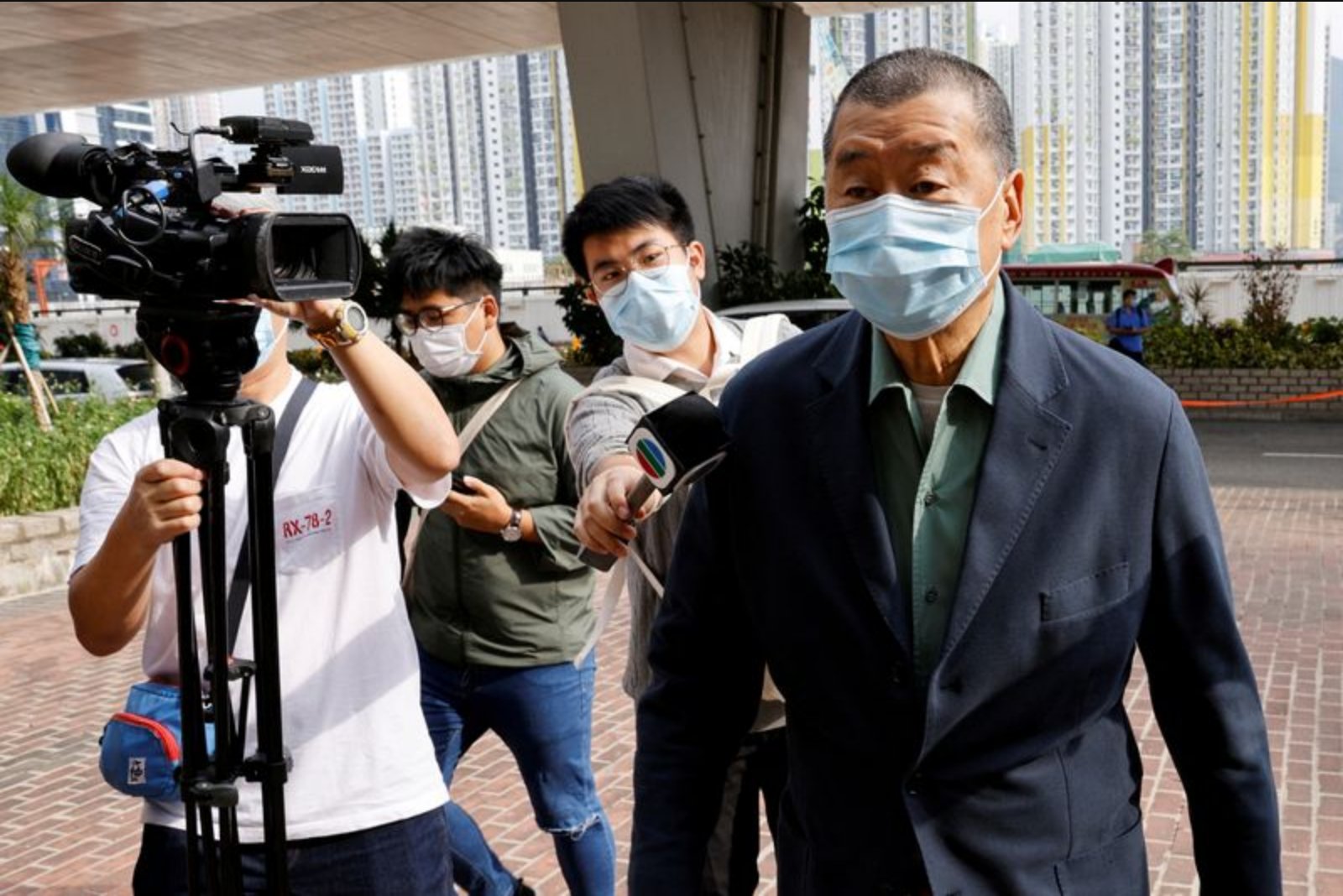
Hong Kong’s High Court on Feb. 9 imposed a 20-year prison term on Jimmy Lai, the 78-year-old media entrepreneur and outspoken critic of Beijing, after finding him guilty on two counts of conspiracy to collude with foreign forces under the city’s national security law and one count of publishing seditious materials. Lai, who founded the pro-democracy Apple Daily newspaper, had entered pleas of not guilty to all charges.
The sentence concluded a long and complex legal saga that combined national security charges, fraud allegations linked to his company Next Digital, and rulings that altered who may represent defendants in national security cases in Hong Kong. Below is a chronological account of key events in Lai’s case as they unfolded.
Timeline of major developments
- June 20, 1995 - Lai publishes the first edition of Apple Daily.
- June 12, 2019 - Hundreds of thousands take to the streets in pro-democracy protests and police fire rubber bullets and tear gas to disperse crowds.
- June 30, 2020 - China imposes a national security law (NSL) on Hong Kong; crimes like subversion or collusion with foreign forces could be punished with terms of up to life imprisonment.
- Aug 10 - Lai is arrested under the NSL over alleged "collusion with foreign forces" as 200 police raid his corporate and media headquarters. He is released on bail.
- Dec 3 - Lai is taken into custody after being denied bail on a separate charge of fraud related to the lease of the headquarters of his listed firm Next Digital.
- Dec 11 - Lai is charged under the NSL for allegedly colluding with foreign forces.
- Dec 23 - Lai is granted bail.
- Dec 29 - Lai resigns as chairman of Next Digital.
- Dec 31 - Hong Kong’s Court of Final Appeal orders Lai back into custody, saying a judge erred in granting bail.
- April 16, 2021 - Lai is jailed for 14 months for taking part in an unauthorised assembly during a demonstration in August 2019.
- May 14 - Lai’s listed company faces mounting pressure, including a freeze on its assets, leading to its shutdown.
- May 28 - Lai is handed a second 14-month jail sentence, this time for taking part in an unauthorised assembly on October 1, 2019.
- June 17 - Police arrest five executives from Apple Daily, as 500 police officers raid and search its newsroom, seizing computers.
- June 20 - Apple Daily marks its 26th anniversary.
- June 24 - Apple Daily prints 1 million copies of its final edition, 10 times its normal print run.
- Sept 29 - Hong Kong Financial Secretary Paul Chan presents a petition to the Court of First Instance to wind up Next Digital.
- Dec 13 - Lai is sentenced to 13 months in jail for taking part in a banned vigil for victims of China’s 1989 Tiananmen Square crackdown.
- July 30, 2022 - Secretary of Justice Paul Lam orders Lai’s trial be heard without a jury, citing the "involvement of foreign factors" and a "real risk that the due administration of justice might be impaired."
- Nov 22 - Six former Apple Daily staffers plead guilty to conspiracy to commit collusion with foreign forces.
- Nov 28 - Hong Kong leader John Lee asks Beijing to rule on its bid to block foreign lawyers from working on national security cases, after the top court rules that British lawyer Tim Owen could represent Lai.
- Dec 1 - High Court postpones Lai’s security trial to December 13, pending a decision from Beijing on whether Owen can defend him.
- Dec 10 - Lai is sentenced to 5 years and nine months on a fraud charge linked to Next Digital’s lease.
- Dec 30 - China’s top lawmaking body, the National People’s Congress Standing Committee, gives Lee, the Hong Kong leader, the power to bar lawyers without the right to practise in Hong Kong from national security cases. The move effectively bars Owen from defending Lai.
- May 19, 2023 - Hong Kong’s High Court dismisses an attempt by Lai to challenge the ruling on legal representation.
- May 29 - Hong Kong’s High Court rejects an application to terminate the security trial against Lai.
- Aug 18 - During a pre-trial review, Lai’s trial is further postponed until December 18.
- Dec 18 - Lai’s national security trial begins.
- Jan 2, 2024 - Lai pleads not guilty to the charges.
- Nov 20 - Lai begins testifying, saying he never tried to influence the foreign policy of countries like the U.S. towards China and Hong Kong.
- March 6, 2025 - Lai finishes his testimony.
- Aug 15 - Closing submissions are delayed after Lai suffers heart palpitations, prompting authorities to provide medication and a heart monitor.
- Aug 28 - Closing submissions for Lai’s national security trial end, bringing the 156-day trial to a close.
- Oct 30 - U.S. President Donald Trump raises Lai’s case in a meeting with China’s leader Xi Jinping.
- Dec 15 - A guilty verdict is handed down.
- Feb 9 - Hong Kong’s court sentences Lai to 20 years in jail.
The proceedings against Lai combined national security charges with other criminal accusations tied to his business activities. Separately, Lai received multiple prison terms for participation in unauthorised assemblies and for taking part in a banned vigil. Authorities also pursued corporate and financial actions against his listed company, Next Digital, including a petition to wind up the firm and measures that led to a freeze on its assets and its subsequent shutdown.
Legal battles during the case included a significant change to the rules governing foreign legal counsel in national security trials. After the Court of Final Appeal allowed Tim Owen, a British lawyer, to represent Lai, Hong Kong’s leader John Lee sought a ruling from Beijing. China’s National People’s Congress Standing Committee then conferred on Lee the authority to bar lawyers who do not have the right to practise in Hong Kong from taking part in national security cases, a move that effectively prevented Owen from defending Lai. Lai challenged that decision in court, but the High Court dismissed his attempt to overturn the restriction.
Lai’s trial began on Dec. 18 and ran for many months, with more than 150 days of proceedings that included Lai’s testimony. He maintained during his testimony that he did not attempt to influence the foreign policy of countries such as the United States toward China and Hong Kong. Following a guilty verdict on Dec. 15, the court delivered the 20-year sentence on Feb. 9.
This case has had wider consequences beyond the courtroom. Apple Daily, the paper Lai founded, printed a final edition with a one-off run of 1 million copies on June 24, after police action and legal pressures culminated in arrests of senior staff and raids on its newsroom. The shutdown of Next Digital and legal actions against its assets were part of the cascade of events surrounding the prosecution.
The record of arrests, bail decisions, courtroom rulings and legislative adjustments in Lai’s case outlines how national security prosecutions have intersected with corporate and media operations in Hong Kong. The imposed sentence is one of the most significant criminal penalties handed down under charges that invoked the national security law.