
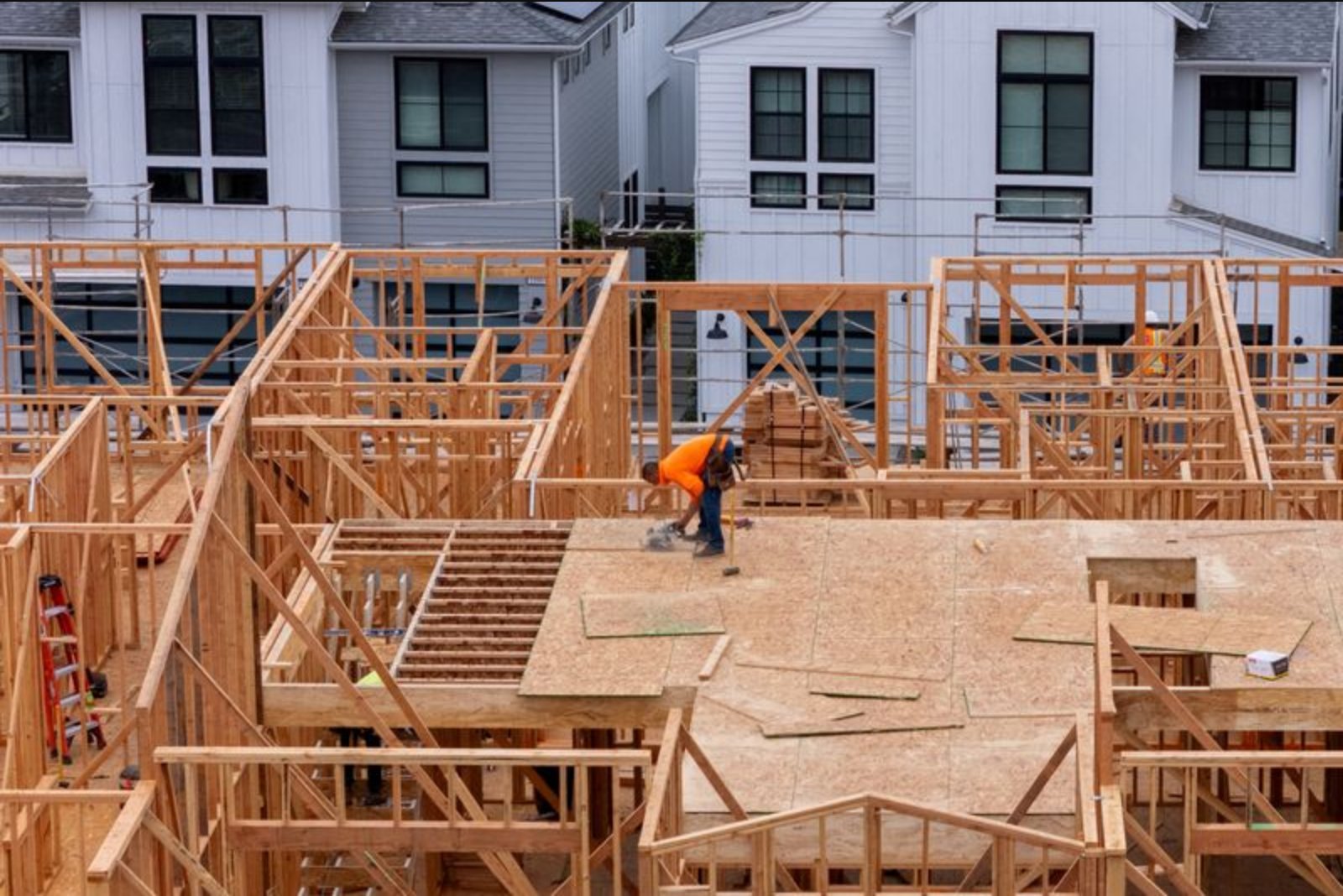
U.S. homebuilder sentiment inched upward in March, according to the National Association of Home Builders/Wells Fargo survey released on Monday, but persistent cost pressures and tight labor remain central concerns for the sector.
The NAHB/Wells Fargo Housing Market Index rose one point to 38 this month, holding well below the 50 level that separates optimism from pessimism for the 23rd straight month. Economists polled by Reuters had expected the index to remain unchanged at 37.
The modest improvement in builder confidence likely reflected lower mortgage rates seen at the start of the year after an administration order directing the government-backed mortgage firms Fannie Mae and Freddie Mac to expand purchases of mortgage-backed securities. However, mortgage rates have reversed course in recent weeks, increasing as the U.S.-Israeli war with Iran pushed up oil prices and revived inflation concerns, which in turn lifted U.S. Treasury yields. Mortgage rates typically track the benchmark 10-year U.S. Treasury yield.
NAHB Chairman Bill Owens summed up buyer sentiment and builder challenges: "Many buyers remain on the fence waiting for lower interest rates and due to economic uncertainty. Builders are facing elevated land, labor and construction costs and nearly two-thirds continue to offer sales incentives in a bid to firm up the market."
Policy moves and trade actions are also factoring into cost dynamics. The report noted that tariffs pursued under an emergency law raised prices for building materials and appliances, and an immigration crackdown - including raids at construction sites - has weighed on labor supply. Although the U.S. Supreme Court struck down those tariffs, the administration responded by imposing a 10% global tariff, which it said would rise to 15%.
In an effort to reintroduce pressure on trading partners, the administration last week launched two trade investigations: one into excess industrial capacity among 16 major trade partners and another into forced labor practices. Separately, the president signed executive orders aimed at reducing regulatory barriers associated with housing construction and at easing regulations tied to mortgage costs and home loans.
Builders are making tactical moves to clear excess new-home inventory. The share of builders reporting price cuts rose to 37% from 36% in February, while the average price reduction remained unchanged at 6%. The proportion using sales incentives dipped slightly to 64% from 65% in February, marking the 13th consecutive month that incentive use exceeded 60%.
Components of the NAHB index showed small gains. The measure of current sales conditions moved to 42 from 41, the gauge of expected sales over the next six months increased two points to 49, and the prospective buyer traffic index climbed three points to 25.
Housing affordability has become a politically charged issue ahead of the November mid-term elections. NAHB Chief Economist Robert Dietz warned of ongoing headwinds, noting: "Down-payment hurdles and uncertainty from the conflict with Iran and the price of oil will be headwinds going forward." He added that the administration’s recent executive orders to lessen regulatory burdens associated with home building "are a positive step toward increasing attainable housing supply."
Separately, a market-focused research service featured in the original report highlights how algorithmic strategies evaluate specific mortgage-related stocks. The service stated it evaluates FMCC and thousands of other companies monthly using more than 100 financial metrics, assessing fundamentals, momentum and valuation without bias. It cited past stock winners in its strategies, including Super Micro Computer (+185%) and AppLovin (+157%), and offered readers a way to check whether FMCC is included in current model portfolios.
The March NAHB/Wells Fargo reading underscores that, while sentiment has improved slightly from recent lows, builders continue to operate in an environment of elevated costs, policy shifts and uneven buyer demand.