
Economy February 18, 2026

Hassett Rebukes New York Fed Tariff Study, Urges Sanctions for Authors

White House economic adviser condemns paper that finds U.S. consumers shoulder tariff costs

By Leila Farooq
Hassett Rebukes New York Fed Tariff Study, Urges Sanctions for Authors

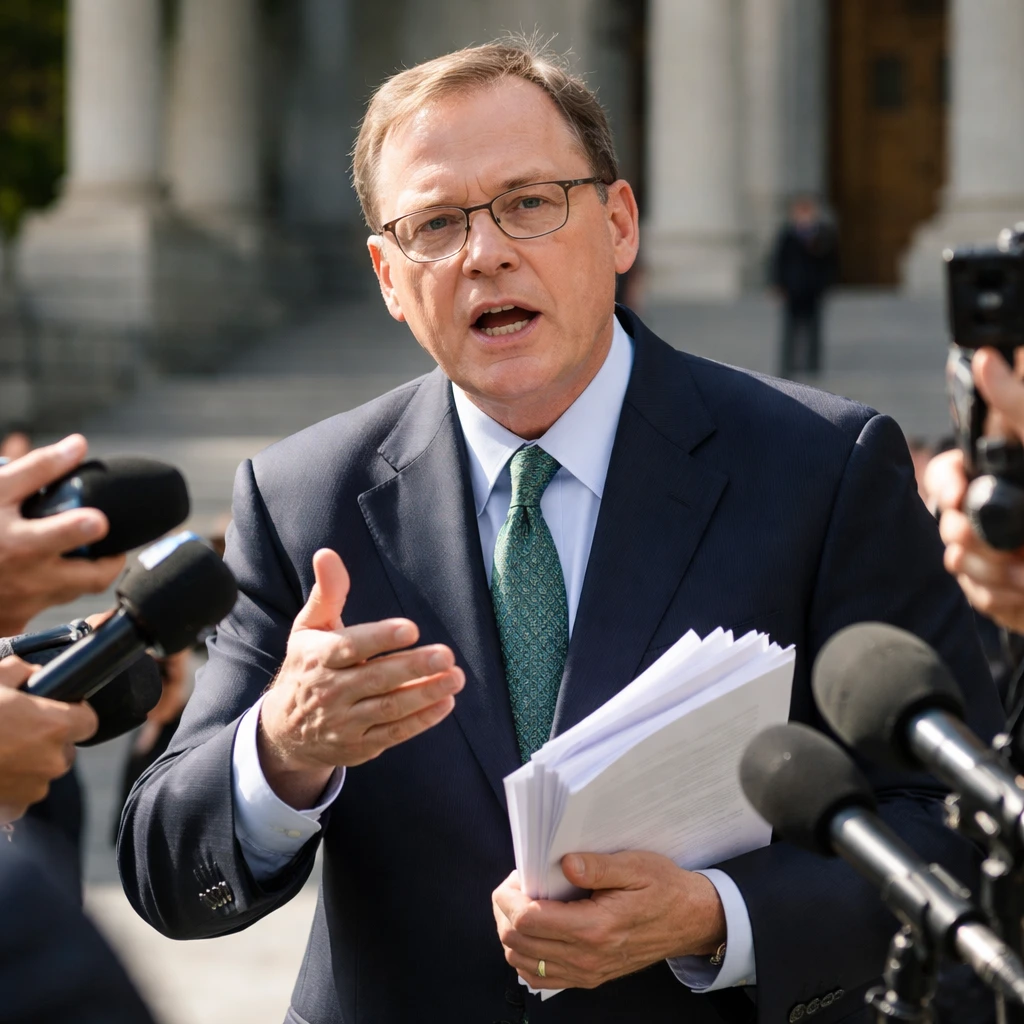
Kevin Hassett, director of the White House National Economic Council and a senior economic adviser to President Donald Trump, sharply criticized a New York Federal Reserve research paper that concluded Americans primarily bear the costs of tariffs. Hassett called the study an "embarrassment," labeled it the "worst paper" he had seen in the Fed's history, and urged disciplinary measures against the authors. The Fed's finding runs counter to the administration's position that foreign countries absorb import taxes, and the paper's conclusions align with similar results from other sources.

Key Points

  • Kevin Hassett, director of the White House National Economic Council, sharply criticized a New York Fed research paper on tariff incidence and called for disciplinary action against its authors - impacts debate over trade policy and economic research credibility.
  • The New York Fed paper concluded that U.S. consumers primarily absorb the costs of tariffs, a finding that contradicts the Trump administration’s claim that foreign trading partners take on those costs - relevant for trade-exposed sectors and consumer-priced goods.
  • The New York Fed’s conclusions are reported to be consistent with similar findings from other sources, underscoring an ongoing empirical debate about who bears tariff costs - implications for policymakers and markets monitoring trade policy.

Overview

Kevin Hassett, a senior economic adviser to President Donald Trump and director of the White House’s National Economic Council, on Wednesday delivered a forceful public rebuke of a New York Federal Reserve research paper addressing who ultimately pays for tariffs.

The paper reached the conclusion that Americans, rather than foreign entities, primarily bear the economic burden of U.S. tariffs. That finding stands in opposition to the Trump administration’s stance that foreign trading partners absorb most of the costs associated with import taxes. The New York Fed’s conclusions have also been echoed by similar findings from other sources, according to the reporting of the research and its reception.


Hassett’s critique

Speaking in a televised interview, Hassett described the study as "an embarrassment." He intensified his criticism by saying, "It’s, I think, the worst paper I’ve ever seen in the history of the Federal Reserve System."

Hassett went further, urging that the researchers be subject to disciplinary action for producing what he characterized as an unacceptable piece of analysis. He said the authors had "put out a conclusion which has created a lot of news that’s highly partisan based on analysis that wouldn’t be accepted in a first semester econ class."


Policy context

The research note and Hassett’s response highlight a clear divergence between the New York Fed’s empirical assessment and the position advanced by the administration regarding the incidence of tariff costs. While the Fed-affiliated paper attributes most of the economic burden to U.S. consumers, the administration has argued that other countries largely shoulder those costs. The reporting indicates the New York Fed’s findings have been corroborated by similar studies, though the details of those studies are not laid out in the material under review here.


Implications for discourse

Hassett’s comments frame the debate in sharply partisan terms and call into question the credibility of the work in question, at least from his perspective. He recommended that the researchers face formal consequences, an appeal that centers on standards of academic and policy research within a central banking context.


What remains clear

The factual record for this report is limited to the New York Fed paper's main conclusion - that Americans primarily bear tariff costs - the Trump administration's opposing claim that foreign countries absorb those costs, and Hassett’s public condemnation and call for discipline. The reporting also notes that similar findings to the New York Fed’s have been published by other sources.

Risks

  • Partisan amplification of research conclusions could deepen political disputes over trade policy and hinder consensus - this affects policy certainty for industries reliant on international supply chains and consumer goods markets.
  • Challenges to the perceived credibility of central bank-affiliated research may reduce trust in empirical analysis used to inform policy decisions - relevant to investors and corporate planners assessing tariff exposure.
  • Public calls for disciplinary action against researchers risk chilling academic inquiry in policy-relevant institutions if investigators face punitive responses for producing contested findings - this could have downstream impacts on the quality of policy research informing markets.

More from Economy

Bessent: Administration to Shift Tariff Strategy After Supreme Court Ruling Feb 20, 2026 Trump Repeats Call for Much Lower Interest Rates, Criticizes Fed Chair Feb 20, 2026 White House to Apply 10% Global Tariff for 150 Days, Citing Trade Act Authority Feb 20, 2026 Trump directs temporary 10% global tariff under Trade Act after Supreme Court rebuke Feb 20, 2026 Trump Announces Plan for 'Even Stronger' Tariff Actions After Supreme Court Setback Feb 20, 2026