
Economy February 18, 2026

Hassett Calls New York Fed Tariff Paper an 'Embarrassment', Urges Accountability

National Economic Council director criticizes study claiming firms and consumers absorbed most tariff costs

By Derek Hwang
Hassett Calls New York Fed Tariff Paper an 'Embarrassment', Urges Accountability

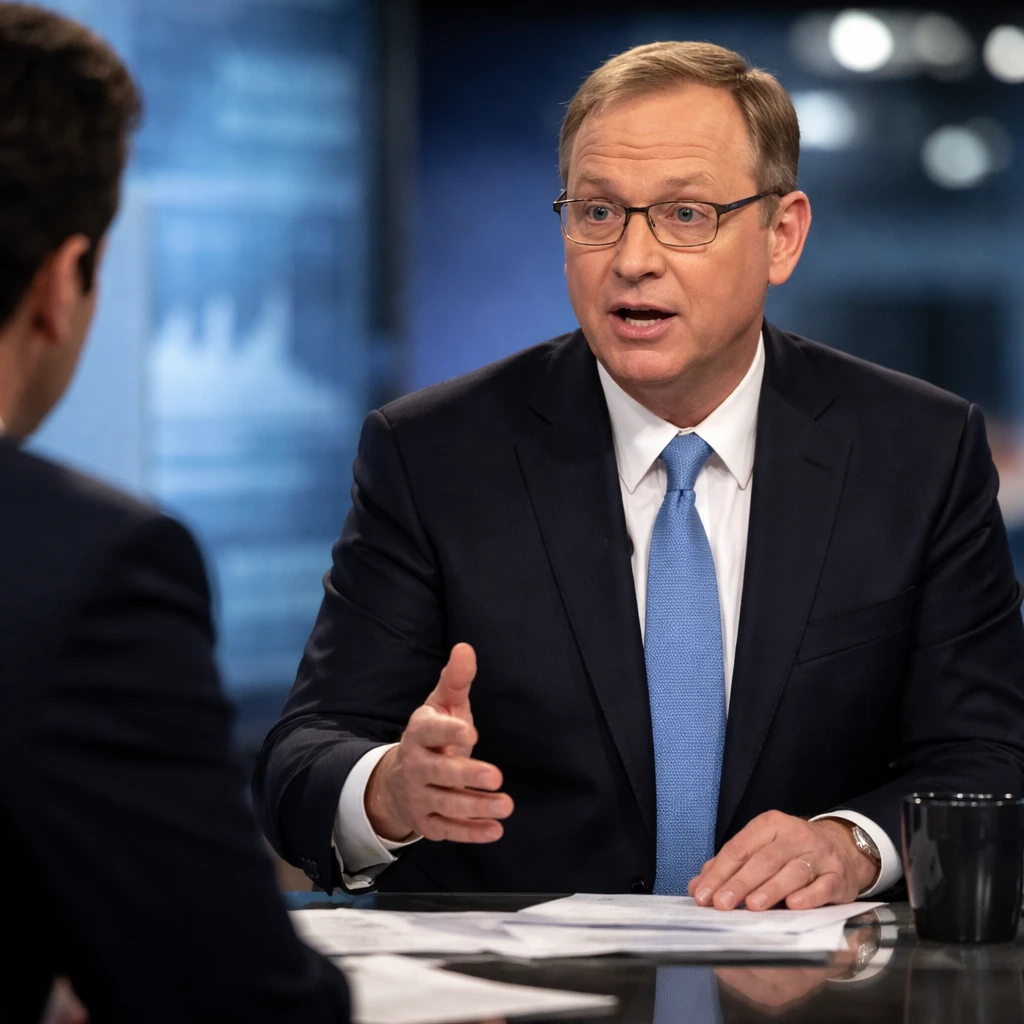
National Economic Council Director Kevin Hassett sharply rebuked a New York Federal Reserve study on the incidence of U.S. tariffs, calling the research 'an embarrassment' and urging disciplinary action for its authors. The study had found that U.S. companies and consumers bore a substantial share of the economic burden from tariffs. Hassett delivered his critique on CNBC, dismissing the analysis as flawed and partisan.

Key Points

  • Kevin Hassett called the New York Fed tariff study "an embarrassment" and said the authors should be disciplined.
  • Hassett described the research as "the worst in Fed’s history" and criticized it on CNBC for producing partisan news from analysis he deemed unacceptable for introductory economics.
  • The New York Fed study concluded that U.S. companies and consumers bore a significant portion of the economic costs of tariffs, a finding at the center of the dispute.

National Economic Council Director Kevin Hassett issued a forceful critique of a New York Federal Reserve study that attributed the bulk of tariff costs to U.S. companies and consumers. Speaking on CNBC, Hassett described the paper as "an embarrassment" and went further, saying the study's authors should face discipline for their work.

During his television remarks, Hassett characterized the research as deeply flawed and partisan. He said: "What they’ve done is they put out a conclusion which has created a lot of news that’s highly partisan, based on analysis that wouldn’t be accepted in a first semester econ class." He also labeled the paper "the worst in Fed’s history," underscoring the severity of his critique.

The New York Fed analysis concluded that a significant portion of the economic costs associated with tariffs was shouldered by U.S. companies and consumers. That finding—central to the study—was the target of Hassett's comments, which questioned both the methodology and the broader implications of publishing the results.

Hassett's remarks underline a public dispute over how the economic incidence of tariffs is measured and communicated. While the study's conclusion assigns notable cost burdens to domestic firms and consumers, the director's remarks focus on the perceived analytical shortcomings and the potential for the findings to be interpreted through a partisan lens.

The exchange took place on national television, where Hassett explicitly tied the study's public impact to its methodological choices, asserting that the work had generated "a lot of news" with a partisan slant. He urged accountability for the researchers, repeating that the study represented a serious lapse in standards in his view.

This public rebuke highlights tensions between policymakers and central bank-affiliated research when analysis touches on politically sensitive topics like tariffs. The study's core claim about who bears tariff costs remains as reported by the New York Fed, while Hassett's comments frame the issue as one of research quality and public interpretation.

Risks

  • Erosion of trust in central bank-affiliated research if high-profile critiques of methodology gain traction - this can affect perceptions among policymakers, firms, and the public.
  • Partisan framing of economic analysis may intensify political disputes over trade policy, potentially complicating informed debate about tariff impacts on companies and consumers.
  • Uncertainty about the credibility of published studies on tariff incidence could create hesitation among businesses and consumers when assessing policy effects.

More from Economy

Bessent: Administration to Shift Tariff Strategy After Supreme Court Ruling Feb 20, 2026 Trump Repeats Call for Much Lower Interest Rates, Criticizes Fed Chair Feb 20, 2026 White House to Apply 10% Global Tariff for 150 Days, Citing Trade Act Authority Feb 20, 2026 Trump directs temporary 10% global tariff under Trade Act after Supreme Court rebuke Feb 20, 2026 Trump Announces Plan for 'Even Stronger' Tariff Actions After Supreme Court Setback Feb 20, 2026