
Economy March 14, 2026

Haddad Sees Up to 1% Quarterly Growth, Says 2026 Outlook Hinges on Rate Path

Finance minister credits credit stimulus for Q1 momentum but warns full-year expansion depends on interest-rate trajectory amid oil-driven market uncertainty

By Ajmal Hussain
Haddad Sees Up to 1% Quarterly Growth, Says 2026 Outlook Hinges on Rate Path

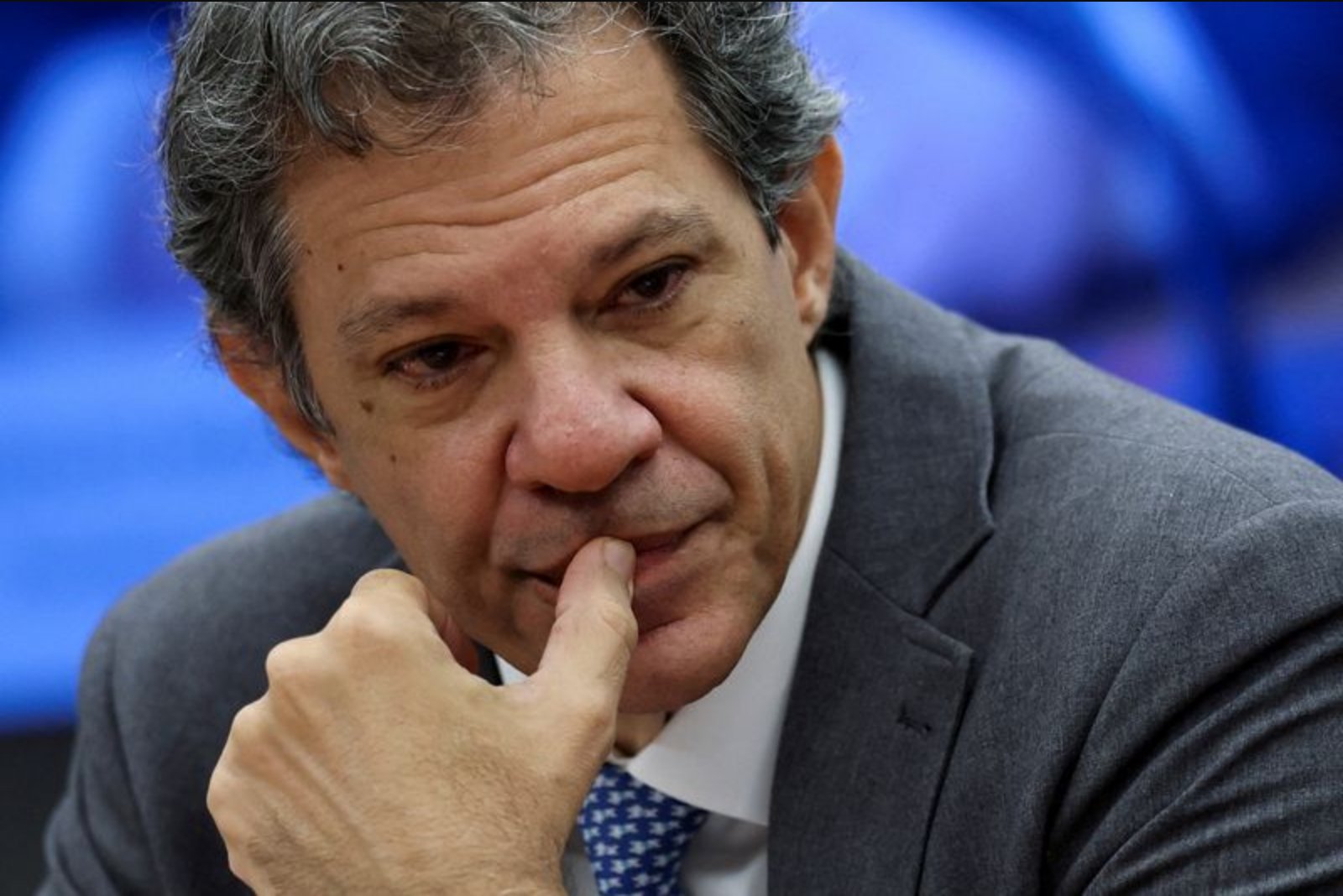
Brazil’s finance minister Fernando Haddad estimates first-quarter GDP growth of roughly 0.8% to 1% quarter-on-quarter, attributing the pickup to government measures that have supported credit and domestic demand. He stressed that whether annual growth exceeds 2% will depend on the future course of interest rates, as oil-price volatility tied to the U.S.-Israeli conflict with Iran has clouded market expectations for forthcoming rate cuts.

Key Points

  • First-quarter GDP likely rose 0.8% to 1% quarter-on-quarter, aided by government measures to expand credit and domestic demand.
  • Finance ministry’s economic policy secretariat projected 2.3% growth for the full year; Haddad said growth above 2% "will depend on interest rates."
  • Monetary policy expectations have shifted after oil-price volatility tied to the U.S.-Israeli conflict with Iran; futures now lean toward a 25-basis-point cut but show rising odds of no change.

BRASILIA, March 14 - Brazil's finance minister Fernando Haddad said the economy may have expanded as much as 1% in the first quarter and emphasized that full-year performance will be sensitive to the direction of interest rates.

In an interview with the local outlet Opera Mundi late on Friday, Haddad said gross domestic product between January and March likely rose 0.8% to 1% from the prior quarter. He attributed that quarter-on-quarter lift to government measures designed to expand credit and boost domestic demand under President Luiz Inacio Lula da Silva.

On the broader yearly outlook, Haddad said growth above 2% "will depend on interest rates." His comments came the same day the finance ministry’s economic policy secretariat projected 2.3% growth for the year.

Haddad said he was less worried about fiscal indicators than he was about borrowing costs, calling them a "handbrake" on activity even as he noted what he described as the "lowest cumulative inflation in four years."

He warned that recent oil-price volatility - following the U.S.-Israeli conflict with Iran and its potential inflationary effects - has complicated market assumptions about the timing of monetary easing that many had expected.

The central bank signaled in January that it was moving toward lowering the benchmark interest rate this month from its near two-decade high of 15%, a level that has been held since last July. On Friday, interest-rate futures reflected a market tilted toward a 25-basis-point cut, while also showing rising odds that the central bank could leave rates unchanged.

Before the Iran-linked conflict, markets had largely priced in a 50-basis-point reduction. The shift in expectations has been driven, according to Haddad, by oil-related price swings and the uncertainty they introduce for inflation and policy timing.

The minister’s remarks underscore a policy landscape in which recent fiscal and credit measures may be supporting short-term demand, but where the trajectory of borrowing costs remains a central determinant of medium-term growth outcomes.

Risks

  • High borrowing costs described as a "handbrake" on activity could constrain consumption and lending, affecting the banking and credit sectors.
  • Oil-price volatility linked to the U.S.-Israeli conflict with Iran could have inflationary effects that complicate the central bank’s timing of rate cuts, impacting fixed-income markets and inflation-sensitive sectors.
  • Shifting market expectations for rate cuts - from a previously priced 50-basis-point reduction to bets on 25 basis points or no change - raise uncertainty for investors in bond and currency markets.

More from Economy

Israel and Lebanon Expected to Hold Direct Negotiations in Coming Days, Haaretz Says Mar 14, 2026 Refiners and LNG Exporters Outperform as Iran Conflict Reconfigures Energy Winners and Losers Mar 14, 2026 Iran conflict moves from initial shock to broader ripple effects across commodity markets Mar 14, 2026 Trump Says U.S. Could 'Bomb the Hell Out of the Shoreline' to Keep Strait of Hormuz Open Mar 14, 2026 Trump Says U.S. Tanker Aircraft Were Not Destroyed in Saudi Strike Mar 14, 2026