
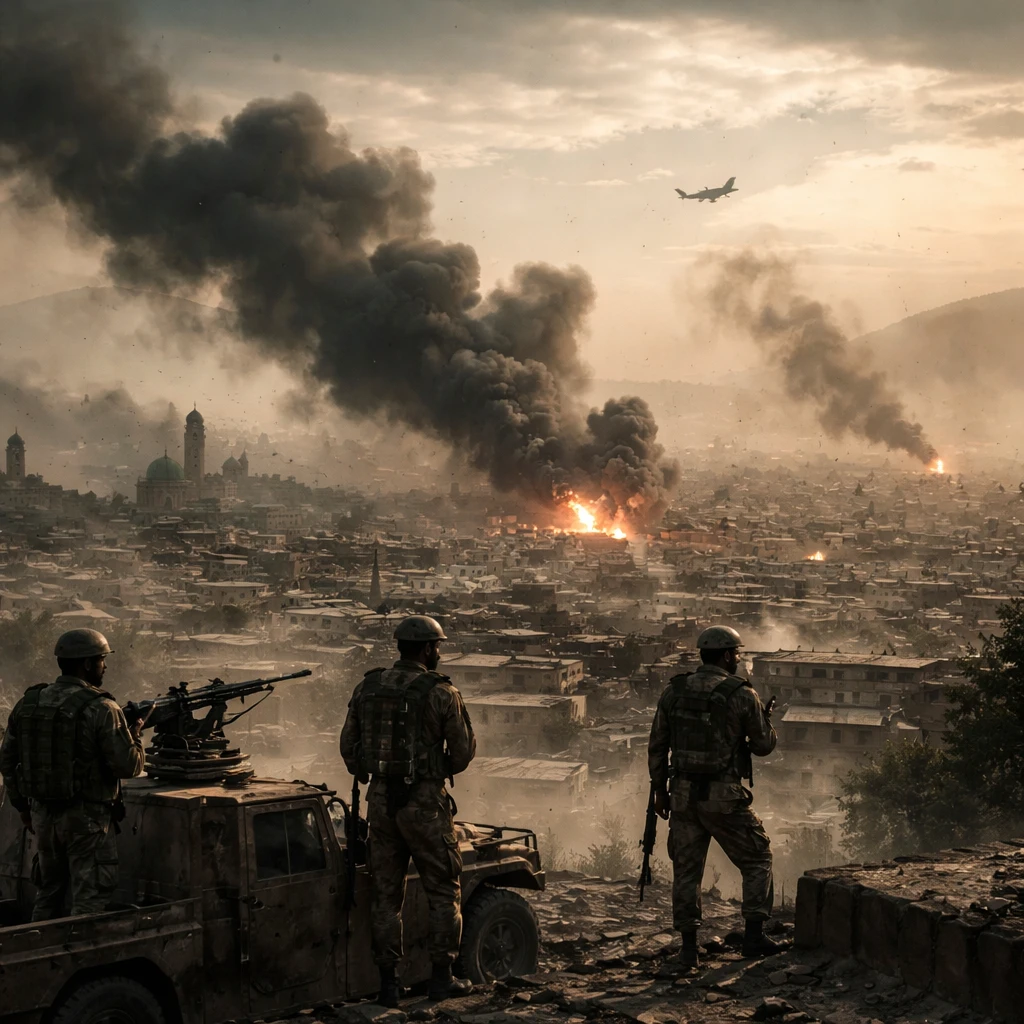
Explosions and heavy gunfire reverberated through Kabul just before sunrise on Sunday as the military confrontation between Afghanistan and Pakistan entered a fourth consecutive day. The sounds of battle reaching the Afghan capital marked a clear intensification of clashes that began near the frontier.
Zabihullah Mujahid, speaking for the Taliban administration, acknowledged the violence and described the blasts as defensive actions. He said Afghan air defense units had engaged Pakistani aircraft observed over Kabul and advised residents "not to be concerned."
Despite that reassurance, the extension of hostilities into the capital has raised fears that the clashes could broaden into a larger regional conflict.
The current confrontation follows a series of Pakistani airstrikes earlier in the week that took place inside Afghan territory. Pakistan has said those strikes were precise operations directed at what it called "militant infrastructure," while Kabul immediately denounced them as a blatant breach of its sovereignty.
Afghanistan responded with retaliatory actions along the long frontier, touching off what observers described as the most intense fighting between the two neighbors in years. The exchanges have been reported along the roughly 1,600-mile border that separates the countries.
Both governments have reported substantial casualties and damage to military equipment, though independent verification of those reports remains difficult. Along the border, observers describe a chaotic pattern of reciprocal strikes - a tit-for-tat dynamic in which neither side appears willing to yield.
The lack of clear, independently verified information from the ground has compounded tensions. State-run media in both countries have been used to convey strength, while official diplomatic channels have remained largely silent.
Notably, key figures in Pakistan's leadership, including the Prime Minister's office and senior military officials, have not publicly commented on reports that aircraft were targeted over Kabul. Some analysts interpret that reticence as an indication that Pakistan's military is reassessing its posture as the fighting moves beyond tribal border areas and into Afghanistan's capital.
The international community has watched the situation closely, growing increasingly alarmed about events along the 2,600 km (1,615 mile) border. What began as what authorities described as localized counter-terrorism strikes has evolved into a direct military confrontation between two sovereign states, raising concerns about further escalation.
At present, the picture remains fluid and confirmation of battlefield claims is limited. The crossing of hostilities into Kabul and the reported losses on both sides underscore the fragility of the situation and the potential for broader destabilization if the military exchanges continue.