
Most Gulf equity markets ended lower on Sunday as the U.S.-Israeli war with Iran entered its third week, stoking investor concern about regional security and the continuity of energy supplies.
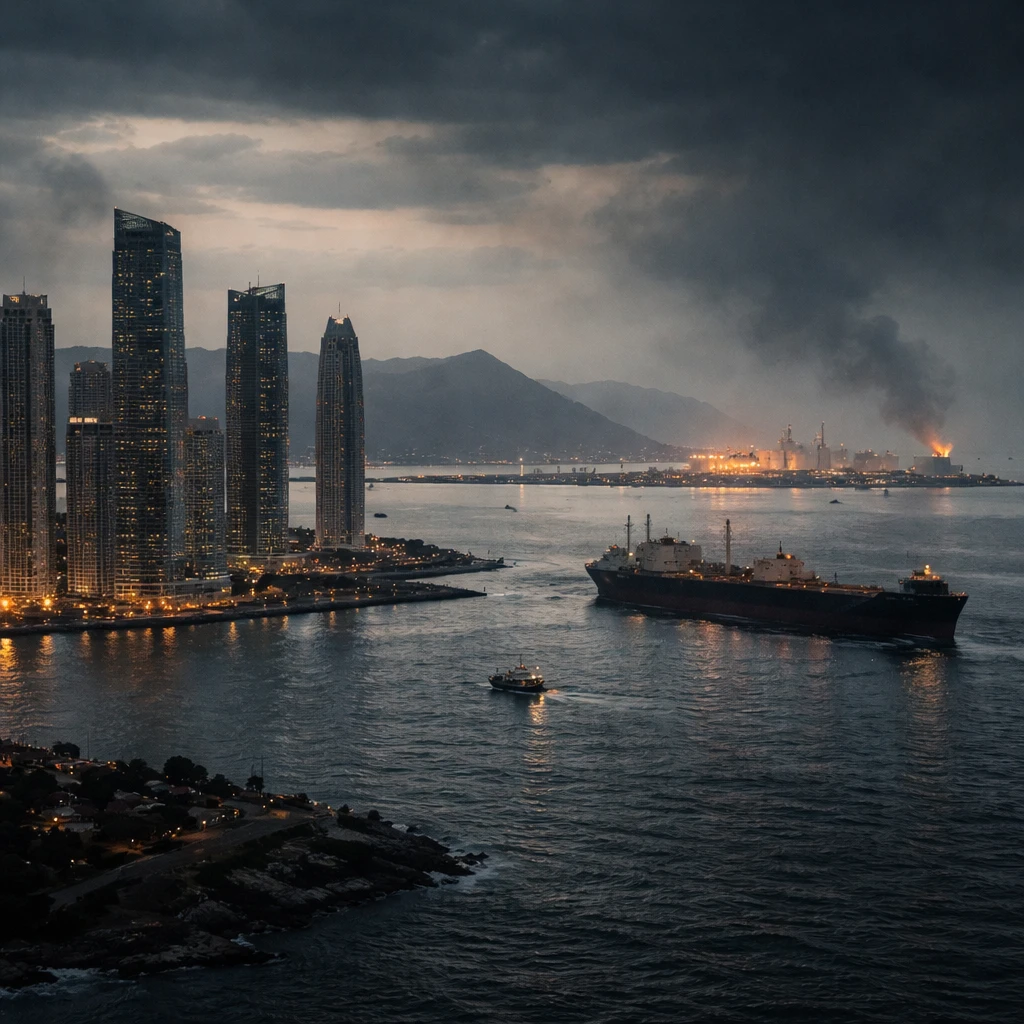
Market participants cited disruptions to energy flows and heightened fears of a broader regional escalation following attacks on oil infrastructure and on shipping lanes around the Strait of Hormuz. Those interruptions have been reflected in higher crude prices, prompting divergent reactions among listed companies.
U.S. President Donald Trump warned that additional strikes could be aimed at Iran's Kharg Island oil export hub, while Tehran said it would intensify its response to continued targeting. The comments from both sides appeared to sustain risk aversion across the region's equity markets.
In Saudi Arabia, the benchmark index slipped 0.1%. Within the market, Saudi National Bank (TADAWUL:1180) fell 1.3%, while oil major Saudi Aramco (TADAWUL:2222) climbed 0.7% as crude prices gained amid the ongoing disruptions around the Strait of Hormuz.
Qatar's benchmark index declined 0.2%, led lower by a 1.3% drop in Qatar National Bank. Other Gulf markets also moved down: Bahrain's index eased 0.5%, Kuwait's market dipped 0.1%, and Oman's benchmark lost 0.4%.
The conflict's spillover effects have reached non-financial regional activity as well. Formula One announced that the Bahrain and Saudi Arabian Grands Prix scheduled for April will not take place due to security concerns, underscoring how the security situation is affecting large-scale events.
Beyond the Gulf, Egypt's blue-chip index fell 1.9%, weighed down by a 2.6% decline in Commercial International Bank (EGX:COMI).
What this means
- Regional political and military tensions are contributing to risk-off sentiment across Gulf equities.
- Energy-related names can behave differently—some rise as crude gains while others fall amid broader market weakness.
- Security concerns are affecting both financial markets and scheduled large events in the region.