
The recent escalation of hostilities involving Iran has placed Gulf states' food security plans under acute pressure, reviving comparisons to the global food shock of 2008. Strategies adopted after that crisis - shifting away from costly attempts to raise domestic production toward import-reliant approaches and investments in overseas agriculture - are being tested as maritime routes and port operations through the Strait of Hormuz come under repeated threat.
Following the 2008 spike in global food prices, several Gulf countries redesigned their food policy. Those earlier programmes that tried to expand domestic cultivation of strategic grains proved expensive and ran up against the region's harsh climate and severe water constraints. Saudi Arabia, for example, began winding down a domestic wheat-growing programme in 2008 and moved to become almost entirely import-dependent for that staple.
Today, with the Gulf region estimated to rely on imports for roughly 80% to 90% of its food needs, analysts warn that continued disruption to shipping lanes and the temporary closure of airspace in parts of the region will translate into price surges and shortages of certain items. "With over 70% of GCC foodstuffs being imported through the Strait of Hormuz, Gulf states face shortages if the war persists," said Neil Quilliam, associate fellow at Chatham House. He added that while governments have diversified suppliers and built stores to withstand disruption, those reserves can only hold out for several months before markets begin to feel the strain.
Hormuz as a logistical choke point
The geography of the Gulf places many of the region's primary seaports in locations that funnel incoming cargo through the Strait of Hormuz. Major installations, including Dubai's Jebel Ali - a principal re-export hub - and primary ports in Kuwait, Bahrain, Qatar and along Saudi Arabia's Gulf coast, sit along routes where most incoming traffic must transit Hormuz. Analysts warn even transient blockages that force ships to call at smaller, less-capable ports will create bottlenecks and operational strains.
Iranian strikes have already hit several of those lifelines. This week, Jebel Ali experienced strikes that prompted suspensions of operations for hours. "The biggest immediate effect will be due to the blockade of Jebel Ali, serving about 50 million people," said Ishan Bhanu, lead agricultural commodities analyst at Kpler, underscoring the port's role not only in serving the UAE but in feeding regional re-exports.
Capacity outside the Hormuz corridor is limited. UAE ports beyond the strait include Khorfakkan, which can handle 5 million twenty-foot equivalent units (TEUs), and Fujairah, with under 1 million TEU capacity. Those levels would struggle to replace throughput lost at Jebel Ali or to pick up volume from Abu Dhabi's Khalifa Port. The consequence, analysts say, is that countries such as Qatar, Kuwait, Bahrain and Iraq would become effectively landlocked for a period, relying on overland transit through Saudi Arabia - a route likely to produce costly congestion.
Immediate market effects and consumer response
So far, the most visible impacts have been shifts in supply-chain timing and consumer behaviour. The UAE has stated that its strategic reserves of essential goods are sufficient for roughly four to six months. Authorities have moved to discourage unjustified price rises by setting up a hotline for residents to report suspected gouging.
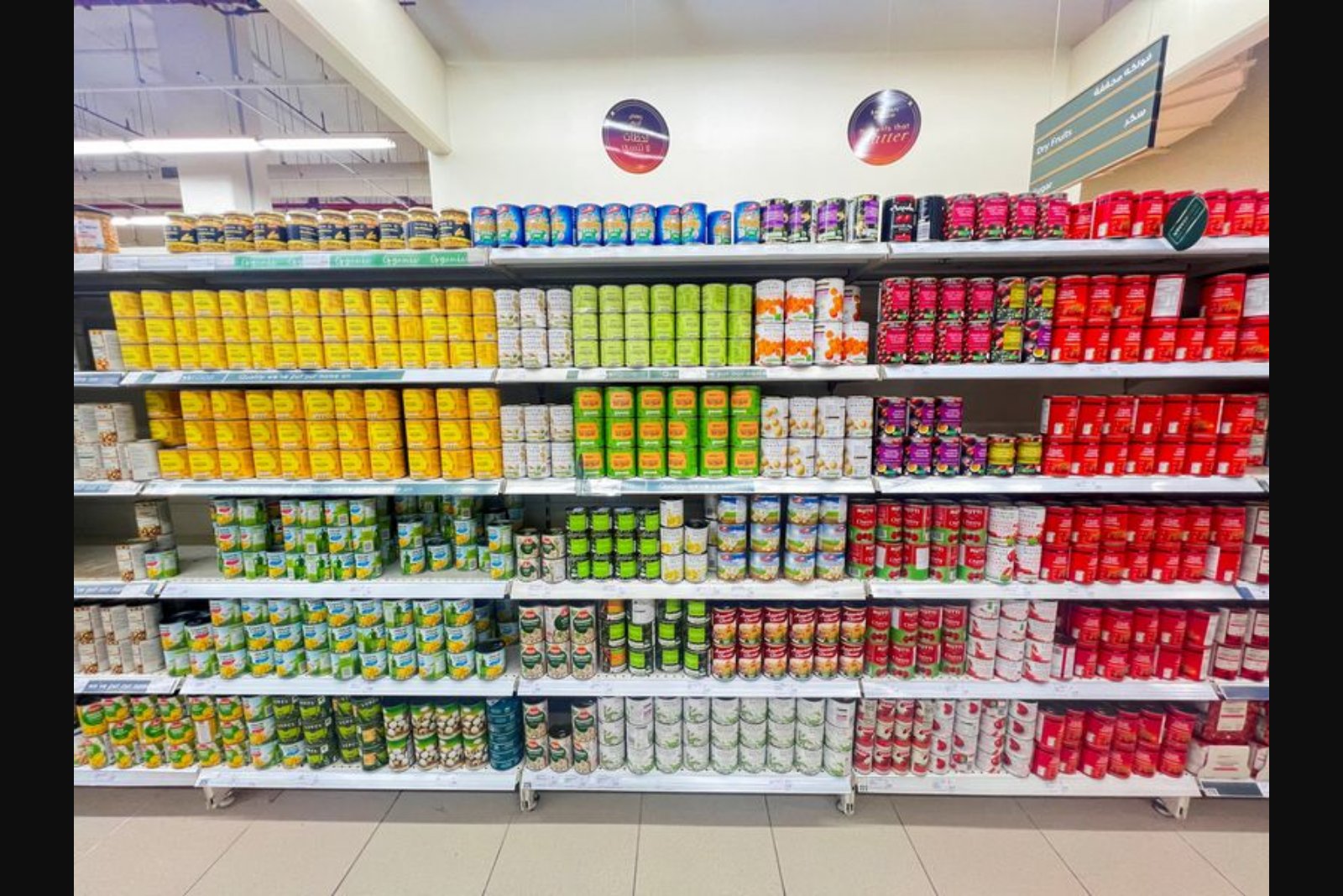
On the ground, supermarket staff report that shelves remain largely stocked, but suppliers are taking longer to replenish some items. Dubai temporarily relaxed truck-movement restrictions to keep goods moving. The initiation of strikes on the Gulf prompted hoarding in some quarters and a short-lived run on stores, a pattern observers warn could be an indicator of what might happen in prolonged disruption. Quilliam noted that perception risk is important - even if stocks are currently adequate, public runs on supermarkets can escalate shortages through panic buying.
A small number of consumers have already observed price changes. One social media post quoted a shopper saying groceries cost three times as much as the previous day and that "even the bananas cost have gone crazy." Items that spoil quickly, such as bananas, are especially vulnerable to longer transit times caused by rerouting. If perishable food is flown in when airspace reopens or transported overland, the extra cost of air freight or longer overland hauls is likely to be passed on to consumers.
"If food is flown in or brought in overland, that is going to be more expensive than shipping," said Justin Alexander, Gulf analyst at GlobalSource Partners and director at Khalij Economics. He added that governments may choose to absorb some of those additional costs through subsidies, as they have in previous crises.
Storage, diversification and regional cooperation
Alongside overseas agricultural investments, Gulf states have invested in modern grain storage infrastructure over the past two decades to buffer staples that can be stored for months, such as wheat, rice and edible oils. The UAE's Fujairah grain silos, opened in 2016 on the Indian Ocean coast outside the Strait of Hormuz, have roughly 300,000 metric ton capacity. The site was deliberately selected to offer a routing alternative in times when Hormuz might be threatened.
Supporters of such infrastructure point to silos as strategic relief valves that provide routing flexibility and diversify risk when maritime conditions tighten. "Fujairah's grain silos act as a strategically important pressure valve providing routing flexibility and risk diversification when the Gulf's maritime environment tightens," said Sudhakar Tomar, president of India Middle East Agri Alliance Ecosystem.
The original intent behind some silo projects was to hold emergency stocks for sharing across the Gulf. In practice, challenges including long distances and limited cross-border road or rail links meant those reserves have largely stayed under national control. Other states have likewise developed storage: Qatar built a Food Security Terminal at Hamad Port containing 51 climate-controlled silos.
Analysts say that coordinated action among Gulf Cooperation Council members will be essential to avoid shortages if disruptions persist. However, the GCC has historically faced difficulties in managing complex, cross-border logistics and coordination. "It will require close cooperation amongst GCC states to manage complex logistics and ensure that all six states and Iraq are sated," Quilliam said.
For now, the combination of strategic reserves, expanded storage and diversification of suppliers provides a temporary cushion. But the recent attacks and the resulting strains on the Strait of Hormuz underline how a concentrated reliance on maritime routes through a narrow waterway can quickly become a systemic vulnerability for a region that imports the majority of its food.