
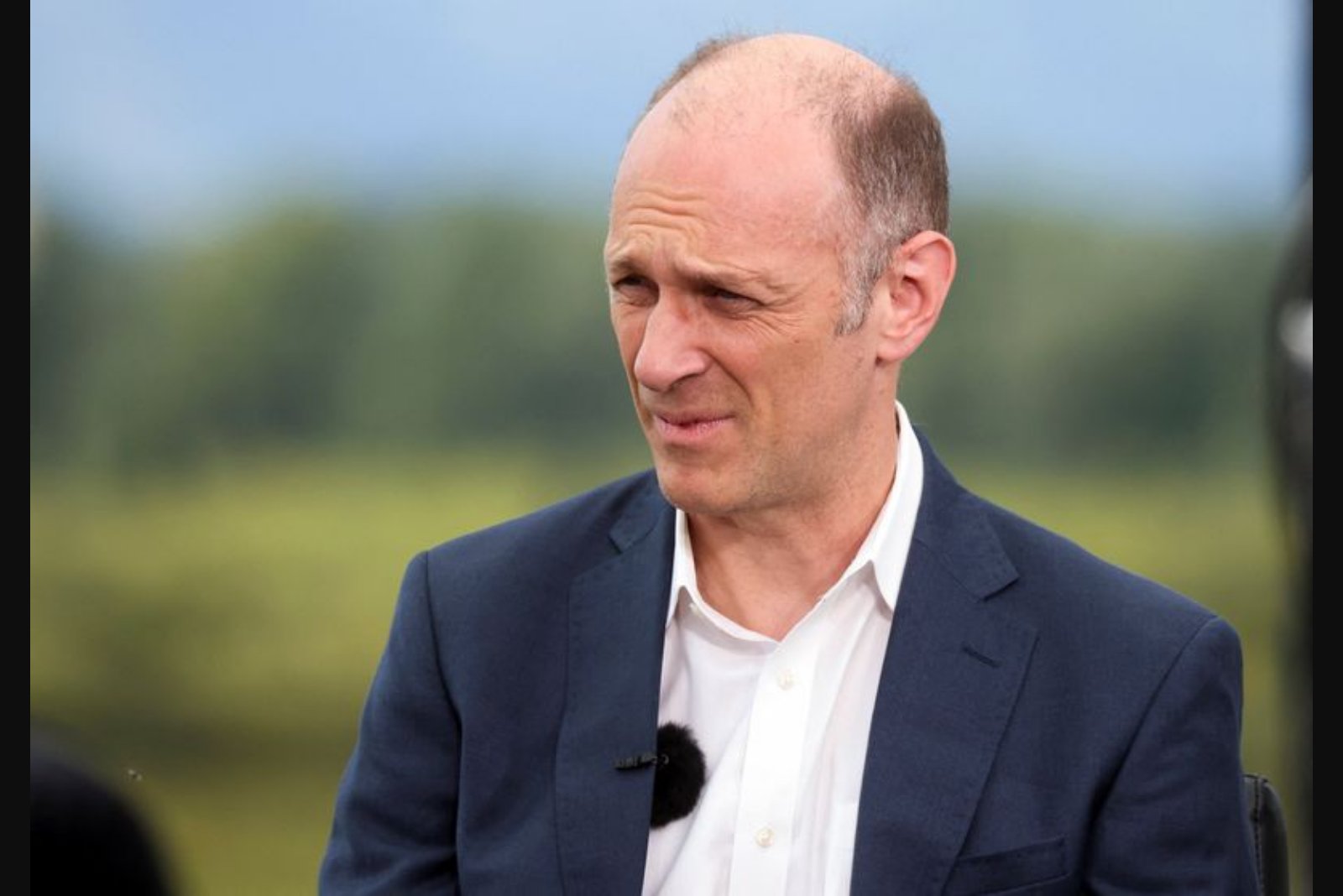
Chicago Federal Reserve Bank President Austan Goolsbee said the U.S. central bank could move to cut interest rates if inflation begins to decline, but he urged prudence about using projected productivity gains as a justification for easing policy at this stage.
Speaking to journalists on Monday before an address to the National Association for Business Economics, Goolsbee said he was hopeful about prospects for rate reductions by late 2026, but he emphasized the need for more convincing evidence that inflation is on a sustained path back to the Fed's 2% objective.
"I’m optimistic that by the end of ’26...it would be appropriate that (the policy rate) go down several more cuts," Goolsbee said. He added that he was "a little concerned about front loading that too much if there’s not yet evidence that inflation is headed back to 2%, and so far my read is we do not yet have that."
Goolsbee's comments underscore a broader debate developing inside the Fed about how much weight to place on anticipated productivity improvements when setting monetary policy. He specifically cautioned against treating forecasts of higher productivity as a near-term reason to lower the policy rate.
That argument for leaning on productivity projections has been advanced by Fed chair nominee Kevin Warsh and Governor Stephen Miran, both of whom have suggested that an unfolding productivity surge could allow for looser policy without rekindling inflation. Their stance draws a historical parallel to former Fed chair Alan Greenspan's mid-1990s remarks, when Greenspan suggested productivity gains could accommodate strong expansion without immediate rate increases.
Goolsbee pushed back on directly equating the present situation with that period. He noted that Greenspan's approach simply delayed rate hikes that eventually occurred, whereas the current discussion centers on the prudence of cutting rates now when inflation remains above target and has been elevated for years.
"It really isn’t the same situation," he said. "You want to be extremely careful...You can overheat the economy easily" if policy is loosened on the basis of expectations tied to investments that do not deliver the magnitude of productivity improvements that were forecast. That, he warned, could leave a large overhang and precipitate a conventional downturn.
Goolsbee urged a cautious, circumspect approach and highlighted ways in which expectations about future productivity can influence present-day behavior. He recounted conversations from Cedar Rapids, Iowa, where local contacts indicated that a surge in data center construction had made it difficult to hire certain skilled trades.
"Nobody can hire an HVAC person because data centers are absorbing all the people....Stuff’s getting expensive," he said, describing the situation as a short-run scarcity of labor and resources driven by strong demand for AI data center capacity. That dynamic, he suggested, creates upward pressure on prices.
Minutes from the Fed’s January meeting reflected similar lines of inquiry by staff and policymakers, noting an emerging focus on how investment tied to artificial intelligence and shifts in productivity may affect the economic outlook. Staff analyses at that meeting projected some modest increase in the economy’s underlying potential, but also indicated that demand was expected to exceed potential growth in the near term - a pattern that could push prices upward over the next two years.
On the policy calendar, the Fed is widely expected to hold the policy rate steady at the March 17-18 meeting. Market participants, the article noted, are not anticipating another rate reduction until July, a timing tied to the expected confirmation of Fed chair nominee Kevin Warsh.
Goolsbee said he expects disinflationary forces to gain traction by that time, including a fading influence from tariffs on import prices - a process he suggested could accelerate following a recent Supreme Court ruling that removed many of those levies. Nonetheless, he reiterated that actual reductions in the federal funds rate should wait for tangible evidence that inflation is moving toward the 2% goal.
"We are failing if we’ve got three to three and half percent inflation that is not going away," he said, highlighting the need for observable progress on price stability before the Fed shifts to a looser stance.
Summary
Austan Goolsbee said the Fed could cut rates once inflation is demonstrably falling, but warned against using anticipated productivity gains as a basis for easing policy now. He pointed to local labor shortages tied to data center construction as an example of short-term constraints that can keep upward pressure on prices. Fed staff also noted potential modest productivity gains but expect demand to outpace potential growth for the next two years.
Key points
- Goolsbee supports the possibility of several rate cuts by the end of 2026 if inflation shows clear progress toward 2%.
- He warned it would be risky to base current policy easing on projected productivity gains; premature cuts could overheat the economy.
- Local effects of data center construction, including competition for skilled labor, illustrate short-term supply constraints that may keep prices elevated; this affects sectors tied to construction, tech infrastructure, and skilled trades.
Risks and uncertainties
- Inflation remains roughly one percentage point above the Fed’s target and has shown limited improvement over the past year - financial markets and consumer-facing sectors remain sensitive to this trajectory.
- Relying on projected productivity increases that fail to materialize could lead to overheating and a subsequent downturn, posing risks to the broader economy and cyclical sectors.
- Near-term demand from AI and data center investments may outpace supply, raising costs in construction and skilled trades and putting upward pressure on prices.