
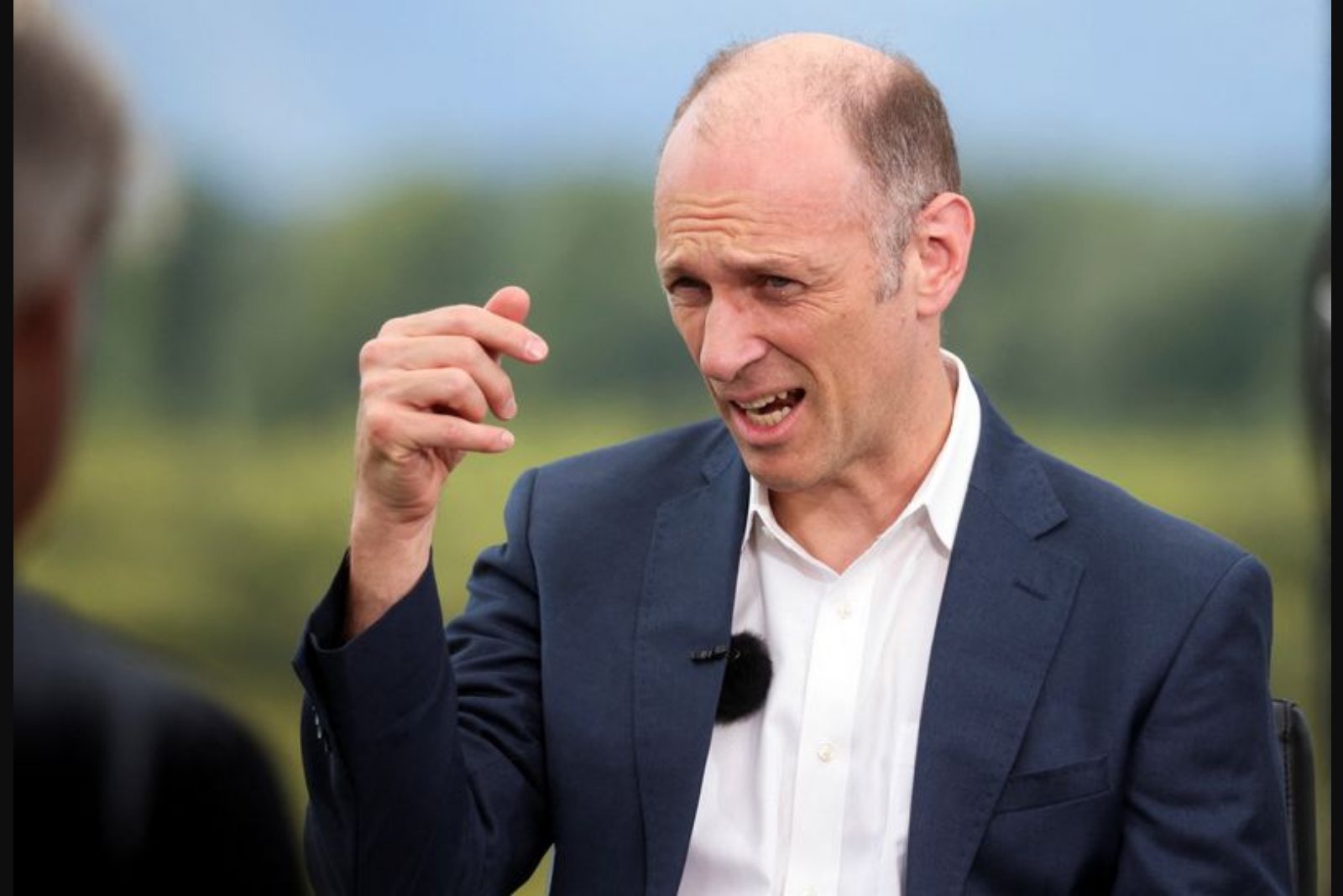
Chicago Federal Reserve President Austan Goolsbee said on Tuesday that the U.S. central bank could approve "several more" interest rate cuts in 2026 if inflation resumes a steady descent toward the Fed's 2% goal, but he warned that recent data do not yet provide a clear signal of that trend.
Goolsbee downplayed January's cooler-than-expected consumer price inflation reading of 2.4% as partially the product of comparisons with high readings from early last year falling out of the calculation. At the same time, he highlighted that services inflation has not yet shown the same progress, noting services prices were running at a 3.2% annual rate last month.
"If...we can show that we’re on path to 2% inflation, I still think there’s several more rate cuts that can happen in 2026," Goolsbee said on CNBC. "But we’ve got to see it" in upcoming data. He added that the committee has been "basically stalled out around 3% with some positive signs, but also some warning signs."
The Fed maintained its policy rate at a range of 3.5% to 3.75% at the January 27-28 policy meeting, and market participants expect the central bank to keep that stance at its next meeting on March 17-18. Recent economic releases have left the Federal Reserve in a holding pattern as officials weigh mixed signals from the economy.
Labor market reports have shown resilience. Job growth in January came in stronger than expected at 130,000, and the unemployment rate edged down to 4.3%, easing concerns that the labor market might be weakening and reducing the near-term case for immediate rate reductions.
At the same time, the process of returning inflation to the 2% target remains incomplete. Several policymakers remain concerned that price increases occurring faster than desired could become entrenched, a rationale for maintaining current policy settings until a more convincing downward trend appears.
Minutes from the Fed's January meeting are scheduled for release on Wednesday and could shed additional light on the extent of policymakers' concern about persistent inflationary pressures as the central bank awaits a transition in leadership. President Donald Trump has nominated former Fed Governor Kevin Warsh to head the central bank when Jerome Powell's term concludes in May. Investors currently anticipate no rate change until the June 16-17 Fed session, which Warsh would chair if confirmed by the Senate in time.
Fed officials, including Chair Jerome Powell, have expressed expectations that inflation will begin falling toward 2% by mid-year. But, as Goolsbee and other officials have emphasized, they want to see a clear, sustained trend in the monthly readings before moving decisively.
The Fed's preferred inflation gauge is the Personal Consumption Expenditures price index, which differs from the Consumer Price Index. The PCE index has been roughly steady at about 2.8% since May through the latest available data for November. Officials have noted that December's PCE figures, due on Friday, are likely to show little if any additional progress toward the 2% goal.
If inflation does appear to be on a credible path back to 2%, Goolsbee said he views a Fed policy rate near 3% as a "loose target" for the neutral rate of interest. Reaching that level of policy would imply two to three quarter-point rate reductions from current settings.
When the Fed issues updated economic and interest-rate projections at its March meeting, the path for policy could be clarified. In December, the median outlook among the 19 policymakers was for only one further rate cut during the year, though the committee's views were split: eight officials anticipated at least two quarter-point reductions.
Key takeaways
- Goolsbee says multiple rate cuts remain possible in 2026 if inflation returns to 2% - impacts interest-rate sensitive sectors such as financials and housing.
- Recent CPI data showed 2.4% inflation in January, but services inflation is still elevated at a 3.2% annual rate - relevant for consumer services and wage-sensitive industries.
- The Fed has held rates at 3.5% to 3.75% and is expected to maintain that range at the March meeting; updated projections will follow then.
Risks and uncertainties
- Services inflation running at 3.2% could delay or limit the scope of rate cuts - this affects sectors reliant on consumer spending and services pricing.
- Strong labor market data, including 130,000 jobs added in January and a 4.3% unemployment rate, reduce near-term pressure to lower rates - this is a risk for sectors that benefit from lower rates, including real estate and interest-sensitive equities.
- PCE inflation has been around 2.8% through November and December data is expected to show little progress - uncertainty in the central bank's preferred gauge could postpone policy easing.
This report summarizes current Fed commentary and recent data on inflation and employment as reflected in officials' remarks and scheduled releases. It does not attempt to forecast future moves beyond the information officials have publicly conveyed.