
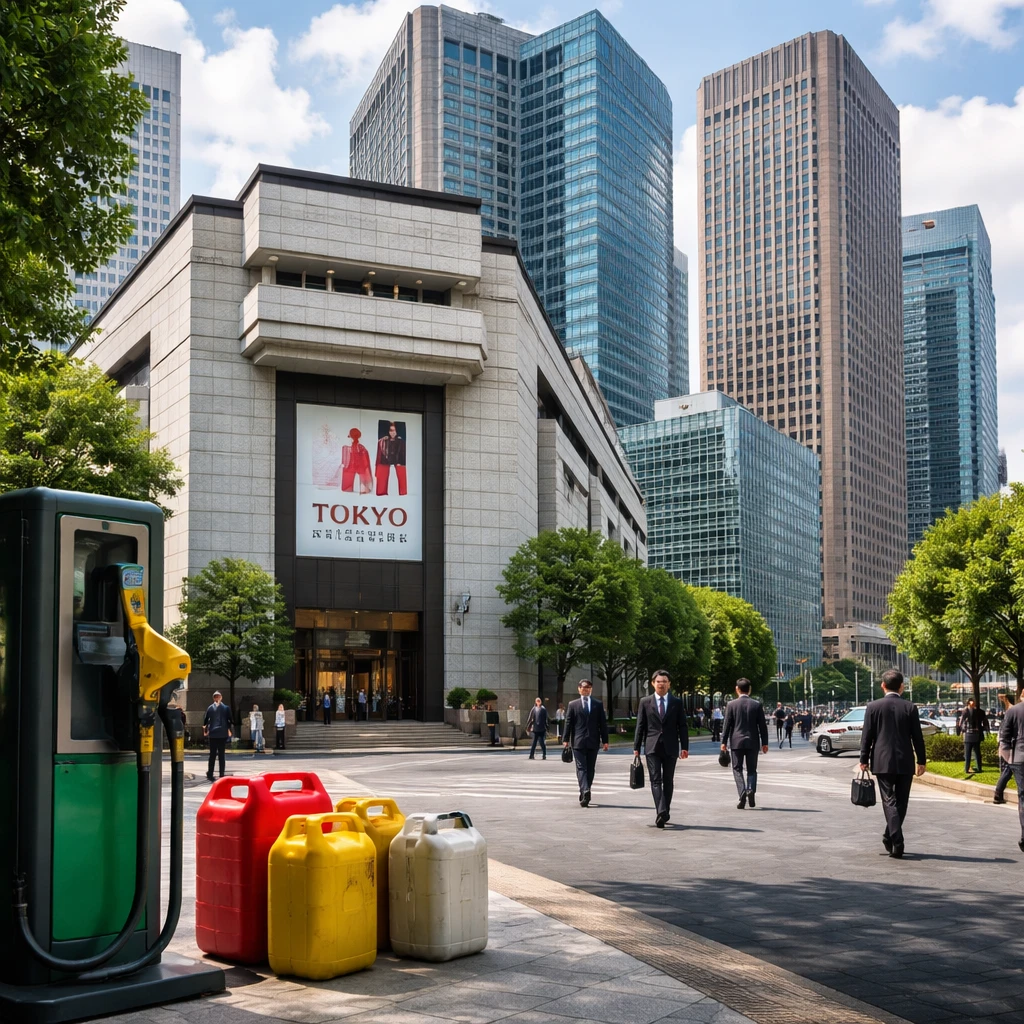
Goldman Sachs revised down its economic growth projections for Japan on Friday, attributing the cuts to an upward shift in its forecast for commodity prices that will exert pressure on the world's fourth-largest economy.
In its update the investment bank lowered its forecast for real gross domestic product growth in 2026 by 0.3 percentage points, to 0.5%. It also shaved 0.1 percentage points off its 2027 projection, which now stands at 1.1%.
Goldman Sachs said its baseline outlook still anticipates positive growth for Japan, supported by continued gains in wages and corporate profits as labor shortages intensify. The firm expects another steady rise in wages in 2026 and projects that real wage growth will remain positive but modest, at around 0.5%.
On the inflation front, Goldman Sachs raised its forecast for core consumer price index inflation in 2026 by 0.2 percentage points, to 2.0% year-over-year. The bank said this revised 2026 CPI projection is 0.4 percentage points higher than its pre-war forecast.
The firm noted that government policy limited the scale of the inflation revision. Specifically, it cited the decision to reintroduce a price cap on gasoline and other fuels as having contained the magnitude of the upward adjustment to its CPI outlook.
Goldman Sachs maintained its view that the Bank of Japan will deliver the next interest-rate increase in July. The bank said its analysis did not find a direct effect from crude oil prices on medium- to long-term inflation expectations, and that the presence of positive economic growth supports the July timing for a rate move.
However, the bank outlined an alternative scenario in which a severely adverse oil-price shock raises the chances of the Japanese economy dipping into temporary negative growth around mid-year. Under that scenario, Goldman Sachs said it would expect the timing of a rate hike to be delayed from July to the second half of the year, with the result being only one policy rate increase in 2026.
This update from Goldman Sachs highlights the trade-off facing policymakers and markets: higher commodity costs push up inflation and weigh on growth, while government fuel price caps and ongoing wage and profit gains provide countervailing support. The bank's baseline preserves a July rate move by the Bank of Japan, but it draws a clear link between oil-price trajectories and the central bank's potential timing decisions.