
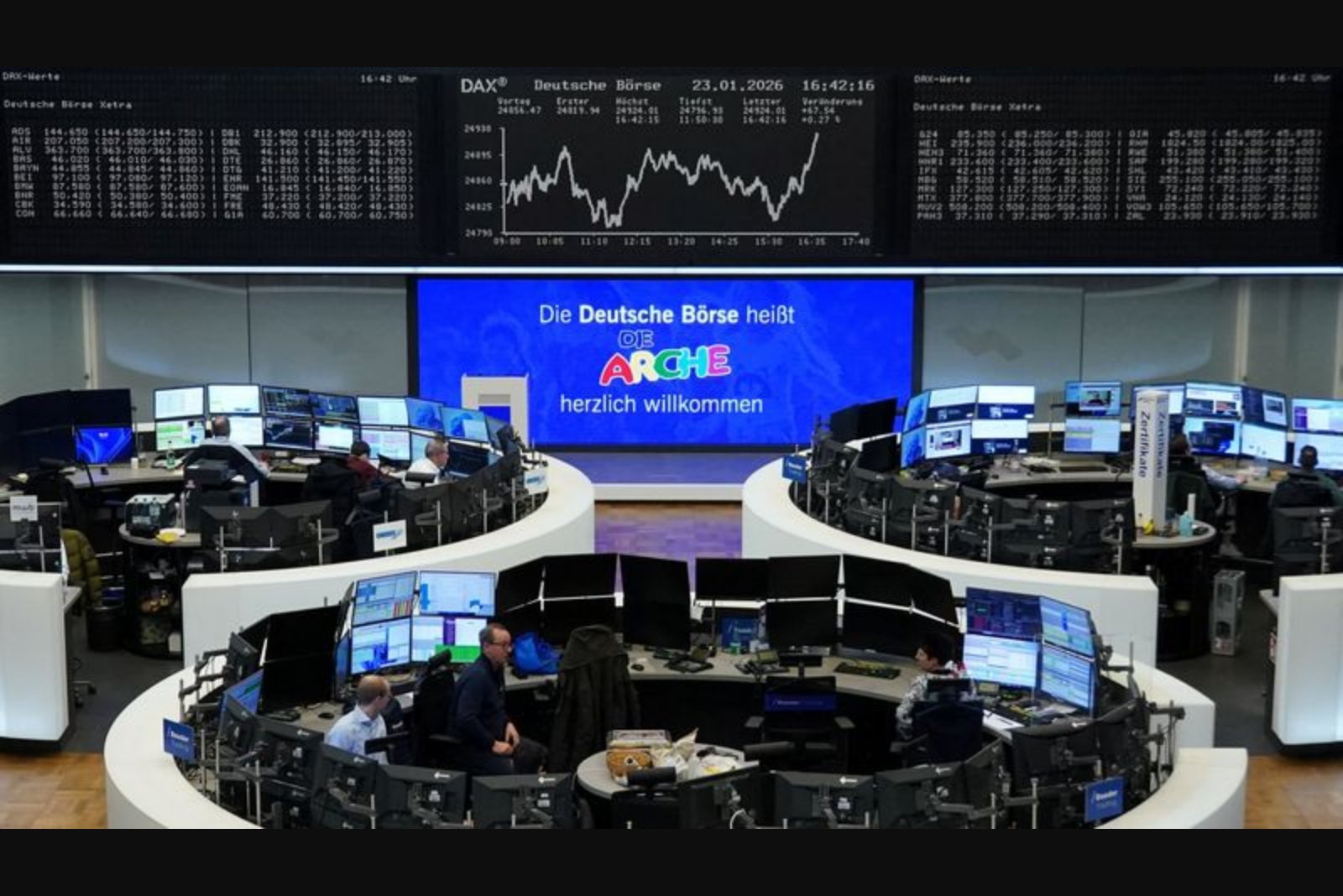
Global equity indices closed higher on Friday as risk appetite held up despite renewed tensions between the United States and Iran that pushed crude oil to multi-month highs. The pan-European STOXX 600 rose 0.5% and was on track to record a fourth consecutive week of gains, while futures for the U.S. S&P 500 climbed 0.4% in overnight trading.
Investors ended a volatile week that combined geopolitical flashpoints, political risk and mixed economic signals by continuing to place emphasis on fundamental metrics. "Clearly, equity investors are getting used to the noisy geopolitical environment," said Mabrouk Chetouane, head of global market strategy at Natixis Investment Managers, noting that market participants were focusing on valuations, earnings and expectations for interest rates.
Corporate results released so far have supported this focus on fundamentals. In Europe, 163 companies in the STOXX 600 had reported quarterly results as of Wednesday, with 57.1% beating analysts' estimates, according to LSEG I/B/E/S data. In the United States, about 73% of S&P 500 companies that had reported earnings by last week exceeded revenue expectations.
Looking ahead, Nvidia's earnings report is expected to be a market focal point next week. Traders will also be parsing a set of important macro releases, including global business activity surveys, fourth-quarter U.S. gross domestic product figures and the Federal Reserve's favored inflation gauge, the core personal consumption expenditures price index.
Currency and bond moves
In foreign exchange markets, the dollar registered its largest weekly gain in four months, supported by a mix of slightly firmer U.S. data and the Federal Reserve's minutes that suggested policymakers do not plan to rush into rate cuts. For the week, the dollar was up about 1% against the euro, sending the common currency to $1.1767.
ING FX strategist Francesco Pesole observed that while the dollar’s safe-haven appeal is generally diminished, it tends to be restored when geopolitical tensions trigger oil shocks. In Japan, the yen weakened after data showed core inflation at 2% in January, its slowest pace in two years, which could complicate the central bank's prospective path on interest rates. The dollar was up 1.8% against the yen for the week, trading at 155.4 yen.
U.S. Treasuries were broadly steady. The 10-year Treasury yield sat at 4.07%. Meanwhile, the Fed minutes revealed division among policymakers over the timing and pace of rate cuts, and two-year yields rose by five basis points over the week to 3.47%. In Europe, yields on Germany's 10-year Bunds were moving toward a weekly decline of 2 basis points.
Oil spikes on heightened U.S.-Iran rhetoric
Crude prices saw notable gains as geopolitical rhetoric intensified. Benchmark Brent crude futures reached six-and-a-half-month peaks above $72 a barrel following sharply escalated statements from the U.S. administration, including an ultimatum that gave Iran 10 to 15 days to reach a deal on its nuclear program or face consequences described as "really bad things."
Analysts highlighted how political escalation can cause supply concerns. "The political rhetoric has escalated sharply. Even limited disruption or credible threats to shipping lanes could cause an immediate supply shock," said Daniela Hathorn, senior market analyst at Capital.com. The prospect of a shock to oil supplies contributed to a more cautious stance among some investors.
That caution was reflected in market commentary from asset managers in Tokyo. Kenji Abe, chief strategist at Daiwa Securities, noted that investors were shying away from risk in light of the news. Brent Donnelly, president of Spectra Markets, said there was little incentive to add exposure ahead of weekend uncertainty tied to developments in the Middle East and described the trading day as one to avoid taking undue risks.
Overall, markets ended a choppy week with equities inching higher and commodity and currency moves underlining the market's sensitivity to geopolitical developments. Investors remain set to monitor incoming corporate earnings and a slate of economic data that could influence expectations for interest rates and growth in the weeks ahead.